
Ministry of Transportation instructs strengthening of ship inspections and emergency drills
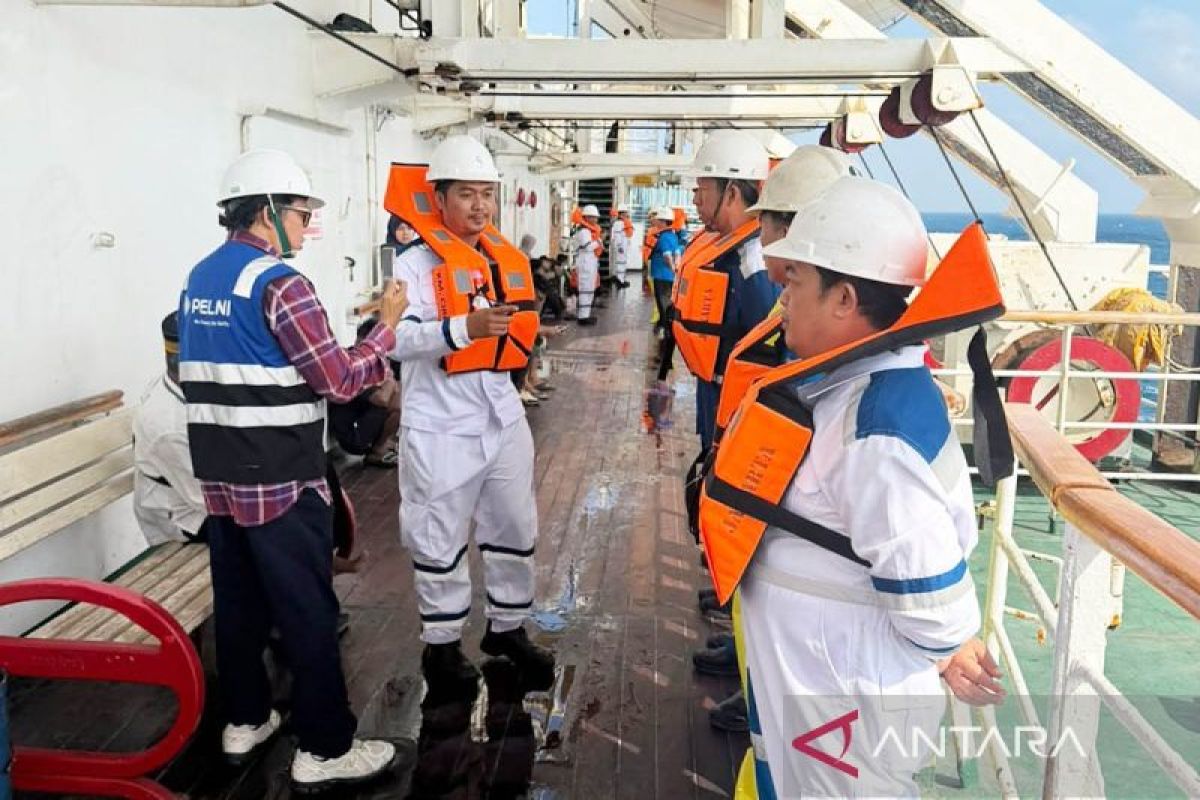
Accidents must not occur where crew members save themselves while leaving passengers behind. This must not happen again.
Jakarta (ANTARA) - The Ministry of Transportation (Kemenhub) has instructed ship operators, harbour masters, and marine inspectors to tighten seaworthiness inspections and increase emergency drills to strengthen national maritime safety for all users.
“The safety of passenger ships and Ro-Ro vessels is a shared responsibility. Government inspections remain important, but safety cannot rely solely on inspections by officials,” said the Acting Director General of Sea Transportation, Lollan Panjaitan, in Jakarta on Wednesday.
He emphasised this during an online meeting gathering maritime stakeholders from across the country in Jakarta.
Lollan stressed that safety responsibility does not lie solely with the government as the regulator. Ship owners, operators, captains, and crew must also ensure that vessels are constantly seaworthy and prepared for emergency conditions.
During the meeting, discussions focused on the Decree of the Director General of Sea Transportation Number KP-DJPL 178 of 2024 regarding Self-Inspection of Seaworthiness for Indonesian-flagged Passenger and/or Ro-Ro vessels, as well as Circular Letter Number SE-DK 6 of 2026 regarding the Optimisation of General Emergency Drill Implementation on Ships.
According to Lollan, both policies are complementary. Self-inspection is used to ensure that the condition of the ship and safety equipment is physically verified.
“Meanwhile, the implementation of general emergency drills ensures that the crew understands their duties, is capable of using safety equipment, and can act quickly and in a coordinated manner when an emergency occurs,” he added.
He also requested that self-inspections be conducted honestly, objectively, and consistently, and that the results must reflect the actual condition of the ship and serve as a basis for improvements if discrepancies are found.
“The scope of this self-inspection includes documentation, hull and machinery, safety equipment, manning, safety radio, pollution prevention, and other aspects according to the type and characteristics of the ship,” said Lollan.
Samsuddin, Director of Shipping and Seamanship at the Directorate General of Sea Transportation, emphasised that the evaluation of emergency drills must be taken seriously.
He requested operators to conduct drills and ensure their implementation is verified by technical implementation unit offices and marine inspectors.
Drill scenarios, he added, must be tailored to the characteristics and operational risks of the ship, including facing fires, leaks, abandon-ship conditions, and man-overboard incidents. Following the drills, operators are required to conduct evaluations to identify deficiencies and ensure continuous improvement.
“Drills will not be effective if the crew only knows the procedures in theory. The crew must be familiar with the safety equipment available on the ship and be able to use it when an emergency occurs,” he said.
In addition to safety equipment, the use of emergency communication tools is also a priority. The crew’s ability to use communication means during an emergency is considered vital to support coordination during critical situations.
In addition to ensuring crew readiness, the Ministry of Transportation emphasised the importance of providing safety briefings to passengers.
Operators are requested to socialise the procedures for using life jackets, evacuation procedures, emergency signals, and the location of muster stations or assembly points in the event of an emergency.
Samsuddin stated that this information must be provided before the ship departs, including the alarm system, which must be ensured to be audible and recognisable to passengers.
“Upon departure, the crew is obliged to inform passengers of emergency signals so that passengers know what to do in the event of an emergency,” said Samsuddin.
According to him, passenger understanding is a vital part of safety preparedness.
“Accidents must not occur where crew members save themselves while leaving passengers behind. This must not happen again,” he emphasised.
Therefore, the authorities have requested operators and officials within the Technical Implementation Unit offices of the Directorate General of Sea Transportation to immediately ensure that emergency drills are conducted properly and in real-time, rather than merely fulfilling administrative obligations.
The implementation of drills must also be verifiable through documentation containing the date and time of the activity (timestamp). This allows inspectors to have evidence that the drill was actually conducted and to evaluate any identified deficiencies for improvement in subsequent drills.
Source: jawawa.id (https://jawawa.id/newsitem/ministry-of-transportation-instructs-strengthening-of-ship-inspections-and-emergency-drills-1790150698)
Originally published by Antara (Indonesian) (https://www.antaranews.com/berita/5754288/kemenhub-instruksikan-pemeriksaan-latihan-darurat-di-kapal-diperkuat), translated from Indonesian