
Ministry of Transportation Harmonises Freight Forwarding and Multimodal Transport to Strengthen National Logistics
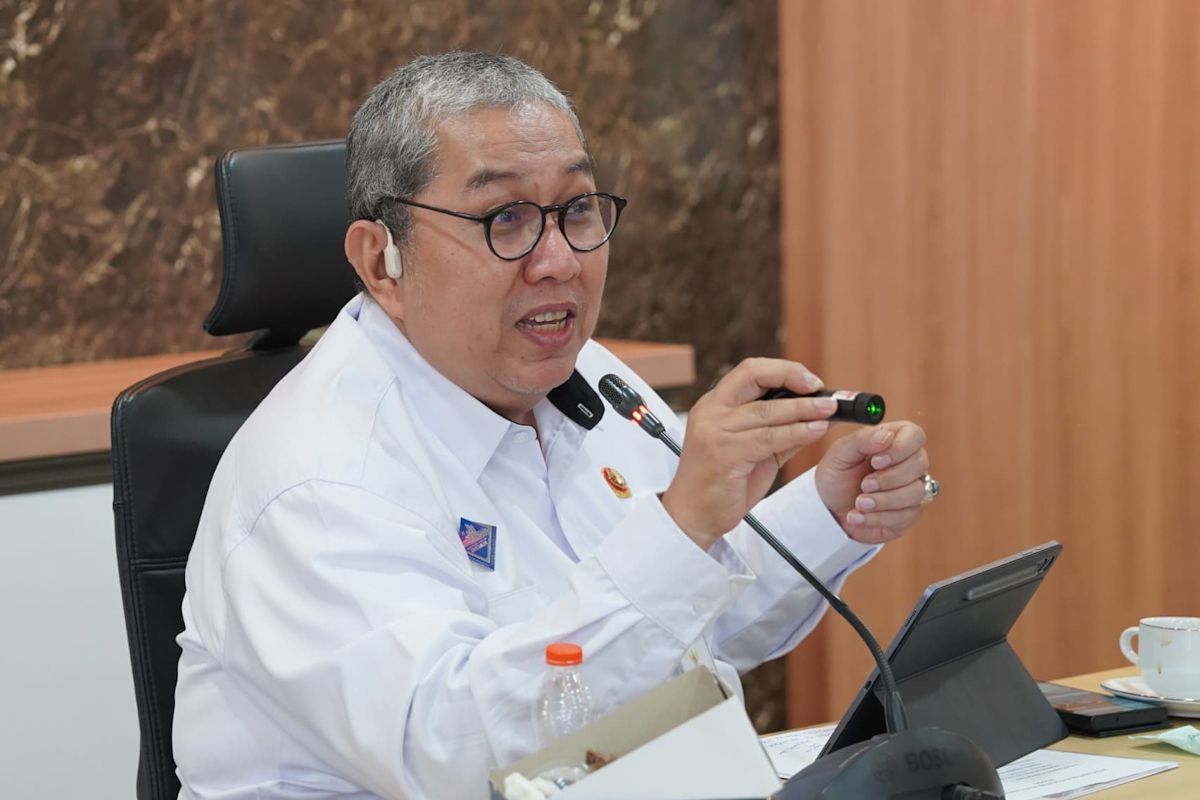
The Ministry of Transportation is encouraging the harmonisation of policies, structuring of authority, and strengthening of supervision for Freight Forwarding Services (JPT) and Multimodal Transport Business Entities (BUAM) to realise a more integrated, efficient, and legally certain national logistics governance system. “JPT and BUAM have different roles and scopes, but they complement each other in supporting the smooth distribution of goods,” said Director General of Transportation Integration and Multimodality at the Ministry of Transportation, Risal Wasal, in Jakarta on Tuesday. He emphasised this during a Focus Group Discussion (FGD) on Strengthening National Logistics Governance through Policy Harmonisation and Transport Synergy at the Directorate General’s office. Risal stated that changes in business classification must be followed by regulatory alignment so that the roles of JPT and BUAM become more synergistic, effective, and efficient. According to him, the change in the Indonesian Standard Industrial Classification (KBLI) must be followed by harmonisation of regulations, guidance, licensing, and supervision. He noted that the Central Statistics Agency (BPS) Regulation Number 7 of 2025 separates the classification of multimodal transport under KBLI 52291 and JPT under KBLI 52311. This separation clarifies JPT as an intermediation service provider, while BUAM carries out the transport of goods using at least two modes under a single contract. Risal explained that JPTs whose activities have exceeded the intermediation function, such as carrying out cross-modal transport, owning transport equipment, and being fully responsible for the journey of goods, need to adjust their business form if they meet the characteristics of multimodal transport operations according to statutory provisions. “This structuring is necessary to ensure that business activities are carried out according to the established scope of permits and division of responsibilities appropriately and proportionally,” said Risal. Strengthening supervision is also a primary concern because logistics activities involve land, sea, air, and railway modes, as well as central and regional government authorities. “Multimodal transport supervision cannot be done sectorally. All modal elements must be involved so that supervision takes place comprehensively from the beginning to the end of the goods’ journey,” he continued. Through this policy harmonisation, the Directorate General of Intram will strengthen cross-unit coordination, arrange guidance and supervision mechanisms, and improve the integration of licensing services and information systems. “This step is expected to reduce logistics costs, increase service certainty, and strengthen the competitiveness of the national and international logistics system,” Risal said.