
Ministry of Transportation Finalises Strategy for Return Flow from Ketapang-Gilimanuk
Readiness of buffer zones is key and must be utilised as effectively as possible. Similarly, arrangements for two-axle goods vehicles not subject to restrictions need attention to ensure smooth operations.
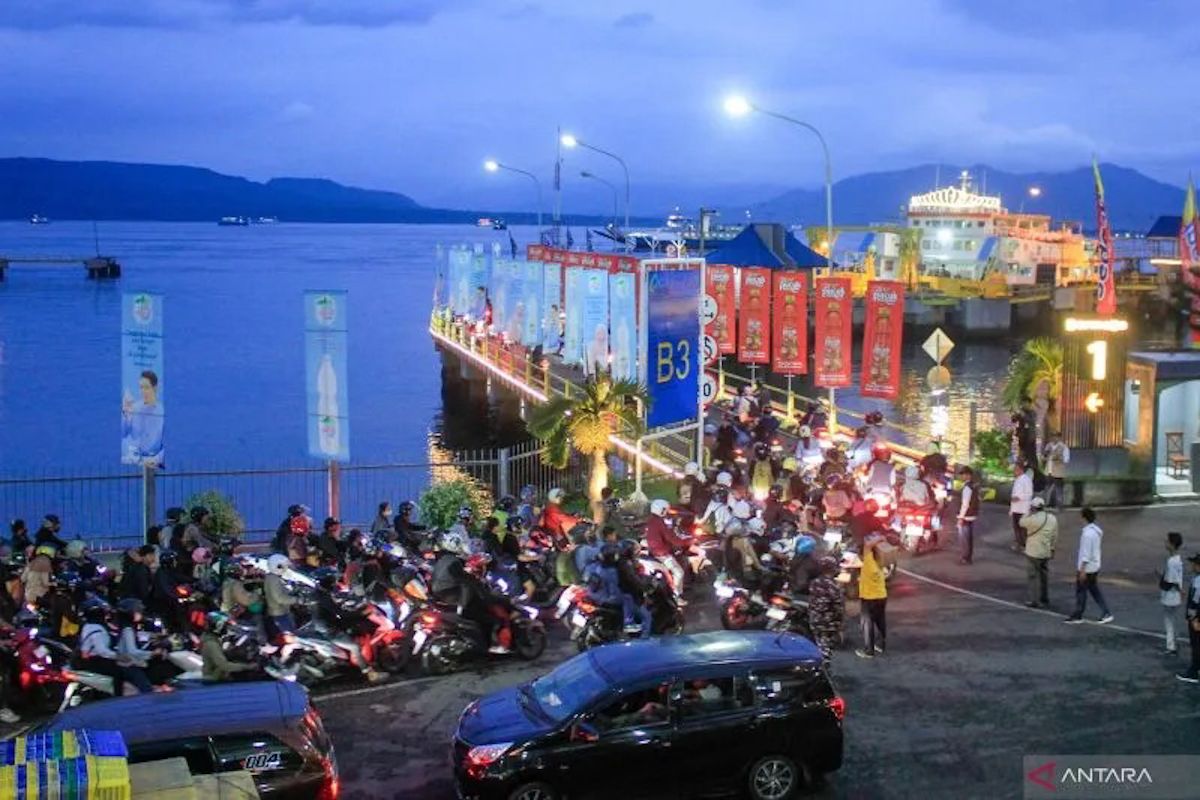
Jakarta (ANTARA) - The Ministry of Transportation is finalising strategies to handle the peak return flow of the second wave on 28-29 March 2026 on the Ketapang-Gilimanuk route at Ketapang Port in Banyuwangi, East Java, to ensure smooth crossings and anticipate vehicle density.
Director General of Land Transportation at the Ministry of Transportation, Aan Suhanan, stated that his team, along with relevant stakeholders, has held a coordination meeting to refine strategies for facing the peak return flow of the second wave on that route.
“We must prioritise ferry services from Ketapang to Gilimanuk during this return flow; the arrive-unload-depart (TBB) mechanism requires quick decisions without delay based on field conditions,” said Aan in a statement in Jakarta on Saturday.
He emphasised that evaluations from the previous outbound flow necessitate optimisation of buffer zones and delaying systems to alleviate queues of vehicles heading to the port area.
Buffer zones for four-wheeled vehicles and buses are allocated at Gran Watudodol and Bulusan Parking Pocket. Meanwhile, for goods vehicles, buffer zones are at Sri Tanjung, PT Pusri Parking Pocket, and Pelindo.
Additionally, another strategy involves ferry operations. Under normal conditions, 28 ferries operate. For dense conditions, 30 ferries operate, and for very dense conditions, there will be 32 ferries.
“If absolutely necessary, the number of ferries can be increased to 35 to 40, and there will be two support ferries with capacities of 60 to 80 vehicles,” he added.
“From that total, there are still 114,255 vehicles (73 percent) that have not crossed to Bali, and ASDP predicts the highest return flow will occur on H+6 or 28 March 2026,” he explained.
To achieve a safe, secure, and smooth return flow, Aan stressed the need for good communication and synergy among port operators, TNI/Polri, Transportation Agencies, and other relevant stakeholders.