
Ministry of Transportation and KAI to Regulate Level Crossings for Safety
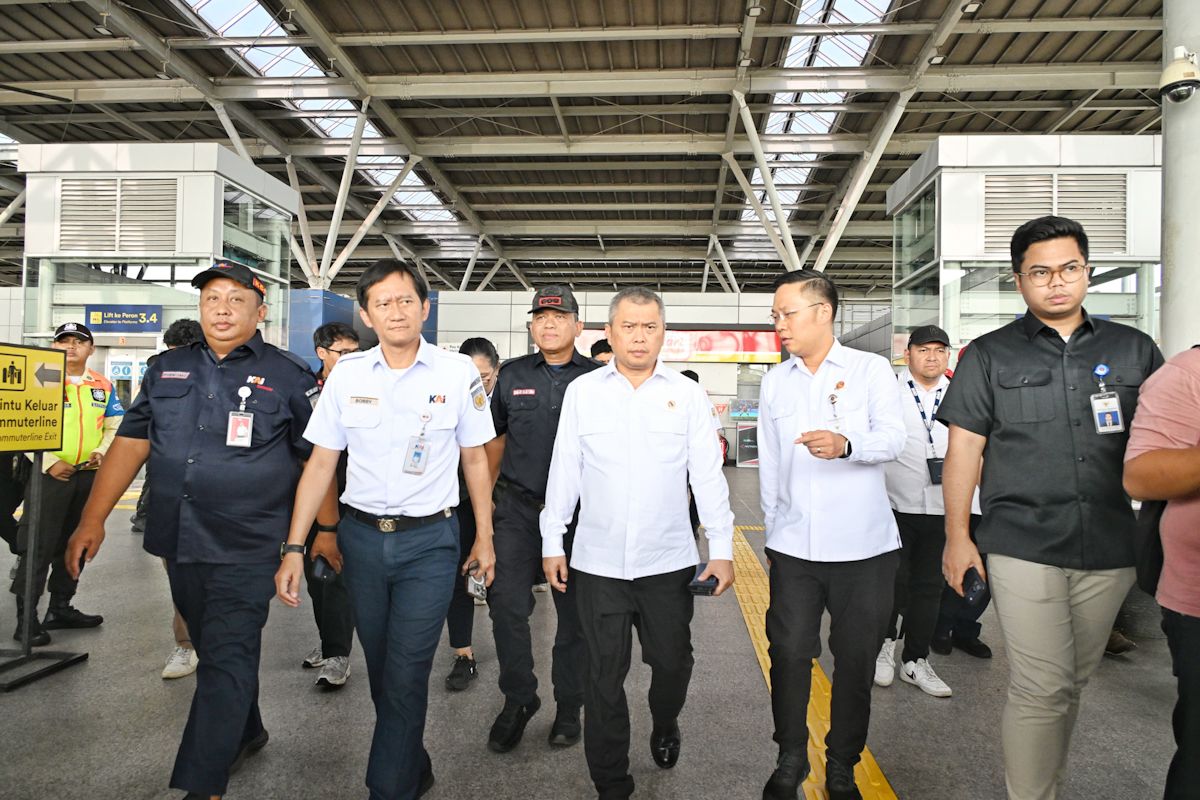
Jakarta (ANTARA) - The Ministry of Transportation (Kemenhub) together with PT Kereta Api Indonesia (KAI) is accelerating the regulation of level crossings at all points to enhance railway travel safety.
Transport Minister Dudy Purwagandhi stated that this step follows up on President Prabowo Subianto’s instructions to regulate level crossings after the train accident incident involving the Argo Bromo Anggrek train with the commuter rail (KRL) in East Bekasi.
“As per the President’s directive, we will carry out the regulation at level crossings. We will expedite it by setting priorities,” the Minister said in Jakarta on Thursday.
The Minister noted that the regulation of level crossings will be carried out very strictly. Kemenhub will ensure field data and conduct an inventory of road authority status, guarding status, and other data related to the condition of level crossings.
The enhancement of safety facilities and infrastructure at road crossings will involve various relevant parties such as local governments, the Directorate General of Highway Development of the Ministry of Public Works, and PT KAI.
According to data from the Directorate General of Railways (DJKA) of Kemenhub as of 30 April 2026, there are a total of 4,046 level crossings on active tracks throughout Indonesia. Of this number, there are 1,903 level crossings that are unguarded.
The government has determined priority points for enhancing the safety of level crossings. There are 10 short-term priority locations and 50 medium-term priority locations.
The criteria for determining these priority points include locations that have experienced accidents or repeated near-miss incidents; the volume of vehicles passing based on national, provincial, city, district, sub-district, and village road status; high train frequency (single/double track).
Additionally, the environmental conditions of the level crossings located at sharp curves, inclines/declines, and obstructed visibility; registered but unguarded level crossings, and minimal safety facilities.
The Minister urged the public not to create crossings without permission and not to reopen illegal crossings that have been closed by KAI. Because, self-made illegal crossings can obstruct the visibility of train drivers operating the trains.
Meanwhile, officially built crossings already meet security and safety requirements.
In addition to using official gates, these crossings are also equipped with sensors that can detect the arrival of trains and trigger the automatic closure of the barriers.
“The public is also urged to continue to comply with the signs at railway crossings by not forcing through closed barriers,” said the Minister.