
Ministry of Transport strengthens safety management and ODOL supervision to enhance transport safety
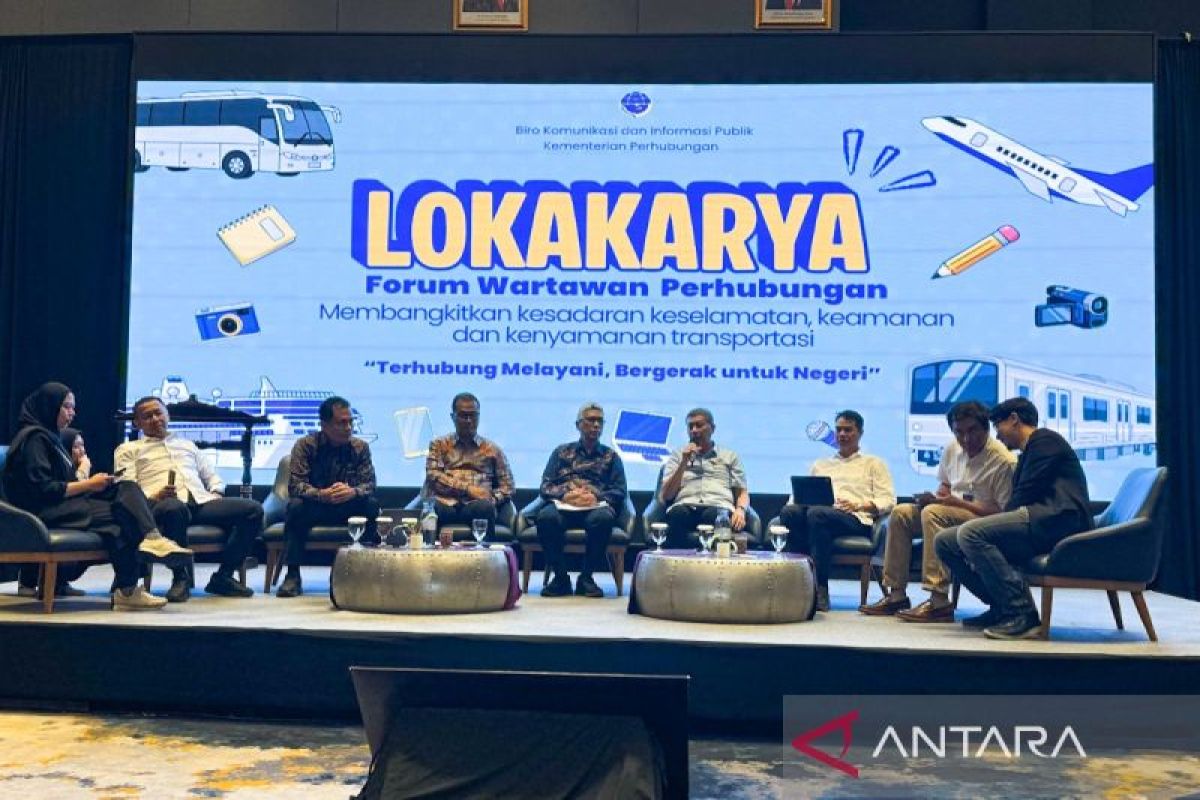
The Ministry of Transport (Kemenhub) is strengthening the Safety Management System for Public Transport Companies (SMK PAU) and the supervision of Over Dimension Over Load (ODOL) vehicles to reduce traffic accidents and road fatalities.
“We want to ensure that every journey begins with a safe system, as well as consistent and effective supervision,” said the Director General of Land Transportation, Aan Suhanorkan, during the Transport Journalists Forum Workshop in Bandung, West Java, on Friday.
He stated that the number of accidents and fatalities resulting from land transport accidents is a serious concern. According to data from the National Police Traffic Corps (Korlantas Polri) for 2025, there were 141,608 accident incidents resulting in 21,717 deaths. This has prompted the government to continuously strengthen efforts to improve land transport safety.
He emphasised that high rates of traffic accidents should not be taken lightly and that safety must remain the top priority. He also explained several measures currently being undertaken by the government to enhance land transport safety.
“The occurrence of accidents and the fatality rates on roads are very concerning. Although accidents occur due to many variables, the government must continue to prioritise safety to reduce the number of accidents and fatalities through various efforts,” said Aan.
Furthermore, Aan mentioned that strengthening the SMK PAU is one of the measures being implemented by the Directorate General of Land Transportation to improve public transport safety. The strengthening of SMK PAU is planned through the integration of licensing systems, the implementation of a ranking system for evaluating SMK elements, the synchronisation of audits and quality assurance units, and the promotion of assessments and competency certifications for those preparing SMK PAU documents, involving directors, managers, and safety officers of public transport companies as a commitment to safety.
According to him, the safety management system in public transport companies plays a vital role in safety, particularly in preventing accidents. “Companies that fully and properly implement the 10 elements of SMK PAU tend to be less involved in accidents,” said Aan.
In addition to strengthening SMK PAU, Aan added that to improve land transport safety, the authorities are also preparing for ‘Zero ODOL’ by strengthening supervision of freight transport, specifically regarding violations related to over-dimension and over-load vehicles.
“Based on Korlantas Polri data, freight transport contributes approximately 10 per cent to traffic accident involvement,” said Aan.
He explained that the government is implementing the Zero ODOL programme through several approaches, such as strengthening regulations by proposing enhanced regulations for freight vehicles in the revision of Law Number 22 of 2009 concerning Traffic and Road Transport. Regarding supervision, the government is transforming monitoring from conventional methods to technology-based supervision through ETLE HUB.
In terms of regulatory strengthening, the authorities have submitted the List of Identified Problems (DIM) for the amendment of the Traffic and Road Transport Law to the House of Representatives (DPR), hoping that the government’s proposals and those of the entire logistics transport ecosystem will be accepted.
“We have also launched ETLE HUB and conducted socialisation, and we have launched the Cargo Load Letter (SUMBA) which is integrated with ETLE HUB,” said Aan.
Aan added that supervision is also being strengthened at ferry terminals to monitor freight transport, ensuring that vehicles entering ships meet the permitted load capacity and dimensions.
The Ministry of Transport, together with PT ASDP Indonesia Ferry, has integrated data with vehicle weighing systems at several ferry ports, and in the future, other port operators will be encouraged to strengthen their supervision facilities.
“The government continues to strive to play its role in building a safety culture, but collective commitment is also required from stakeholders and all elements of society as road users,” said Aan.