
Ministry of Transport Begins Trial for Overdimension and Overloading Truck Enforcement
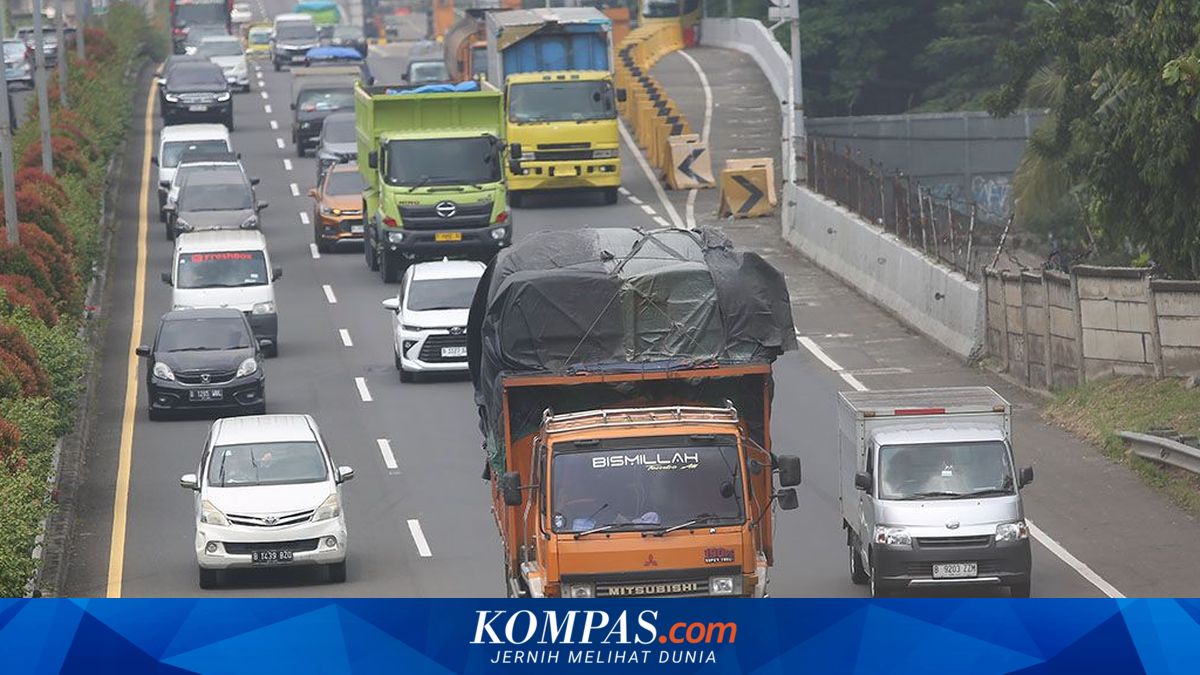
The Ministry of Transport (Kemenhub) has commenced a wider trial for handling overdimension and overloading (ODOL) vehicles, effective from 1 June 2026. This step is part of an accelerated effort towards the ‘Zero ODOL’ target, which is scheduled to be achieved by 2027.
The Director General of Land Transportation, Aan Suhanan, stated that managing ODOL trucks can no longer rely solely on conventional supervision; instead, a more modern system is required to ensure monitoring is effective and transparent. “From 1 June, we will socialise the implementation of technology. Previously, most methods were conventional—weighed, and if overloaded, reprimanded. From 1 June, we will use technology to issue warnings without immediate sanctions,” he said in a statement on Tuesday (2/6/2026).
He added that all Ministries, Agencies, and stakeholders are prepared to implement these measures to ensure a load-excess-free environment by 2027. A primary focus is the implementation of an information technology-based monitoring system capable of operating objectively and 24 hours a day. Through this digitalisation, direct interaction between officers and drivers is expected to be minimised. In addition to increasing monitoring accuracy, the digital system is also viewed as a way to reduce the potential for illegal levies (pungli), which have long been a point of concern.
Furthermore, the Ministry of Transport is strengthening supporting monitoring infrastructure. Optimisation is being carried out through Motor Vehicle Weighing Implementation Units (UPPKB), Weight in Motion (WIM) technology, and Online Weighbridges (JTO) integrated with electronic monitoring systems. Aan explained that supervision will not only take place on the roads but also during the loading process within industrial areas. Consequently, vehicles exiting towards public roads are expected to comply with the applicable dimension and load limits.
“We will maximise the use of WIM and JTO, not only for monitoring but also as a basis for law enforcement,” said Aan. The next step involves aligning regulations and Standard Operating Procedures (SOP) so that the entire ODOL handling process follows a uniform reference—from violation detection and data validation to the delivery of confirmation letters and enforcement processes. Currently, the government is also revising Law Number 22 of 2009 concerning Traffic and Road Transport.
Aan noted that a shared perception among agencies is key to ensuring that ODOL policies can be implemented effectively without disadvantaging specific parties. For context, monitoring and law enforcement against ODOL vehicles have been underway since 27 January 2026, with the trial period concluding on 31 May 2026. As of 6 April 2026, the Ministry of Transport recorded that 49,003 vehicles had been penalised for violating dimension or load regulations. Of that number, 45,545 vehicles received warnings, 1,924 were issued fines, one vehicle was processed by the police, and 1,533 vehicles received sanctions through the UPPKB.