
Ministry of Transport Affirms Protection and Competitiveness Boost for Indonesian Seafarers
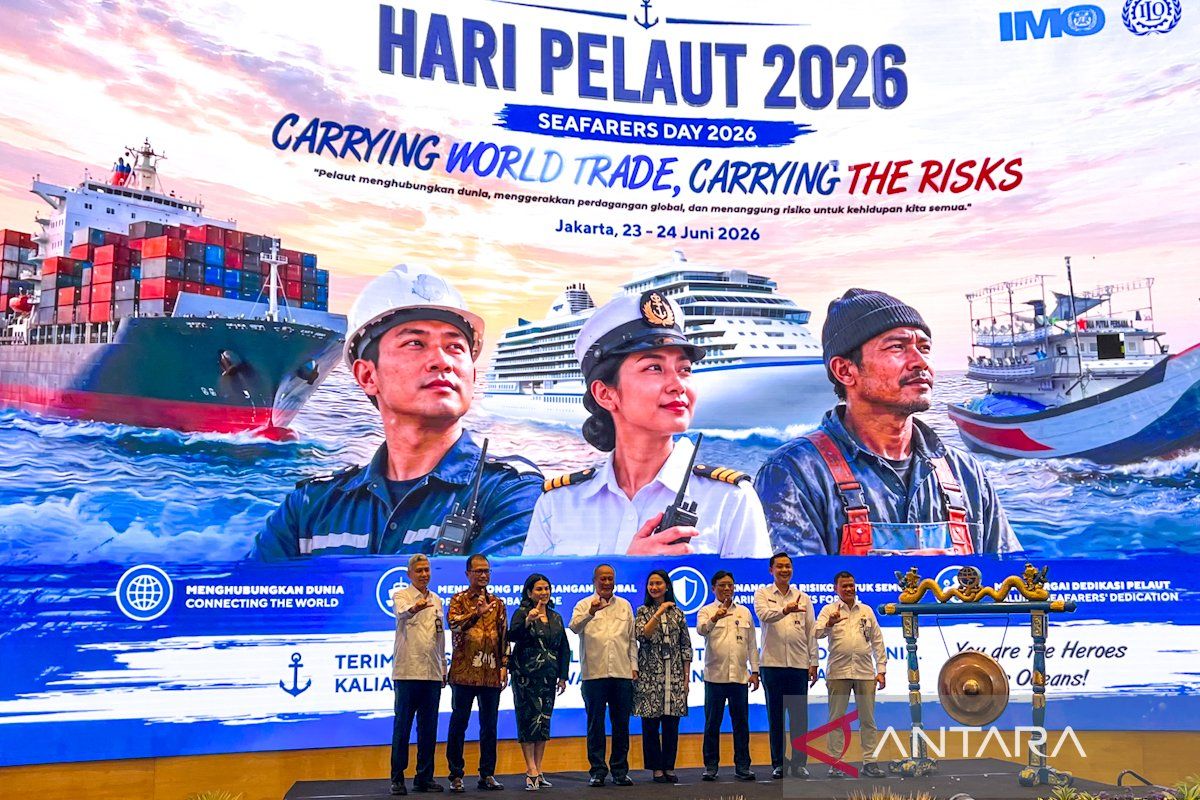
The Ministry of Transport (Kemenhub) has affirmed its commitment to strengthening the protection and boosting the competitiveness of Indonesian seafarers through enhanced competency, internationally standardised certification, digitalised services, and improved welfare and occupational safety.
“The role of seafarers is immense, connecting the world, driving global trade, and bearing risks for all of us,” said Deputy Minister of Transport Suntana during the 2026 Day of the Seafarer commemoration at the Maritime Expo held at the Ministry of Transport office in Jakarta on Tuesday.
Adopting the International Maritime Organization’s (IMO) global theme, “Carrying World Trade, Carrying the Risks”, the Deputy Minister noted that the commemoration serves as a moment to honour seafarers who are the backbone of global trade while facing various risks in their profession.
The Deputy Minister stated that the Ministry of Transport remains committed to guaranteeing the rights of Indonesian seafarers through strengthened protection and improved decent welfare. He noted that the seafaring profession carries high risks, including extreme weather, working far from family for months, and potential threats of accidents at sea.
For their dedication and service, the Deputy Minister expressed appreciation to Indonesian seafarers, whom he regarded as courageous and strategic heroes of the oceans in maintaining the smooth flow of trade and maritime connectivity. “Working on a ship means facing extreme weather, being away from family for months, and the threat of accidents at sea. Therefore, I greatly appreciate the dedication, courage, and service of Indonesian Seafarers. You are the heroes of the Oceans,” he added.
On the same occasion, Director General of Sea Transportation at the Ministry of Transport, Muhammad Masyhud, revealed that Indonesia is currently recorded as one of the top five seafarer-supplying countries in the world, with approximately 1.6 million seafarers. He stated that this potential must be accompanied by improved competency, technological mastery, and adequate protection so that Indonesian seafarers become more competitive in the global maritime market.
He emphasised that the government continues to strengthen the seafarer certification system, digitalise services, and supervise the implementation of international standards such as the STCW Convention and the Maritime Labour Convention (MLC) 2006. “Furthermore, the protection of seafarers’ rights, occupational safety, health, and welfare are also top priorities,” he stressed.
Masyhud added that there are currently more than 100 maritime education and training institutions being continuously developed by the Directorate General of Sea Transportation to meet international standards. “We are also continuously improving simulator facilities, strengthening the quality of instructors, and aligning the curriculum with the needs of the global maritime industry,” he asserted.
In addition to the Maritime Expo held on 23–24 June 2026, the Day of the Seafarer series of events also included the presentation of approvals to maritime education and training institutions, the provision of compensation and insurance to seafarers’ families, health services and blood donation drives, and seafarer document services. The peak commemoration on 25 June 2026 will also feature the Strategic Maritime Forum 2026, a forum discussing national maritime policy direction, maritime sector investment, and the strengthening of seafarer human resources as a strategic national asset, with the participation of stakeholders in the shipping and maritime sectors. The 2026 Day of the Seafarer series will conclude with a leisurely walk event at the West Plaza of Gelora Bung Karno, Jakarta, on 28 June 2026.
Through the momentum of the 2026 Day of the Seafarer, the Directorate General of Sea Transportation hopes the activities can strengthen synergy between regulators, industry, educational institutions, and the seafarer community in building a sustainable maritime ecosystem and produce strategic recommendations for the advancement of the national seafaring sector.