
Ministry of Transmigration: TEP Innovation Reduces Nutmeg Drying Time in Fakfak
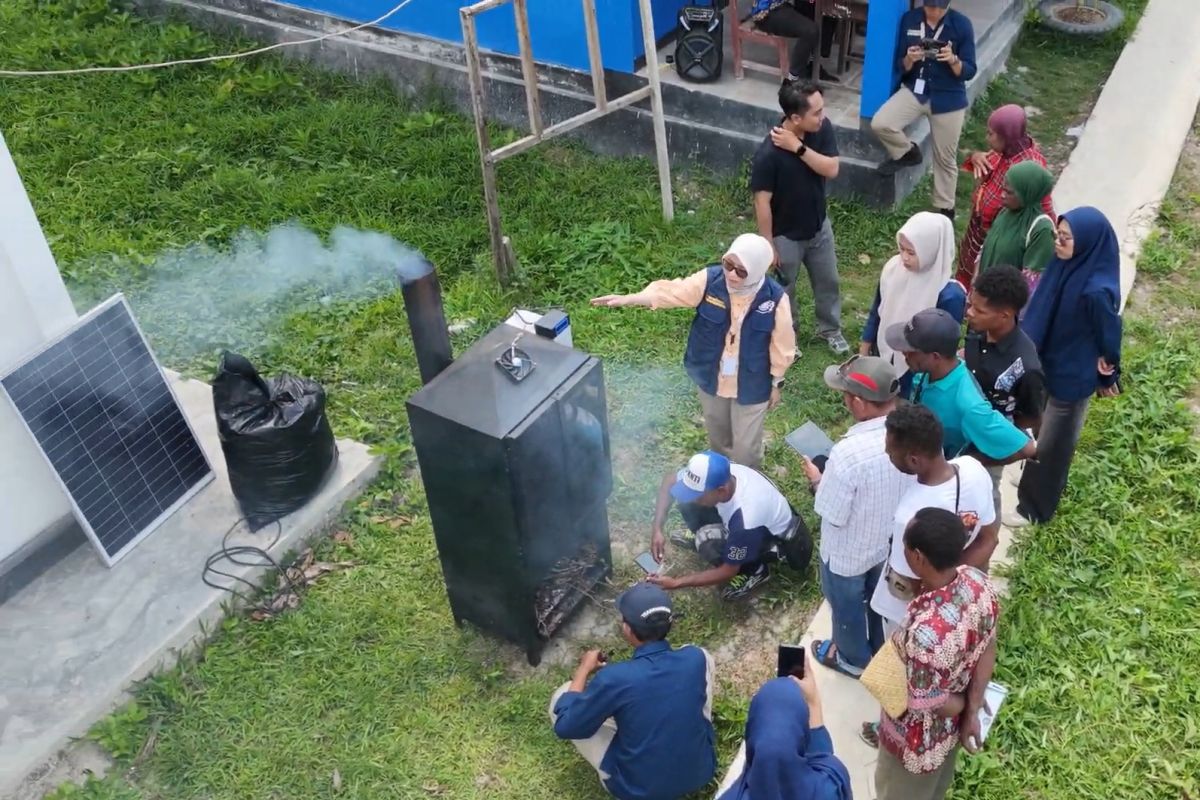
The Ministry of Transmigration (Kementrans) has stated that the Smart Solar Biomass Dryer, created by the Patriot Expedition Team (TEP) 15 from Hasanuddin University, is capable of reducing the nutmeg drying time for farmers in the Weri-Saharey Transmigration Area, Fakfak Regency, West Papua, from seven days to two days.
This appropriate technology is used to help farmers overcome post-harvest obstacles, particularly nutmeg drying, which has traditionally been dependent on weather conditions.
“Regarding the drying tool, there is indeed a need for such equipment so that we do not need to worry about the weather, such as rain,” said the Chairman of the Rangkum Aher Samai Farmer Group in an official statement received in Jakarta on Thursday.
Aher noted that the drying process can utilise materials available in the surrounding area and does not require electricity, allowing the tool to be used in various locations. He expressed hope that the capacity of the tool could be increased to accommodate more nutmeg and further accelerate the drying process of the farmers’ harvests.
“The hope is that the drying machine produced can have a larger capacity so that it can dry more nutmeg, more quickly,” he said.
The Ministry of Transmigration noted that the Smart Solar Biomass Dryer can maintain a drying temperature of approximately 60 degrees Celsius and can hold up to 1,000 nutmeg seeds in a single process. With more controlled drying conditions, the time previously required—about seven days—can be slashed to two days. The use of this tool also aims to reduce the risk of nutmeg mould when the drying process is interrupted by rain.
Michel Obrien, a representative of the Hasanuddin University Patriot Expedition Team, stated that the device features five trays for placing nutmeg during the drying process. “Furthermore, there is a special space above it containing five trays, which can dry around one thousand nutmeg seeds,” said Michel.
The technology combines solar energy and biomass and is equipped with Internet of Things (IoT) technology. Farmers can monitor the temperature and humidity of the drying chamber via mobile phones, with the nutmeg drying temperature maintained between 50–60 degrees Celsius.
The technology employs a hybrid mechanism. When the temperature falls below 50 degrees Celsius, biomass can be added, whereas when the temperature exceeds 60 degrees Celsius, the amount of burning biomass is reduced.
The development of this post-harvest technology is highly relevant given nutmeg’s position as one of West Papua’s key plantation commodities. Data from the Directorate General of Estate Crops of the Ministry of Agriculture shows that the nutmeg area in West Papua reaches 32,440 hectares with a production of 1,555 tonnes.
The application of appropriate technology is also one of the priority themes for TEP 2026, alongside downstreaming and industrialisation, productive economy, digitalisation, and renewable energy. The programme involves universities in conducting research, studies, and assistance for the development of transmigration areas.
The Ministry of Transmigration noted that TEP 2026 consists of 246 teams with 1,476 participants from 10 partner universities, stationed across various transmigration areas.
The Minister of Transmigration, Muhammad Iftitah Sulaiman Suryanagara, previously emphasised the independence and innovation of TEP participants to identify community problems, analyse them, and present solutions through innovation in transmigration areas.
“Indonesia needs human resources who no longer wait for orders, but are capable of seeing problems, analysing them, and then presenting solutions. That is what we call ‘Discipline Initiative’,” said Iftitah.
Source: jawawa.id (https://jawawa.id/newsitem/ministry-of-transmigration-tep-innovation-reduces-nutmeg-drying-time-in-fakfak-1790218611)
Originally published by Antara (Indonesian) (https://www.antaranews.com/berita/5755872/kementrans-inovasi-tep-pangkas-waktu-pengeringan-pala-di-fakfak), translated from Indonesian