
Ministry of Transmigration partners with German university to design Green Barelang resettlement
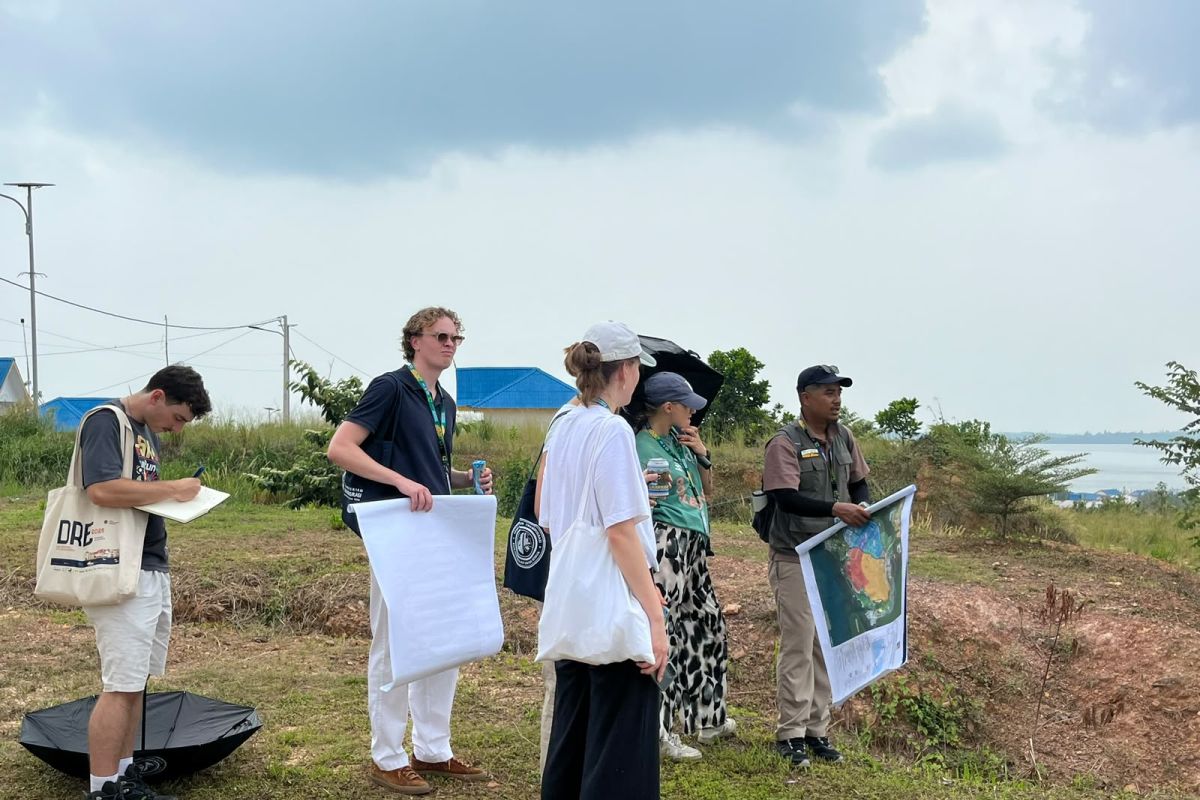
The Ministry of Transmigration (Kementrans) has partnered with the Technical University of Munich (TUM), Germany, alongside Diponegoro University (Undip), to design the development of the Batam–Rempang–Galang (Barelang) Transmigration Area based on green growth principles.
This collaboration is being conducted through the 2026 Summer Course, titled ‘Transformative Transmigration Planning Towards Green Barelang’, held from 1–10 October 2026, with a specific focus on the spatial planning of the Tanjung Banon transmigration area in Batam.
“I believe that transmigration can be a great opportunity for the community if aspects such as ecology, economy, and social factors are integrated correctly,” said TUM delegate Jacob in a statement received in Jakarta on Monday.
According to Jacob, the integration of these three aspects can provide benefits to the community, both economically and ecologically. The programme is aimed at producing a more environmentally friendly, self-sufficient, and sustainable spatial planning strategy by integrating spatial planning, economy, environment, and community empowerment.
During the programme, a multi-disciplinary delegation—ranging from geography and land management to environmental engineering—conducted field observations in the Rempang Eco City area on the third day of the activities. Participants collected data and community feedback to formulate development ideas in four key areas: spatial planning and economy, land management, coastal environmental sustainability, and community empowerment.
Another TUM delegate, Alina, noted that the field activities provided an opportunity for participants to study Indonesian community life directly while strengthening international knowledge exchange. “In the future, there could be a reciprocal exchange to Germany, so that both countries can be connected, create something together, and learn from one another,” Alina said.
Community involvement was also a key component of the activity. Garim, a resident of Rempang Eco City, stated that the presence of international participants provided a platform for locals to share knowledge and experiences regarding their living area. “We are certainly proud because, even though we are from a remote area, we can share knowledge with people from abroad,” Garim expressed.
As of May 2026, a total of 242 families, or 842 individuals, have occupied the new residential area of Rempang Eco City. BP Batam noted that this relocation is part of the implementation of the local transmigration concept in the Rempang area.
On 3 October 2026, the Ministry of Transmigration also noted that four Expedition Patriot Teams (TEP) from the Bandung Institute of Technology (ITB), IPB University, the University of Indonesia (UI), and the Sepuluh Nopember Institute of Technology (ITS) have conducted studies in Barelang. These studies range from seaweed business development and urban agriculture to strengthening local commodity value chains and integrated surveys of Tanjung Banon.
The results of these studies serve as a knowledge base for Summer Course participants in formulating development ideas tailored to the potential and needs of the Barelang community.
Minister of Transmigration Muhammad Iftitah Sulaiman Suryanagara emphasised that the new direction of the transmigration programme is no longer merely about moving populations, but about developing regions capable of providing economic opportunities for the people.
“The new transmigration programme develops regions that provide opportunities for the community. We are no longer just moving people to occupy land. We are building an economic ecosystem where people can work, grow, and achieve prosperity,” said Iftitah.
This direction aligns with the Ministry’s policy to prioritise the revitalisation of 45 transmigration areas within the 2025–2029 National Medium-Term Development Plan (RPJMN) to strengthen regional economic growth and reduce inter-regional inequality.
Through the 2026 Summer Course, the results of observations, community feedback, and multi-disciplinary collaboration are expected to form the basis for formulating the Tanjung Banon development strategy, integrating economic, social, spatial, and environmental sustainability aspects. The collaboration between the Ministry of Transmigration, Undip, and TUM is also aimed at strengthening educational and research cooperation while producing a transmigration area development approach that benefits the community.
Source: jawawa.id (https://jawawa.id/newsitem/ministry-of-transmigration-partners-with-german-university-to-design-green-barelang-resettlement-1791169057)
Originally published by Antara (Indonesian) (https://www.antaranews.com/berita/5771173/kementrans-gandeng-kampus-jerman-rancang-transmigrasi-hijau-barelang), translated from Indonesian