
Ministry of Transmigration and Unhas Assist Fakfak Residents in Processing Fish into Food Products
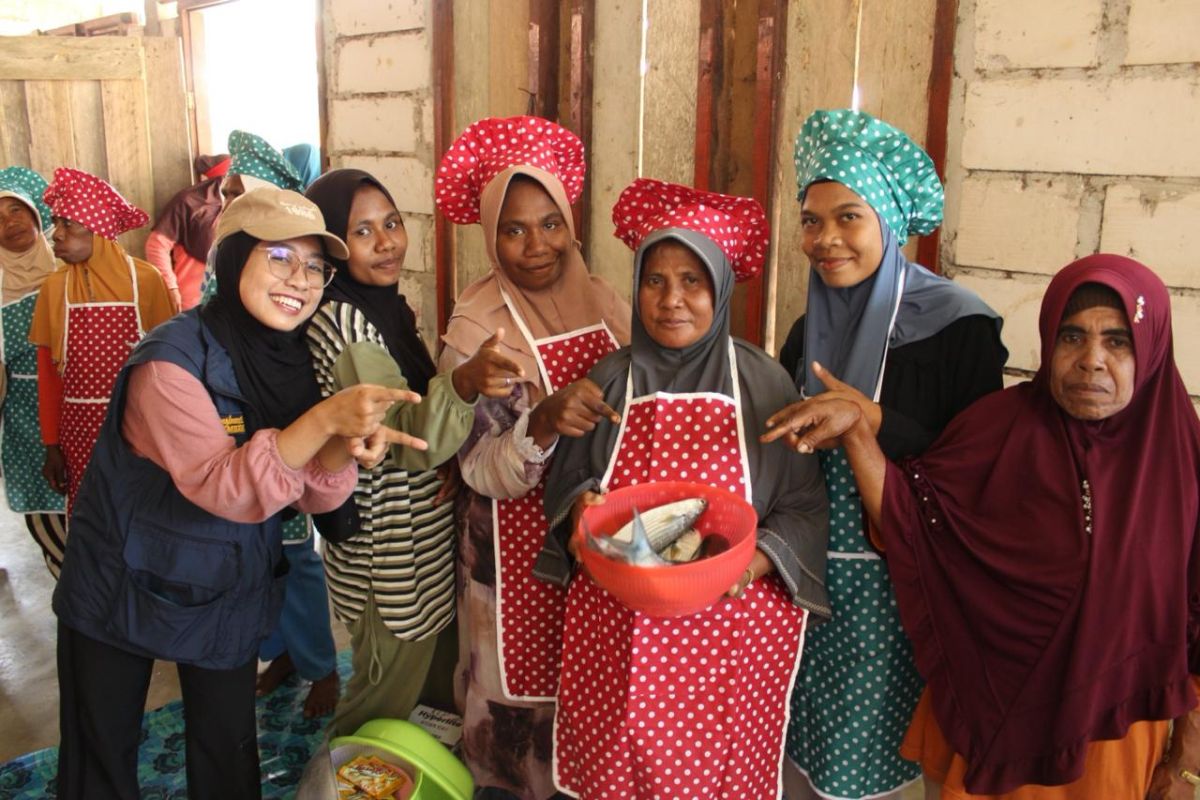
Jakarta (ANTARA) - The Ministry of Transmigration (Kementrans), through the Patriot Expedition Team (TEP) of Hasanuddin University (Unhas), is assisting 20 women in Sahari Village, Fakfak Regency, West Papua, in processing ‘sibula’ fish—which is currently less in demand—into various food products.
The assistance covers everything from fishery product processing to packaging techniques. The 20 participants have been divided into four small business groups, all equipped with identical production tools.
Kasmiati, Chairperson of TEP Unhas, stated in a briefing received in Jakarta on Tuesday, that the mentoring is designed to ensure that processing skills can be sustained by residents after the programme concludes.
“We are providing intensive assistance to the residents so they can truly perform marine product processing independently, which will lead to their economic self-sufficiency in the future,” said Kasmiati.
The programme also targets male fishermen through training on hygienic catch handling. The equipment used during the activity has been handed over to the groups to enable continued production.
The Ministry of Transmigration noted that the products created by the residents include meatballs, nuggets, crackers, shredded fish (abon), and fish sambal.
One of the primary raw materials is ‘sibula’ fish, which, according to the Ministry, is abundant in local waters but has historically been less popular and held relatively low market value when sold only in its fresh state.
In addition to fish processing skills, TEP Unhas provided guidance on packaging sterilisation. This technique allows the fish sambal to be stored for up to four months at room temperature without the use of preservatives.
“Previously, the fish was only sold whole or for immediate consumption. Now, we can work independently to increase our household income,” said Nayu Ohebor, one of the programme participants.
Residents plan to subsequently form a permanent business group. Nayu added that the formation of this group will be discussed with the community to serve as a vehicle for maintaining production sustainability and business development.
“God willing, we will deliberate to form one permanent business group resulting from this activity,” she said.
The programme is part of the TEP 2026, which nationally involves 1,476 participants across 246 teams deployed to 53 transmigration areas.
The Ministry of Transmigration stated that this year’s TEP focuses not only on research and mapping but also on direct assistance and community engagement.
Hasanuddin University is one of ten partner universities to the Ministry of Transmigration within TEP 2026. The Ministry noted that Unhas manages 25 teams with 125 members, with the Weri-Saharey area in Fakfak Regency serving as one of the assignment locations under Unhas coordination.
The TEP 2026 programme is directed towards providing productive economic assistance and utilising appropriate technology according to the potential of each transmigration area.
The Minister of Transmigration, Muhammad Iftitah Sulaiman Suryanagara, previously stated that the development of transmigration areas must be tailored to the characteristics and potential of each region, rather than using a uniform approach.
This approach aligns with government policy, which emphasises improving human resource quality, innovation, productivity, strengthening cooperatives, and the downstreaming of natural resources as part of regional economic development.
Furthermore, the Coordinating Minister for Infrastructure and Regional Development, Agus Harimurti Yudhoyono (AHY), also emphasised the importance of enhancing human resource quality so that the community can play a larger role in development towards ‘Indonesia Emas 2045’.
In several directives, President Prabowo Subianto has positioned the downstreaming of natural resources, food security, cooperatives, and the strengthening of the village economy as key strategies to ensure that the community acts as both participants and beneficiaries of economic development.
Source: jawawa.id (https://jawawa.id/newsitem/ministry-of-transmigration-and-unhas-assist-fakfak-residents-in-processing-fish-into-food-products-1788869150)
Originally published by Antara (Indonesian) (https://www.antaranews.com/berita/5731600/kementrans-unhas-dampingi-warga-fakfak-olah-ikan-jadi-produk-pangan), translated from Indonesian