
Ministry of Trade ensures protection and facilitation for local labour-intensive industries
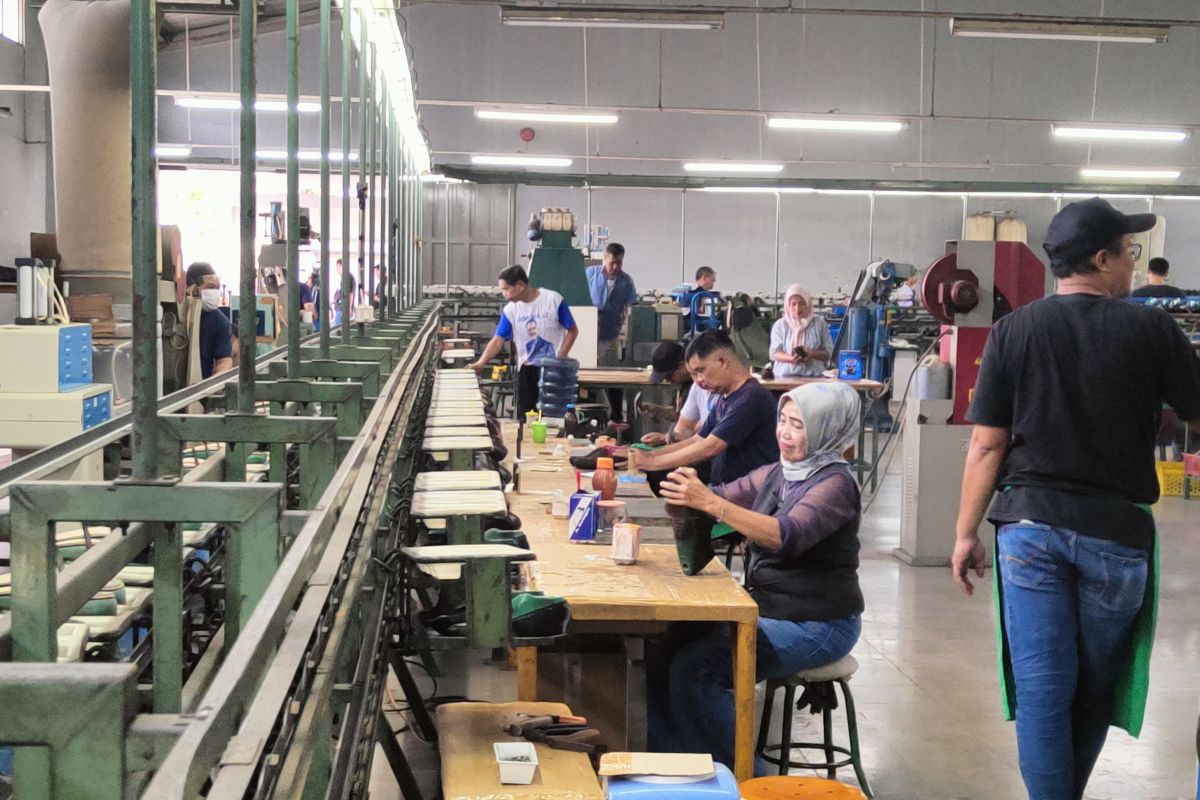
The Ministry of Trade (Kemendag) has ensured the protection and market facilitation for local labour-intensive industries, particularly textiles and footwear.
Deputy Minister of Trade Dyah Roro Esti Widya Putri emphasised that the ministry is actively encouraging and supporting local labour-intensive industries, especially footwear and textiles, which are Indonesia’s core export commodities.
“The Ministry of Trade always assists and facilitates to ensure the market is secure so that these producers can sell both domestically and abroad through the assistance I mentioned, and we always collaborate with other ministries, including the Ministry of Industry,” said Dyah during a visit to the Fortuna Shoe Factory in Bandung, West Java, on Monday.
As part of the protection measures for domestic products, the ministry is implementing additional import duties on products sold at prices lower than their normal value or fair market price in their country of origin as part of anti-dumping measures.
“We have implemented many anti-dumping measures so that we are not flooded with products from abroad,” she stated.
While she did not elaborate on specific goods or the countries involved, Dyah reaffirmed that these measures continue to be enforced to protect local industries and markets. “In principle, we are always processing them. If something is proven to disrupt our domestic market, we will follow up through our ongoing systems,” she added.
Furthermore, for local products, Dyah stated that the ministry is encouraging compliance with a minimum Domestic Component Level (TKDN) of 25 per cent, which is believed to create a positive multiplier effect for local communities.
It is noted that the government has officially issued Government Regulation (PP) Number 3 of 2026 as an amendment to PP Number 29 of 2021 regarding Trade Sector Implementation. This regulation serves as a strategic step to strengthen national trade governance and align oversight systems with the risk-based business licensing mechanism implemented by the government.
The amendment remains based on the mandate of Law Number 11 of 2020 on Job Creation, specifically the provisions regulating the supervision and implementation of the trade sector. Generally, PP Number 3 of 2026 aims to clarify the division of authority between central and regional governments, strengthen the governance of imports, exports, distribution, and warehousing, and bolster law enforcement instruments through a more effective administrative sanctions regime.
A key point in this new regulation is the affirmation of trade oversight authority. Both central and regional governments retain oversight authority within their respective scopes. However, the central government, through the Ministry of Trade, has gained a stronger role in overseeing import trade after goods leave the customs area.
Meanwhile, the authority of regency and municipal governments has been narrowed to the oversight of hazardous materials, warehouses, alcoholic beverages, as well as basic and essential goods within their respective regions.
Regarding import oversight, PP Number 3 of 2026 provides clarity on the division of duties between the Ministry of Finance, through customs authorities, and the Ministry of Trade. Oversight of goods within the customs area falls under the jurisdiction of customs, whereas trade oversight is conducted by the Ministry of Trade once goods enter the domestic distribution area. This is expected to create more effective coordination and avoid overlapping authorities between agencies.
According to the latest data released by the Ministry of Trade, the ministry seized illegal imported products worth IDR 26.4 billion during the January-July 2025 period across four cities—Surabaya, Makassar, Medan, and Bekasi—as a result of post-border customs area oversight.