
Ministry of Trade Cuts Export Licensing through Trade Ministerial Regulations 5 and 6 of 2026
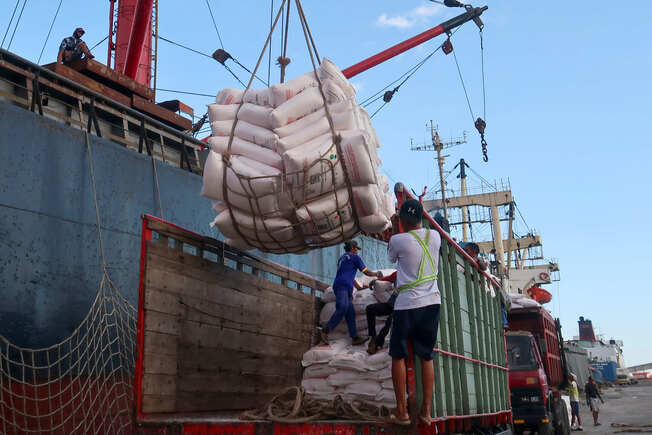
The Indonesian Ministry of Trade has officially issued two new regulations to simplify the export process and increase the competitiveness of business actors. These policies are outlined in Trade Ministerial Regulation Numbers 5 and 6 of 2026, which will take effect on 1 April 2026.
Trade Minister Budi Santoso stated that the issuance of these rules is part of deregulation to cut administrative barriers and improve the investment climate.
“The government is carrying out deregulation and simplification of export licensing to increase ease of doing business and improve the investment climate,” Budi said, quoted from a press release received on Tuesday (7/4).
He explained that both regulations relax export policies through the elimination of several obligations, sanctions, and reductions in prohibition and restriction documents (lartas).
In line with this, Director General of Foreign Trade Tommy Andana said the policy revision is designed to meet the business world’s needs for a faster and more efficient export process.
“This revision simplifies regulations while adapting to global trade dynamics,” he said.
In its implementation, the government is simplifying export requirements for several strategic commodities. For industrial tin commodities, for example, the requirements are now just an Export Approval (PE) and Surveyor Report (LS), while the Registered Exporter (ET) status has been eliminated.
In the oil and gas sector, the provisions have also been simplified to only PE and LS. For coal commodities, the government has eliminated the obligation for cooperation agreements in ET applications as well as minimum export realisation requirements.
In addition, the government is encouraging the digitalisation of services through the issuance of electronic and automatic PE for certain commodities such as rice and fishery products. This system has also been integrated with the Indonesia National Single Window to accelerate real-time data verification.
Other steps include harmonising regulations across agencies, including the transfer of authority for certain documents and adjustments to nomenclature to avoid policy overlaps.
Tommy added that the preparation of these rules has involved cross-ministerial coordination and input from business actors. The government hopes this policy can strengthen national export performance amid global uncertainties.
“We hope exporters can continue to maintain trade balance performance and become a stabiliser for the Indonesian economy,” he concluded.
Source: jawawa.id (https://jawawa.id/newsitem/ministry-of-trade-cuts-export-licensing-through-trade-ministerial-regulations-5-and-6-of-2026-1775591503)
Originally published by Media Indonesia (https://mediaindonesia.com/ekonomi/877221/kemendag-pangkas-perizinan-ekspor-lewat-permendag-5-dan-6-tahun-2026), translated from Indonesian