
Ministry of Tourism promotes culture as a pillar of sustainable tourism
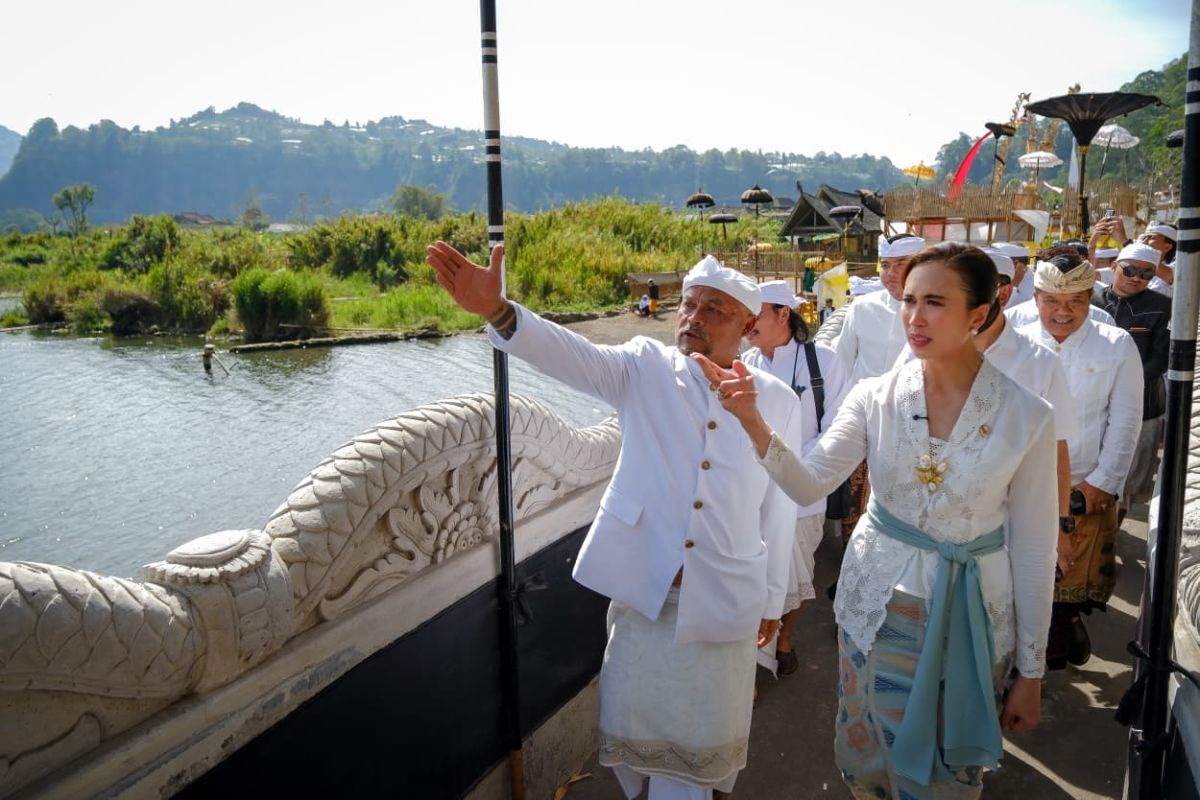
Jakarta (ANTARA) - The Ministry of Tourism is encouraging culture to become one of the core strengths in developing high-quality and sustainable tourism, while maintaining the preservation of traditions and values alive within society.
Minister of Tourism Widiyanti Putri Wardhana, in an official statement confirmed in Jakarta on Wednesday, cited the Upacara Tawur Agung Manca Wali Krama at Pura Hulundanu Batur, Songan Village, Kintamani, Bali, which takes place from 12 August to 6 October 2026, as an example.
Widiyanti assessed that the holding of this decennial ritual ceremony reflects the strength of high-quality and sustainable culture-based tourism.
“The Tri Hita Karana values in this ceremony reflect the soul of Indonesian tourism. Tourists come not merely to enjoy natural beauty, but also to experience the living culture and the hospitality of the people,” she said.
The implementation of the ceremony is an expression of sincere devotion, togetherness, and the spirit of ‘gotong royong’ (mutual cooperation) that continues to be maintained and passed down through generations.
The Tri Hita Karana values reflected in the ceremony are also a vital part of the soul of Indonesian tourism. Living culture and community hospitality serve as attractions that provide meaningful experiences for tourists while complementing the natural beauty of Bali.
The Ministry of Tourism, she stated, is committed to continuing its presence in supporting the community to maintain the sanctity of the Mount and Lake Batur area, while simultaneously developing sustainable culture-based tourism that provides real benefits for the welfare of local residents.
The Batur area is a natural heritage site possessing rich biodiversity and culture. Batur was designated as Indonesia’s first UNESCO Global Geopark in 2012, covering an area of 36,640 hectares.
Water sourced from the Batur area plays a vital role as a source of life, fertility, prosperity, and the welfare of the Balinese people.
Tawur Agung Manca Wali Krama also serves as a momentum to strengthen awareness regarding the importance of maintaining the balance between the relationship between humans, God, and nature.
She also encouraged the younger generation to play an active role in continuing this noble traditional heritage to ensure its preservation, including maintaining the sanctity of the sacred Batur area and nurturing harmony and concord in communal life.
“We hope this traditional heritage will continue to be carried forward by the younger generations while maintaining the sanctity of the Batur area and remaining harmonious in togetherness. May this ceremony bring peace, prosperity, and harmony for Bali and all people in Indonesia,” said Widiyanti.
On the same occasion, Widiyanti continued her working visit to the Batur UNESCO Global Geopark to directly observe educational and natural heritage preservation efforts, and to receive an explanation regarding the revalidation process of the Batur UNESCO Global Geopark, which has successfully maintained its ‘green status’ four times.