
Ministry of Tourism conducts training to strengthen civil servants' capacity
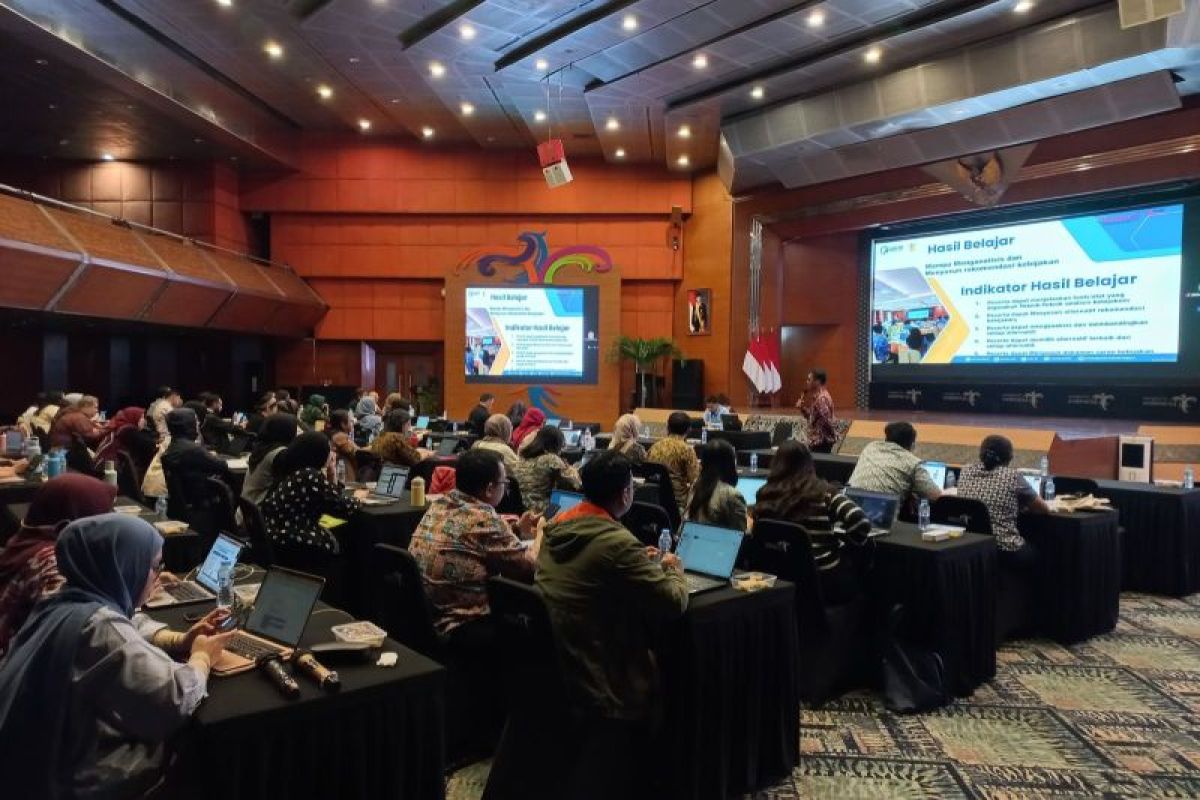
Jakarta (ANTARA) - The Ministry of Tourism held a Policy Brief Preparation Training, combining online learning via Zoom Meeting and in-person sessions at the Sapta Pesona Building in Jakarta from 8 to 16 April 2026, to strengthen the quality of human resources among civil servants (ASN).
“This training aims to enhance the capacity of civil servants’ human resources in preparing high-quality, evidence-based policy recommendations, while supporting the development of strategic tourism sector policies, including the National Tourism Development Master Plan (RIPPARNAS) 2026–2045,” said Assistant Deputy for Enhancing Civil Servant Human Resource Capacity and Vocational Education of the Ministry of Tourism, Andar Danova L. Goeltom, in an official statement confirmed in Jakarta on Wednesday.
Andar stated that the training was provided to civil servants in functional positions as policy analysts as a strategic effort to produce targeted tourism policies that are data-based and have a real impact on national development.
On the first and second days, participants were equipped with the basics of policy analysis, including problem identification techniques using the problem tree method and 5 Whys, understanding the differences between policy problems and research, and the use of multi-criteria analysis in policy formulation.
Entering the third day, participants received reinforcement on strategic policies, including a deep understanding of policy briefs and their role in the decision-making process, as well as materials related to RIPPARNAS and bureaucratic reform.
On the fifth day, participants practised drafting policy briefs with intensive guidance from facilitators from the National Institute of Public Administration (LAN) and the Ministry of Tourism.
According to him, this process continued with revisions and refinements of the documents, emphasising the quality of analysis, the linkage between problems and solutions, and concise and persuasive presentation.
Andar emphasised that the training ran smoothly and successfully improved participants’ understanding and skills in policy analysis.
Participants were able to prepare systematic, data-based, and applicable policy briefs to support decision-making in the tourism sector. In addition, collaboration among participants in group work also showed effective results.
“As a follow-up, participants will refine their policy briefs based on evaluator feedback,” said Andar.
The Ministry of Tourism will also encourage further capacity building and more in-depth discussions on implementing the training outcomes on various strategic tourism issues.