
Ministry of Social Affairs Reveals 45 Per Cent of Social Assistance Mistargeted
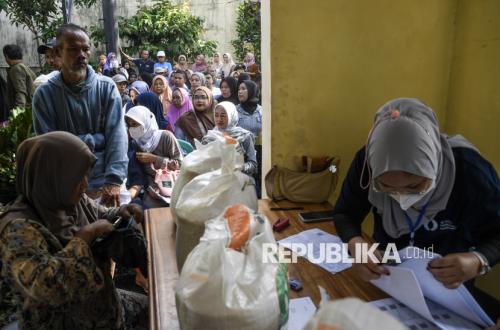
The Ministry of Social Affairs (Kemensos) has revealed that 45 per cent of social protection distributions are indicated to be mistargeted. This finding is one of the primary reasons the government is improving the database of social assistance recipients through the National Single Social and Economic Data (DTSEN).
Andy Kurniawan, Expert Staff to the Minister of Social Affairs for Planning and Strategic Policy Evaluation, stated that mistargeting is a key issue preventing social protection budgets from achieving maximum impact on poverty alleviation. In 2025, the social protection budget reaches nearly Rp 504 trillion, with approximately Rp 78 trillion allocated to the Ministry’s specific programmes, namely the Family Hope Programme (PKH) and Basic Food Assistance (Sembako).
“According to studies by the National Economic Council, 45 per cent is suspected to be mistargeted, while the remaining 55 per cent aligns with the designated deciles. From this alone, we can conclude: imagine if we did not have deciles, would we be able to correct this inaccurate 45 per cent mistarget?” Andy said during a public discussion on the Methodology of Decile Determination and Poverty Measurement in Indonesia, in Jakarta, on Friday (11/9/2026).
According to him, mistargeting is also a reason why social protection programmes have not reached their full potential. The large budget for poverty alleviation will not be optimal if assistance is not received by the people who need it most.
“Indonesia has never significantly alleviated poverty; the decline remains stagnant. Why? Even though the budget for poverty alleviation and social protection is large. The question is why? Because all programmes are not reaching their maximum potential. One of the causes is mistargeting,” said Andy.
Kemensos also found issues with social assistance recipients who have been receiving aid for a very long time. Andy noted that there are 4.5 million recipients who have received assistance for more than five years, including 36,460 individuals who have been receiving aid for over 18 years.
On the other hand, there are groups of people in need of assistance who are not included in the recipient data. These groups include the elderly, persons with disabilities, and abandoned individuals who do not receive social assistance because they are not registered in the system.
“Therefore, by design, the exclusion error is very high. Thus, it is vital for us to rectify this,” said Andy.
The government is now using the DTSEN to improve the targeting accuracy of social protection programmes. During the transition from the Integrated Social Welfare Data (DTKS) to the DTSEN, the government is conducting ground checks on 12 million beneficiary families to identify recipients experiencing both inclusion and exclusion errors.
As a result, approximately 4.3 million new beneficiary families who previously never received social assistance can now receive aid. Andy mentioned that these 4.3 million families fall within Deciles 1 to 4.
At the same time, the government is gradually transferring recipients from higher deciles to community groups with lower levels of welfare. Andy emphasised that these changes are not intended to reduce the social assistance quota.
“The social assistance remains; the quota remains. PKH at 10 million, BPNT at 18 million, PBI at 96 million. It is just that those who previously received aid in Decile 10, Decile 6, or Decile 7, we are moving to those in Decile 1, 2, and 3,” said Andy.
He added that the government will not rely solely on deciles to determine eligibility. Administrative data will be used to strengthen the verification process, including through National Identity Numbers (NIK) and biometrics, which can be linked to asset ownership information and other administrative data.
The government aims to implement the new social assistance distribution mechanism by 2027. Through this mechanism, individuals in need can apply for assistance, after which the government will conduct eligibility verification using available data.
Source: jawawa.id (https://jawawa.id/newsitem/ministry-of-social-affairs-reveals-45-per-cent-of-social-assistance-mistargeted-1789128012)
Originally published by Republika (https://ekonomi.republika.co.id/berita/tl7455490/kemensos-ungkap-45-persen-bansos-terindikasi-tak-tepat-sasaran), translated from Indonesian