
Ministry of Social Affairs Involves Change Agents to Support Social Assistance Digitalisation
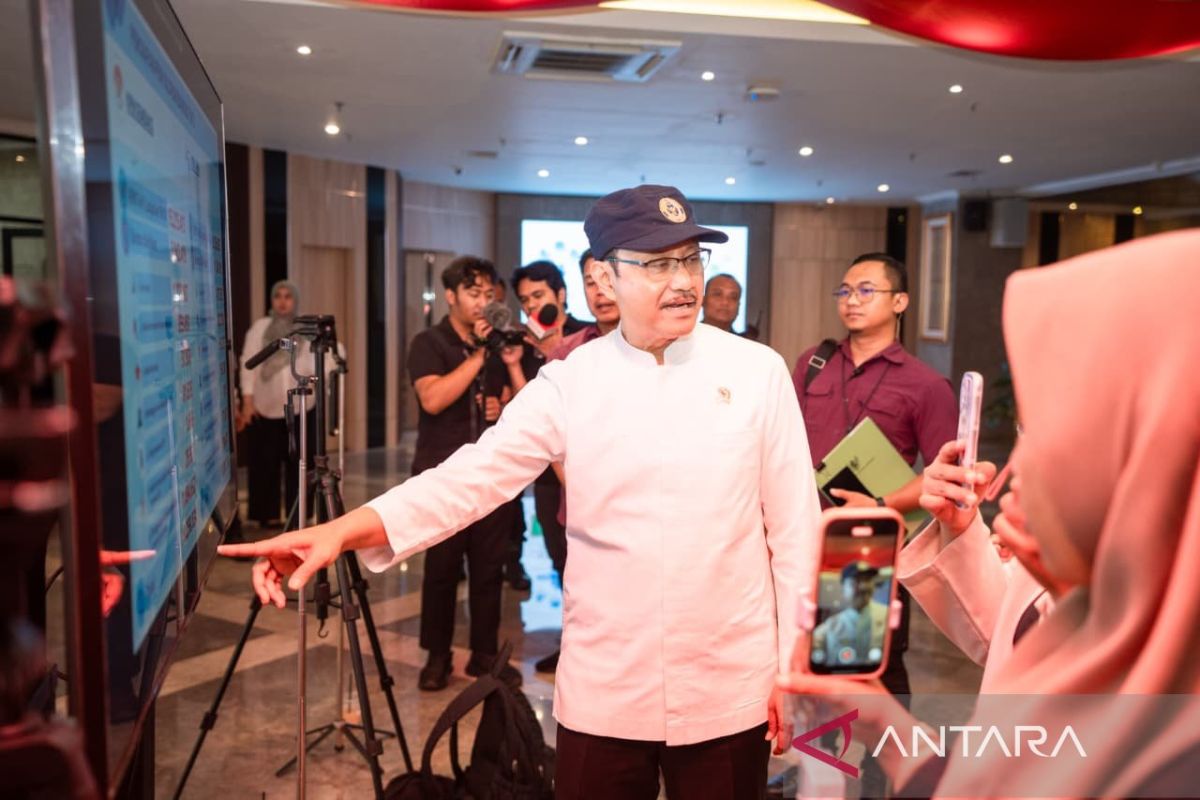
Jakarta (ANTARA) - The Ministry of Social Affairs is deploying tens of thousands of volunteers and assistants, acting as ‘change agents’, to assist underprivileged communities who lack digital devices, ensuring they remain served during the restructuring and improvement of social assistance (bansos) data.
The Minister of Social Affairs, Saifullah Yusuf, stated in Jakarta on Wednesday that this step is part of an effort to digitally transform the disbursement and proposal process for social assistance, without overlooking the technological access limitations faced by some citizens.
“We are involving assistants, community leaders, and volunteers, whom we call change agents, to accompany the community during the digitalisation of social assistance. For instance, during the trial in Banyuwangi, we involved tens of thousands of change agents,” said the Minister, popularly known as Gus Ipul.
The eligibility testing application is directly linked to data from other ministries and agencies, such as the Ministry of Agrarian Affairs and Spatial Planning/National Land Agency (ATR/BPN) regarding land ownership, and the Indonesian National Police regarding motor vehicle ownership.
The government is currently implementing social assistance digitalisation across 153 regencies/cities in 38 provinces. The digitalisation of social assistance registration for the Family Hope Program (PKH) and Non-Cash Food Assistance (BPNT) is already underway, reaching over 3 million registered families, moving towards a target of 49 million families, or more than 50 per cent of Indonesian families, upon full implementation.
When asked about complaints regarding the adjustment or cessation of assistance for some poor residents, Gus Ipul emphasised that this was not triggered by changes in the quarterly social assistance decile, but rather by data matching related to indications of involvement in online gambling activities or data from other ministries.
Deciles are used for ranking to determine the socio-economic condition of a family. Deciles 1-5 represent poor to vulnerable-poor families, 6-8 represent middle-income families, and 9-10 represent the upper class or wealthy.
Families within deciles 1-5 are eligible for government intervention programmes, including social assistance ranging from the Family Hope Program, health insurance, food assistance, education, and more.
“As for the social assistance deciles, our data for the third quarter is already processing and underway. Regarding the revocation of assistance such as scholarships or PIP, that falls under the jurisdiction of the Ministry of Primary and Secondary Education to provide explanations,” said Gus Ipul.
Gus Ipul emphasised that the monthly and quarterly nature of social assistance data updates provides space for citizens to perform corrections or data improvements if discrepancies are found in the field. This includes beneficiaries whose social assistance accounts are indicated to be used for online gambling transactions, who can file an appeal by attaching accurate evidence.
“There is already a mechanism for proposals and appeals, and there are officers to handle them. The purpose of this data matching is to ensure our social assistance is accurately targeted,” he said.