
Ministry of Social Affairs Explores Collaboration to Send People's School Graduates to Work in Japan
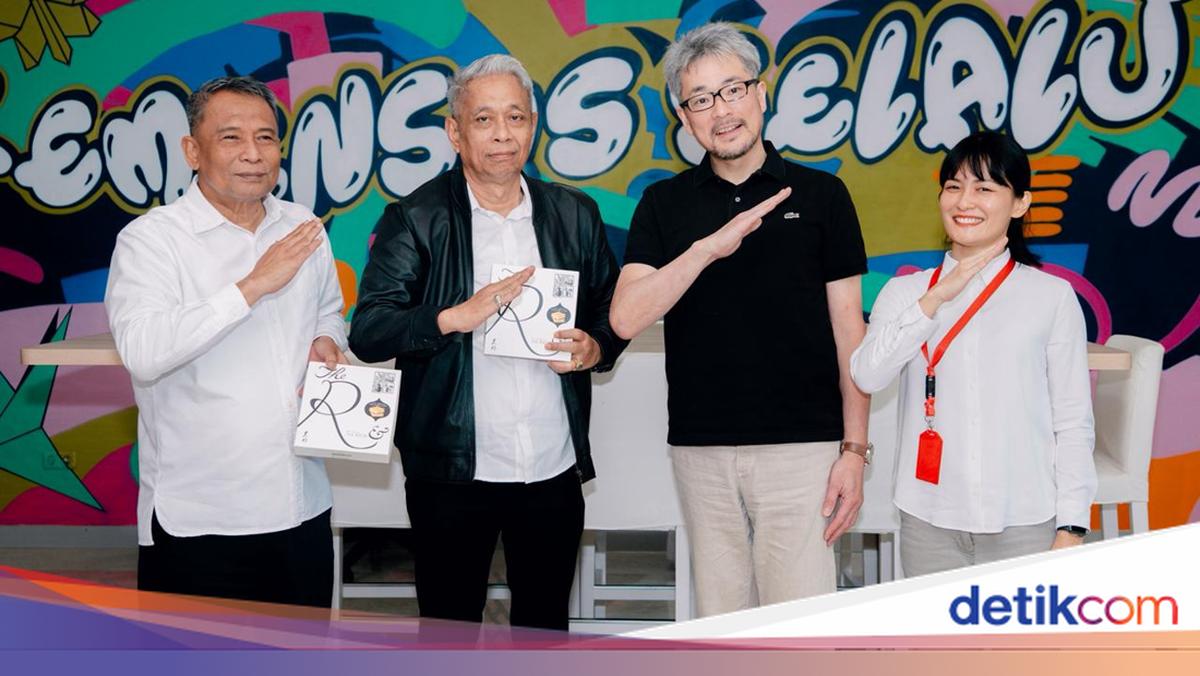
Indonesia’s Ministry of Social Affairs (Kemensos) is opening opportunities for collaboration with Regiono Group to prepare prospective caregiver workers to be sent to Japan. The prospective workers to be prepared are graduates of People’s Schools and social assistance recipients to strengthen the graduation programme.
“So from poor families, then we train them, yes, as caregivers. And indeed, we hope this can become a permanent, strategic collaboration,” said Deputy Minister of Social Affairs Agus Jabo Priyono, in a written statement on Monday (13/4/2026).
He conveyed this when receiving CEO of Regiono Group Nakashima Yasuharu at the Kemensos office in Central Jakarta on Monday (13/4).
Regiono Group is a Japanese institution focused on education and healthcare, including care for the elderly and children. The institution operates in Fukuyama and Hiroshima.
“We hope this collaboration continues. So our task is to provide caregivers. We train the caregivers, then they depart,” said Agus.
Agus stated that this collaboration is expected to support Kemensos’s programme in terms of graduation or improving community welfare.
Agus emphasised that his side is currently working to strengthen the graduation programme.
In addition, Agus explained that the group that can be prepared to become caregivers are graduates of People’s Schools. Graduates who want to work directly can be facilitated to meet that need.
“After graduating from high school, there will be many of them. That means the prospects for transferring caregivers from Indonesia to Japan have great potential,” explained Agus.
At the same location, Director General of Social Rehabilitation at Kemensos Supomo stated that the curriculum applied at People’s Schools is organised to train and develop students’ talents, so they have the ability to work after graduating from school.
“So we have quite a few in districts and cities, all have People’s Schools. That’s where we prepare the children to become caregivers,” said Supomo.
“So in the final curriculum, if they don’t want to go to university and prefer to work, that’s where we also include it, we’ve prepared it. So once they graduate from that, they can depart to there (Japan),” he continued.
Supomo added that Kemensos will also invite other stakeholders to follow up on this collaboration opportunity. One of them is the Ministry of Indonesian Migrant Worker Protection (KP2MI).
“Therefore, in the future, after perhaps going to Japan, there will be recommendations given to us. Then we will invite KP2MI to regulate the collaboration, because many need it,” said Supomo.
“I realise that if only one institution collaborates, the opportunities are not great. But if there are many, then there will be more. And we want to facilitate our citizens who need jobs to become caregivers,” he added.
CEO of Regiono Group Nakashima Yasuharu stated that over the next few years, his side needs as many as 400 caregivers to work in Japan.
The caregivers will later work in social homes to care for children or the elderly for 5 days a week. Their working duration is 8 hours. Nakashima said his side is greatly helped by workers from Indonesia.
“We, as Japanese citizens, are also helped by Indonesians,” he concluded.