
Ministry of Social Affairs Explains Reasons Behind DTSEN Decile Changes
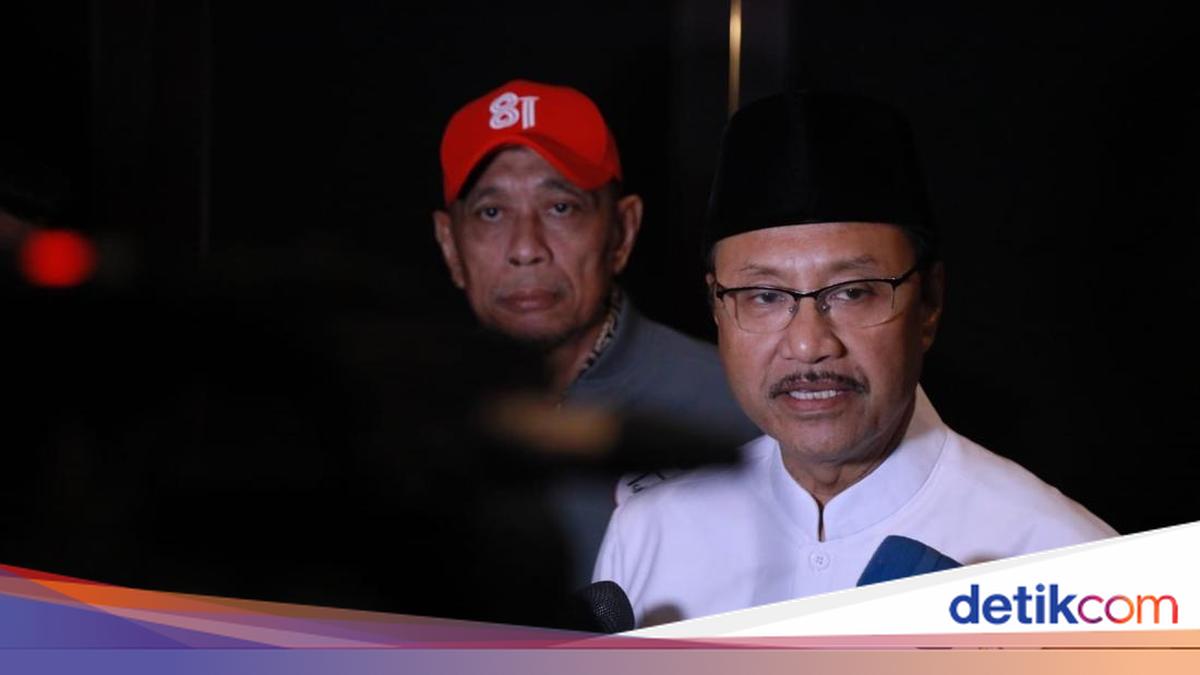
The Ministry of Social Affairs has stated that the significant changes previously observed in the deciles of the National Socio-Economic Single Data (DTSEN) Volume 3 have been corrected through DTSEN Volume 3.1, published by the Central Bureau of Statistics (BPS).
The Minister of Social Affairs, Saifullah Yusuf (Gus Ipul), stated that the government is continuously conducting consolidation and updates to the DTSEN to improve data accuracy. These updates are carried out through various sources, including collaboration with local governments. The recent changes were partly influenced by the inclusion of approximately 12 million new data entries from the National Population and Family Planning Board (BKKBN).
“The 12 million new data entries from BKKBN had entered without undergoing verification and validation, leading to fluctuations. This has now been stabilised, tidied, verified, and validated. God willing, in the next 1-2 weeks, this data will become even more accurate,” said Gus Ipul in a written statement on Friday.
An expert advisor to the Minister for Planning and Strategic Policy Evaluation, Andy Kurniawan, explained that DTSEN deciles do not determine an individual’s level of wealth or specific income. Instead, they represent a relative ranking of the population’s welfare levels nationwide. The population is ranked from the lowest to the highest level of welfare and divided into ten groups, known as deciles.
“A decile is not a certificate of being rich or poor. Deciles cannot be equated directly with income. You cannot say Decile 1 earns this much or Decile 10 earns that much,” he said.
Because the system is relative, an individual’s decile position can change even if their economic condition remains unchanged. This occurs because the status of other families in the national ranking may also shift.
“For example, if there is a disaster in Sumatra causing many people to fall into poverty, my decile will automatically rise. Because if the national ranking is recalculated, as some people move down, others must move up (in decil rank),” he added.
Andy noted that the DTSEN is updated every three months, resulting in four data versions per year. The significant decile changes in Volume 3 occurred following the integration of the 12 million new BKKBN records.
He noted that the issue of decile changes gained significant attention as it coincided with university admissions, particularly for the Indonesia Smart Card (KIP) pathway, alongside the update of DTSEN Volume 3.
“These 12 million new data entries were the source of the update in Volume 3. This update caused the decile fluctuations to feel very significant. This was immediately evaluated by BPS, and we have taken action regarding the specific cases reported by the public,” said Andy.
He emphasised that a decile is not the primary requirement for receiving social assistance, but rather serves as a priority consideration. Each assistance programme maintains its own specific criteria and regulations.
“For instance, if there are 10 people in a room entitled to assistance, but the government only has funds for 5, the decile functions to select those 5. Those in Decile 1 certainly take priority over those in Decile 4, and Decile 4 takes priority over Decile 5. That is how priority is determined,” he asserted.
Furthermore, criteria for social assistance recipients are tied to each specific programme. For example, even if someone is in Deciles 1 to 4—the priority group for the Family Hope Programme (PKH)—they cannot receive assistance if they fail to meet other criteria, such as being a civil servant (PNS).
An increase in decile does not automatically mean an individual has become wealthier or has lost their right to social assistance. Recipient determination still considers programme criteria and available quotas.
“There is a perception that if your decile rises, it means you have become wealthier, and therefore your assistance is lost. This is entirely untrue. And if assistance is lost, the public perception is that it has been revoked or diverted to other programmes. This is incorrect, as the total amount of social assistance remains the same or even increases. The reason some eligible people do not receive assistance is simply due to limited quotas,” Andy explained.
Regarding the data changes in DTSEN Volume 3, BPS has released DTSEN Volume 3.1 as a correction to rectify the significant spikes in decile shifts previously observed.
Members of the public who feel their DTSEN data is inaccurate can request updates through village or sub-district governments via the SIKS-NG operator, through ground checks by PKH facilitators, BPS, or local governments, or independently via the Cek Bansos application.