
Ministry of Social Affairs: DTSEN Update is Part of Refining Decile Determination
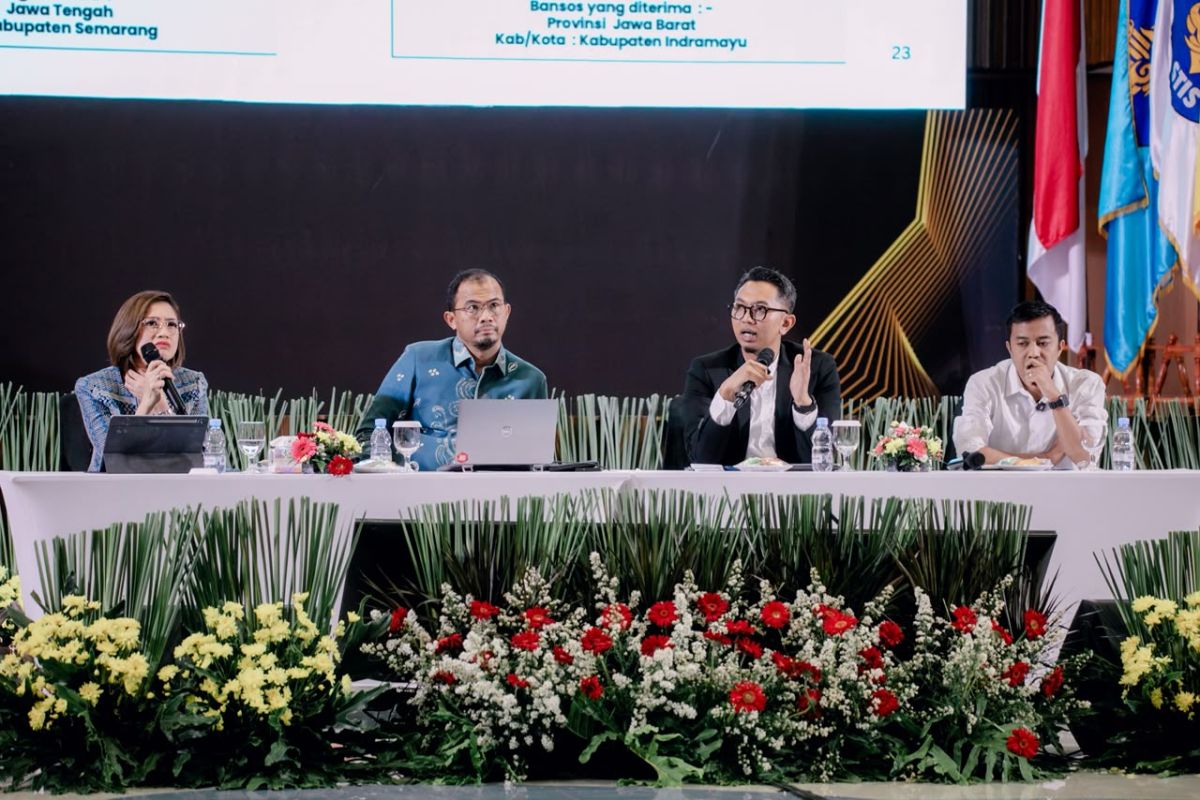
The Ministry of Social Affairs (Kemensos) has noted that approximately 4.3 million new Beneficiary Families (KPM) have been included in the social assistance recipient list following the utilisation of the Single Socio-Economic and National Data (DTSEN).
Andy Kurniawan, Expert to the Minister of Social Affairs for Planning and Strategic Policy Evaluation, stated that the DTSEN update is necessary to respond to changes in the socio-economic conditions of the community, as well as various discrepancies discovered in the field.
“Regarding matters that may appear erroneous in the field, we are responding to all of them. All input from the media is being addressed and acted upon as part of the update process,” Andy said during a discussion on Decile Determination Methodology and Poverty Measurement in Indonesia at the STIS Polytechnic of Statistics, Jakarta, on Friday.
According to him, the use of DTSEN provides a broader basis for observing the socio-economic conditions of the population. One visible result is the inclusion of community members who were previously not recorded as social assistance (bansos) recipients.
“Previously, many were unable to receive social assistance; now, these 4.3 million new KPM are receiving it, because we are now using deciles,” he said.
Furthermore, Andy added that the government is open to feedback to refine both the methodology and the determination of deciles. Academic discussions serve as a space to evaluate this process.
“There was input from Media Askar from Celios, which I believe is constructive for the government to improve everything—to refine the methodology, the deciles, and the DTSEN. We are open to this,” he said.
According to Andy, the update does not stop at administrative data renewal but also includes responding to findings in the field.
Each data source possesses different characteristics and levels of information completeness, making the integration process a vital part of compiling the socio-economic database.
According to Setia, data must be continuously updated because community conditions change over time.
“Data must indeed be updated because the condition of the community changes. There are those who change their domicile, those who pass away, and so on,” he said.
In determining deciles, BPS (Statistics Indonesia) compiles welfare rankings based on the socio-economic characteristics of households. These rankings are not determined solely by income, as direct information regarding expenditure or income is not available for all households.
Regional characteristics also form part of the modelling process. BPS develops models based on the conditions of each regency/city because the socio-economic characteristics of the community differ between regions.
“The model is built for each regency/city because the characteristics of each region are different,” he said.
The results of the modelling are then used to compile socio-economic condition rankings nationally. According to Prof. Setia, the process is continuously evaluated to improve model accuracy and reduce errors that may arise from both the model and the quality of the data used.
He added that the refinement of methodology is an ongoing process alongside data updates. Thus, changes in the socio-economic conditions of the community can be reflected in the database used by the government.
Source: jawawa.id (https://jawawa.id/newsitem/ministry-of-social-affairs-dtsen-update-is-part-of-refining-decile-determination-1789139522)
Originally published by Antara (Indonesian) (https://www.antaranews.com/berita/5737147/kemensos-pemutakhiran-dtsen-bagian-dari-penyempurnaan-penentuan-desil), translated from Indonesian