
Ministry of Social Affairs, BPS, and CELIOS Convene to Discuss Decile Controversy
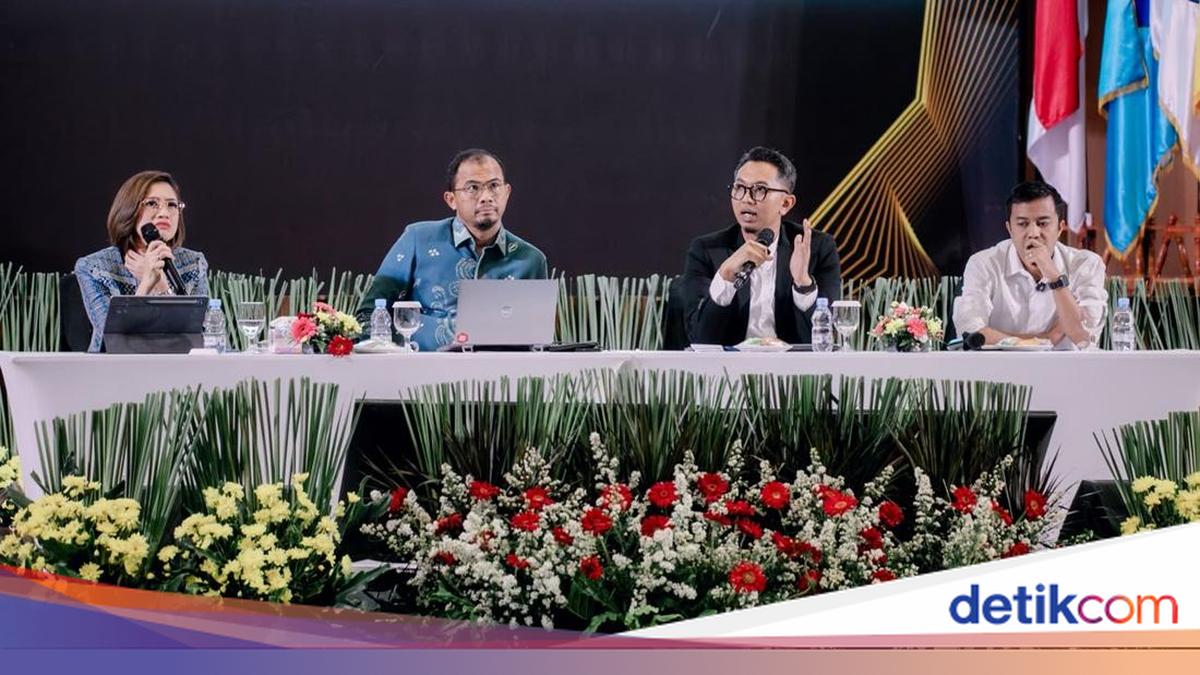
The Indonesian Ministry of Social Affairs (Kemensos), alongside the Central Bureau of Statistics (BPS), academics, and researchers, openly reviewed the controversy surrounding deciles and the targeting accuracy of social assistance (bansos) that has recently been widely discussed by the public.
During the ‘Discussion on Decile Determination Methodology and Poverty Measurement in Indonesia’ held at the STIS Polytechnic Statistics Auditorium in Jakarta, all materials were reviewed, ranging from decile determination methods and limitations to areas for improvement to enhance the accuracy of social assistance targeting.
Andy Kurniawan, Expert Staff for Planning and Strategic Policy Evaluation at the Ministry of Social Emancipation, explained that deciles are necessary because social protection programmes, such as the Family Hope Programme (PKH) and the Basic Food Programme, are targeted. When the number of people in need exceeds the programme’s capacity, the government must establish priorities.
“If there are 100 poor people here, but the government only has funds for 80, the government must choose who those 80 people are. How is this done?” said Andy in a written statement on Friday (11/09/2026).
“We rank them starting from the most disadvantaged. That is essentially the function of the decile,” he added.
According to Andy, one of the previous issues regarding inaccurate targeting was that the database did not cover the entire population. The Integrated Social Welfare Data (DTKS), for instance, covers approximately 43% of the population, meaning people in need may potentially remain unrecorded.
“If there is a question as to why Person A receives social assistance and Person B does not, even though both are poor, the answer can be simple: because they are not yet in the data. From that alone, it can be confirmed that there is a potential for exclusion error,” Andy stated.
This condition is one of the reasons the government is integrating various data sources into the National Single Social and Economic Data (DTSEN). Since its use as the basis for social assistance distribution in the second quarter of 2025, more than 4.3 million new Beneficiary Families (KPM) in deciles 1-4, who previously received no assistance, have now obtained aid.
Andy added that targeting improvements are being carried out gradually to avoid sudden shocks. While recipients of PKH and the Basic Food Programme were still spread into higher deciles at the beginning of 2025, by the third quarter of 2026, recipients of both programmes have been directed towards deciles 1-4.
“We cannot move everyone all at once. The community must not experience such a large shock. Therefore, the government is doing this in stages,” said Andy.
Andy emphasised that the government is open to feedback and acknowledges that there is still room for improvement, including input from the Founder of the Centre of Economics and Law Studies (CELIOS), Media Askar Wahyudi.
“We do not reject any of Mr Media’s comments. They are all fine,” said Andy.
“We must be honest that there are still weaknesses and we must continue to improve them,” he continued.
Andy likened the refinement of the DTSEN to repairing potholes on a road. The process may cause temporary inconvenience, but it is necessary for better conditions.
“Today we are ‘stuck’ in the process of repairing the road. Today we are repairing the DTSEN,” said Andy.
The government also provides a mechanism for correction when data does not match factual conditions. Andy cited the example of a resident of Bogor, Sri Dwi Riyati, who was initially recorded above decile 4 and thus deemed ineligible. After filing an appeal and updating her data, her status changed to potentially eligible.
To ensure that those in need are not overlooked, the government is also preparing the National Neighbour Care Movement. Through this movement, the community is encouraged to help neighbours or family members in need who face obstacles in registering themselves, including through the role of Social Protection Agents.
Andy ensured that findings of discrepancies in the field, as well as input from various parties, will continue to be followed up.
“If there are errors in the field, we respond to all of them. All input is responded to and immediately followed up as part of the update process,” said Andy.
Setia Pramana, Director of Statistical Methodology and Data Science at BPS, explained that deciles are a relative ranking of socio-economic conditions, not a permanent category attached to an individual or family.
“A decile is an order, a ranking. Do not think of decile one as a fixed group,” said Setia.
“It is relative to its comparison group,” he added.
Ranking is conducted by estimating per capita expenditure based on household characteristics, such as housing conditions, family composition, access to basic facilities, and asset ownership. BPS uses the Proxy Means Test (PMT) approach, which is continuously refined using various statistical methods and machine learning.
Setia admitted that, like other statistical models, estimation results still have the possibility of error, making data quality and currency essential.
“This does not mean it is finished. It is still a process. How we can improve the model, how to obtain accurate and up-to-date data, is our shared task,” said Setia.
The Founder of CELIOS, Media Askar Wahyudi, reminded that data errors in social protection programmes have direct consequences for the community.
“Data has a feeling; numbers have a soul,” said Media.
According to Media, attention must be paid to exclusion errors so that those who truly need it do not lose access to assistance. He also encouraged the development of methods that can more comprehensively reflect the economic condition of the community.
“The community may not need an explanation about the Proxy Means Test. The community only wants the existing data to match the reality they face,” he said.
Previously, Minister of Social Affairs Saifullah Yusuf (Gus Ipul) stated that data updates are carried out continuously through collaboration between ministries/agencies, local governments, and BPS.
“Since 2025, every quarter of distribution involves improvements to the social assistance recipient data…”
Source: jawawa.id (https://jawawa.id/newsitem/ministry-of-social-affairs-bps-and-celios-convene-to-discuss-decile-controversy-1789139205)
Originally published by detikcom (https://news.detik.com/berita/d-8659105/kemensos-bps-dan-celios-duduk-bersama-bahas-polemik-desil), translated from Indonesian