
Ministry of Social Affairs and BPS Refine DTSEN, Deciles Divided into National and Regional Levels
The Ministry of Social Affairs (Kemensos) and Statistics Indonesia (BPS) continue to consolidate efforts regarding the updating of the National Single Social-Economic Data (DTSEN). This is because the data is dynamic and must be continuously adjusted to match conditions in the field.
“Indeed, this data is dynamic; we adjust it according to developments in the field. There is one thing that needs to be conveyed: deciles are divided into those for the national level, regional deciling, and district/city levels,” said Social Minister Saifullah Yusuf, or Gus Ipul, in a written statement on Thursday (16/4/2026).
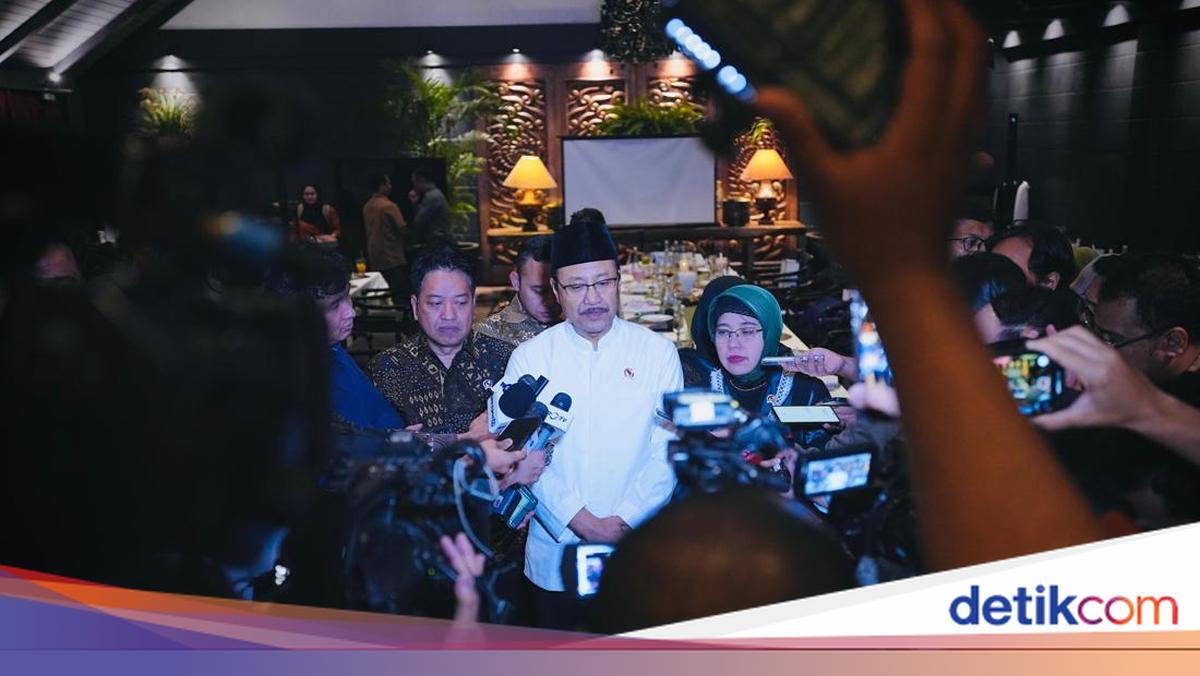
Gus Ipul conveyed this after a consolidation meeting with BPS Chief Amalia Adininggar Widyasanti, which was also attended by members of the press in Setiabudi, South Jakarta, on Wednesday (15/4/2026) evening.
Gus Ipul explained that the decile ranking, divided into national, regional (provincial), and district/city levels, needs to be well understood and serves as a guide for local governments in implementing programmes.
“For that reason, this needs to be understood by all of us, especially the regions, so that assistance provided by the government, including local governments, can be more on target,” said Gus Ipul.
Gus Ipul emphasised that Kemensos continues to make efforts to consolidate data in order to produce accurate data. Besides BPS, he said, local governments also play a role in the data updating process.
“Many regions are starting to realise how important regional data is to be consolidated with BPS. This certainly becomes a more concrete step in producing more accurate data,” he stated.
For the DTSEN updating process in the second quarter of this year, Gus Ipul emphasised that the data updating process can be done faster than the previous quarter. This achievement is certainly inseparable from the cooperation between Kemensos and BPS.
“Previously, BPS usually submitted on the 20th; now, alhamdulillah, thank you to Mrs BPS Chief, it can be submitted on the 10th, at the beginning of each quarter’s distribution. I am grateful for this, because with that, we can carry out the distribution more quickly,” said Gus Ipul.
On the same occasion, BPS Chief Amalia Adininggar Widyasanti explained that her side could accelerate the updating process by more than 10 days. This is inseparable from close collaboration with Kemensos and the Directorate General of Population and Civil Registration (Dirjen Dukcapil) of the Ministry of Home Affairs.
“So, it means collaboration with the Social Minister is for faster ground checks, then with Dukcapil, the reconciliation process with Dukcapil is also faster and more responsive, so we can accelerate the updating process,” said Amalia.
Furthermore, Amalia explained that the division of decile levels is due to differences in decile rankings in national data, regional (provincial), and district/city data.
“It means that within one province, they are ranked only within that province. So, if someone is, for example, decile 6 nationally, if they are in a very wealthy city, nationally decile 6, in a very wealthy area where everyone is wealthy, they could be decile 4 or 3,” she clarified.
She hopes that through this decile ranking, assistance programmes or policy interventions using the state budget (APBN) can use the national decile. Meanwhile, when local governments want to intervene using the regional budget (APBD), they then use the provincial decile.
“Then, determining which decile is eligible for intervention by the APBD is the policy of each region,” Amalia concluded.