
Ministry of Social Affairs Accelerates Social Assistance Digitalisation to Reduce Inclusion and Exclusion Errors
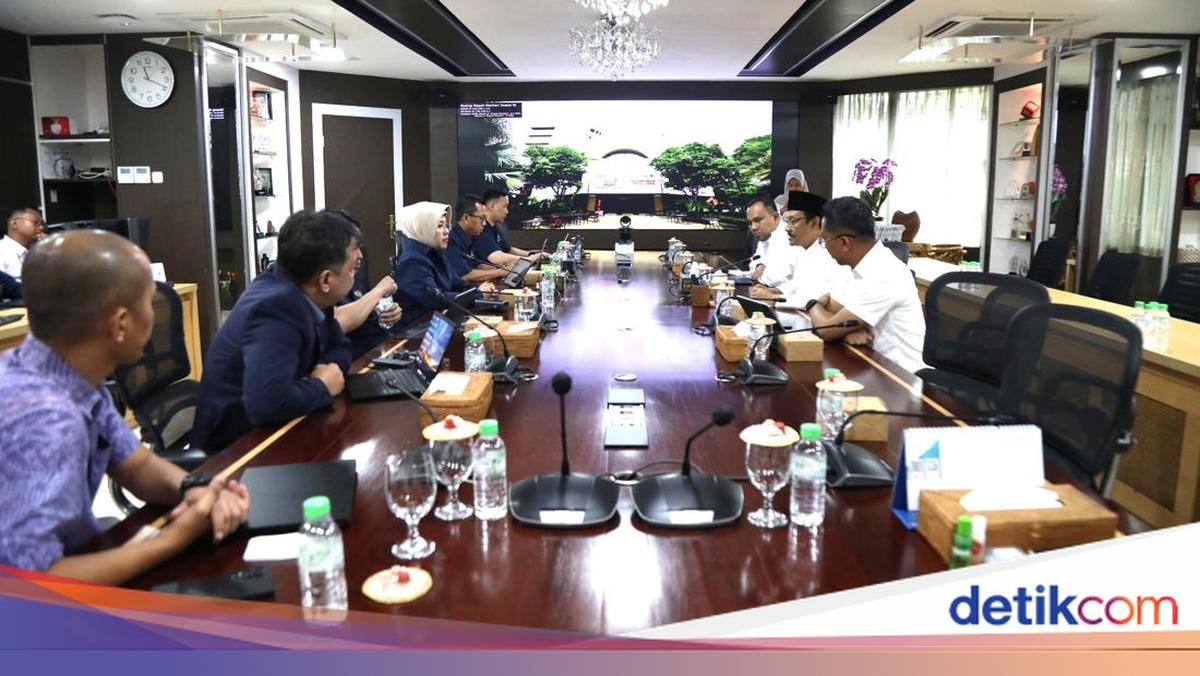
At the meeting, various matters related to strengthening the accuracy of social assistance distribution were discussed. This includes efforts to reduce inclusion and exclusion errors through data updates, utilisation of big data, and refinement of the beneficiary ranking model.
Inclusion error refers to individuals who are ineligible because they are already capable or wealthy yet registered as social assistance recipients. Meanwhile, exclusion error involves people who should be eligible (poor or meeting criteria) but are not registered or do not receive assistance. Both errors represent the main challenges in the precision of social data targeting in Indonesia.
Gus Ipul emphasised that digitalisation is a crucial part of implementing the Presidential Instruction regarding DTSEN and poverty alleviation. This is because all Ministry of Social Affairs programmes now use DTSEN as the basis for social assistance distribution.
“I want today to be a stage in the social assistance digitalisation process guided by Inpres numbers 4 and 8. So all programmes use DTSEN because that is the President’s order. With social assistance digitalisation, we are pleased to find things that may become our attention regarding social assistance not being on target,” said Gus Ipul in a written statement on Monday (11/5/2026).
He is optimistic that the continuity of the DTSEN base and the digitalisation process will improve the accuracy of social assistance, making it more targeted. “DTSEN does correct our data. Now DTSEN is strengthened with digitalisation. That means it becomes a continuous thread,” he explained.
Gus Ipul mentioned that the digitalisation trial conducted in Banyuwangi showed quite positive results. Now, digitalisation is beginning to be replicated in 42 districts/cities, with a target for national implementation by the end of 2026.
However, he acknowledged that there are still challenges with digital literacy in society. “But this must be gone through, to educate society going forward,” said Gus Ipul.
Gus Ipul also revealed the fact that errors in social assistance distribution remain high. In his view, digitalisation is an important step to gradually fix that issue.
Meanwhile, Amalia explained that digitalisation is not merely a technological transformation but a tool to accelerate DTSEN updates for greater accuracy and targeting.
“The essence is that digitalisation is a tool to smooth and update more quickly and accurately,” stated Amalia.
Currently, BPS is preparing improvements in measuring inclusion and exclusion errors through the results of the 2026 Economic Census. From that census, BPS will calculate societal deciles more accurately and compare them with the realisation of social assistance distribution by the Ministry of Social Affairs.
BPS will also strengthen the ranking model based on variables from the 2026 Economic Census through variable refinement and utilisation of big data. Amalia explained that technologies such as geotagging, satellite imagery, and photos of housing conditions will be used for processing the Proxy Means Test (PMT) model.
“We will utilise big data by overlaying geotagging with satellite imagery, plus photos of housing conditions (with) scoring method entering into the PMT model,” clarified Amalia.
Amalia added that BPS also plans to refine the sampling method for the National Socio-Economic Survey (Susenas) by using the updated DTSEN as the sampling frame basis.
“So the new Susenas going forward will also have its sampling frame basis from the comprehensively updated DTSEN,” explained Amalia.
On the same occasion, Prof. Arief emphasised the importance of transparency and a scientific approach in refining the PMT model.
“If we want to reduce uncertainty in information, there are two ways. First, ensure the PMT model is accurate and simple (through) a team and peer review process or an expert panel on PMT modelling in a more scientific manner. There is openness, transparency, and peer review process,” said Prof. Arief.
He added that the quality of up-to-date data is an important factor in improving social assistance accuracy. In his view, independent data updates through self-registration mechanisms, like the social assistance digitalisation trialled in Banyuwangi, need to be continuously expanded.
“Ensure the data is the most up-to-date through self-registration piloted in Banyuwangi and 42 (other areas),” he concluded.