
Ministry of Religious Affairs to Train 5,000 Marriage Guidance Facilitators
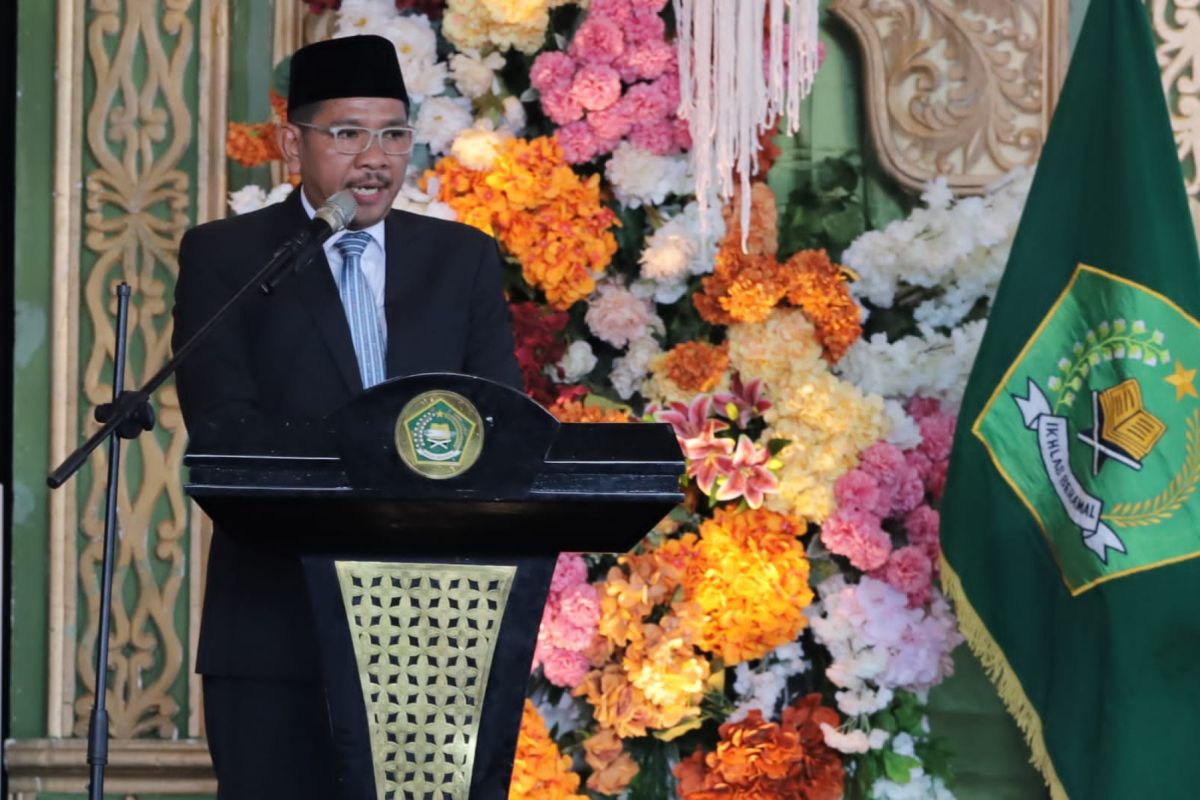
The Ministry of Religious Affairs has announced a National Strengthening Programme for Marriage Guidance (Bimwin) Facilitators in 2026, targeting more than 5,000 facilitators to improve the quality of coaching for prospective brides and grooms. Director General of Islamic Community Guidance at the Ministry of Religious Affairs, Abu Rokhmad, stated that marriage data from 2025 provides an increasingly complete picture of the profile of Indonesian couples. Ministry data reported that 2,960,081 prospective brides and grooms, or 1,480,048 couples, entered into marriage throughout 2025. This figure represents a 0.12 per cent increase compared to 2024, which recorded 1,478,302 couples. Additionally, throughout 2025, the Ministry facilitated marriage legalisation (isbat nikah) for 47,258 couples. The data underscores the Ministry’s strategic role in providing marriage services while preparing millions of couples to build harmonious, resilient, and high-quality families. Data analysis shows that approximately 61 per cent of prospective couples are aged 22-30 years. Furthermore, 82 per cent are couples marrying for the first time, while nearly 18 per cent have been married previously, either due to divorce or the death of a spouse. Abu Rokhmad noted that the majority are couples of productive age building a family for the first time, but there are also couples entering remarriage with different life experiences. He emphasised that marriage guidance services must continue to evolve to meet the real needs of society. As a follow-up, the Ministry will strengthen the capacity of more than 5,000 Bimwin facilitators. The strengthening focuses on understanding the characteristics of prospective couples, applying adult learning methods (andragogy), empathic communication, and managing interactive and participatory learning. Abu Rokhmad said that strengthening facilitator competence is an important investment to improve the quality of Indonesian families, as strong families begin with good marriage preparation. Director of KUA and Sakinah Family Development, Ahmad Zayadi, explained that the competency strengthening will also be accompanied by improvements to the Bimwin learning approach. Previously, all prospective couples received the same material according to the national curriculum. Going forward, the Ministry will strengthen facilitators’ ability to adapt the learning approach based on participant characteristics. Zayadi noted that a 23-year-old couple starting household life has different needs from a 40-year-old couple remarrying. The material remains the same, but the delivery method, case studies, and discussion spaces will be made more contextual. In addition to training, the Ministry will strengthen the facilitator ecosystem through digital learning, the development of a case study bank, continuous training, and forums for sharing best practices. These steps are expected to maintain the quality of Bimwin services evenly across Indonesia.