
Ministry of Religious Affairs Tightens Pesantren Operational Permits to Guarantee Children's Rights
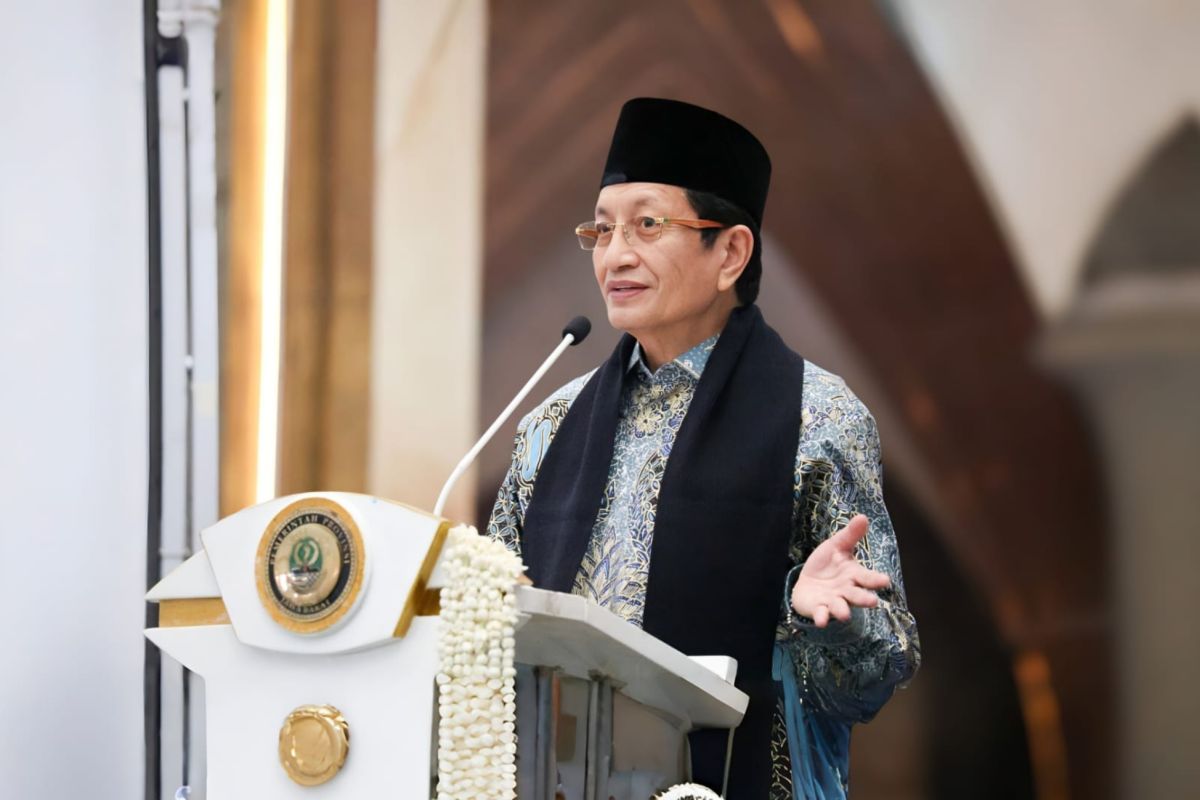
The Ministry of Religious Affairs is tightening the gateway for pesantren operational permits through the Sitren application as part of the transformation of educational institutions and to guarantee the fulfilment of children’s rights. The Sitren application is the official application from the Ministry of Religious Affairs for the registration, extension, and management of operational permits for Islamic religious institutions online. “The state has an obligation to ensure that institutions that receive official recognition truly meet the basic characteristics of a pesantren and are able to guarantee the safety of students,” said Minister of Religious Affairs Nasaruddin Umar in a statement in Jakarta on Wednesday. This approach is taken through structural, cultural, and consistent regulatory enforcement to ensure pesantren remain safe and dignified educational spaces for students. According to him, handling cases in the field is no longer solely oriented towards individual perpetrators but also targets overall system improvement. “The violent incidents that occur are not only a matter of criminal law violations but involve the protection of children’s rights, institutional governance, and the state’s responsibility to guarantee a safe educational environment,” he said. The policy has shifted from previously pursuing the quantity of institutions to now focusing on quality, feasibility, and the fulfilment of dormitory safety criteria. Administrative firmness is also imposed without compromise on institutions that are negligent in protecting their students. Throughout 2026, massive institutional interventions have been carried out. The Ministry of Religious Affairs has halted the admission of new students in 17 problematic pesantren cases, replaced leadership in 14 cases, and permanently revoked the institutional registration certificates. Regarding complaint mitigation, optimising the Telepontren channel established by the Ministry of Religious Affairs has become a solution to break the culture of silence that has been a barrier to uncovering cases of violence. From initially receiving only 5 reports in 2024 and 26 reports in 2025, this channel has responded rapidly to 22 complaints from January to May 2026. “This surge in complaints should not be interpreted simplistically as an increase in the rate of violence. On the contrary, this data shows a very large increase in trust from students, parents, and the community in the complaint mechanism provided by the state, because its confidentiality and protection are credible,” said the Minister. Long-term prevention measures have also been strengthened within the caregiving ecosystem. The Ministry of Religious Affairs has collaborated with religious mass organisation practitioners such as PBNU, MUI, Nawaning, and RMI to launch a Child-Friendly Pesantren Facilitator Module, while also promoting Tarbiyah Jinsiyyah (Islamic-based sexual education) training. “This curriculum trains students to recognise the boundaries of social interaction and to dare to report early,” he said. As a national standardisation effort, the Minister encourages all pesantren in Indonesia to replicate best practices from institutions that have successfully implemented dialogical caregiving systems without physical punishment, such as Pesantren Al Muayyad Surakarta, Peacesantren Welas Asih Garut, and Pesantren Nurul Jadid Probolinggo. “Through regulatory strengthening, strict supervision, and the continuous hard work of the Task Force, the state is present not only when cases occur but fortifies the protection system from the beginning for the future of Indonesia’s children,” said the Minister.