
Ministry of Religious Affairs Prepares Structure for Directorate General of Pesantren, Recruitment Must Be Clean
President Prabowo Subianto has officially signed the Presidential Regulation on the organisation and working procedures of the Ministry of Religious Affairs, which includes provisions for the establishment of the Directorate General of Pesantren. This policy has been positively received as a strategic move to strengthen the role of pesantren in Indonesia.
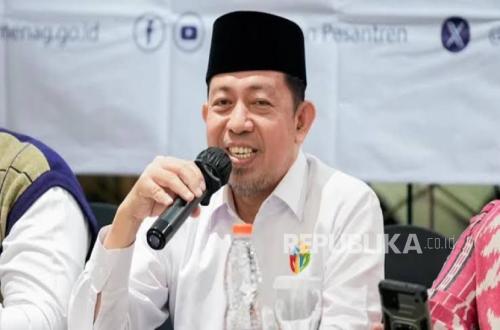
Director of Pesantren at the Ministry of Religious Affairs, Basnang Said, expressed appreciation for the decision. He assessed that the formation of the Directorate General of Pesantren represents a significant milestone in institutional strengthening for pesantren, especially after the separation of hajj and umrah affairs into a separate ministry.
“We express our thanks to President Prabowo for signing the Presidential Regulation related to the organisation and working procedures of the Ministry of Religious Affairs, which includes the establishment of the Directorate General of Pesantren,” Basnang said when met after attending the National Silaturrahmi of Islamic Organisations and Halal Bi Halal for Eid al-Fitr 1447 H by the Indonesian Ulema Council (MUI) in Jakarta on Wednesday night (15/4/2026).
According to him, the next step is to follow up on the leadership’s directives in the Ministry of Religious Affairs to prepare the organisational structure under the Directorate General of Pesantren. In the regulation, the Directorate General of Pesantren will have one secretariat and a maximum of five technical directorates.
Basnang explained that out of the five directorates, the majority will focus on pesantren education functions. “Pesantren has three main functions, one of which is education, so we are preparing around two to three Echelon II units to manage this field,” he stated.
In addition, according to Basnang, a directorate will also be formed to handle the development of pesantren da’wah, as well as the Directorate of Pesantren Empowerment. The latter directorate is considered crucial because it will manage economic aspects and community strengthening based on pesantren.
“The Directorate of Pesantren Empowerment will focus on strengthening the pesantren economy, institutional independence, and developing cross-ministerial and institutional cooperation,” said Basnang.
He gave an example that such cooperation could involve various ministries such as the Ministry of Cooperatives, Ministry of SMEs, Ministry of Health, and the Ministry of Women’s Empowerment and Child Protection and Transmigration.
Regarding the appointment of the Director General of Pesantren, Basnang emphasised that the authority lies with the president. However, the selection mechanism will still refer to applicable rules, including the possibility through an open bidding process or a talent pool system.
“Usually, there is open bidding or full talent, where the competency track records of candidates will be scrutinised,” Basnang explained.
Meanwhile, regarding recruitment of employees within the Directorate General of Pesantren, Basnang also stressed the importance of upholding principles of transparency and integrity. He hopes that the Ministry of Religious Affairs can serve as a model in the clean recruitment process.
“The Ministry of Religious Affairs must be an example in clear and clean recruitment,” he said.