
Ministry of Religious Affairs Prepares 15 Portions of Ready-to-Eat Indonesian Dishes for the 2026 Hajj Peak
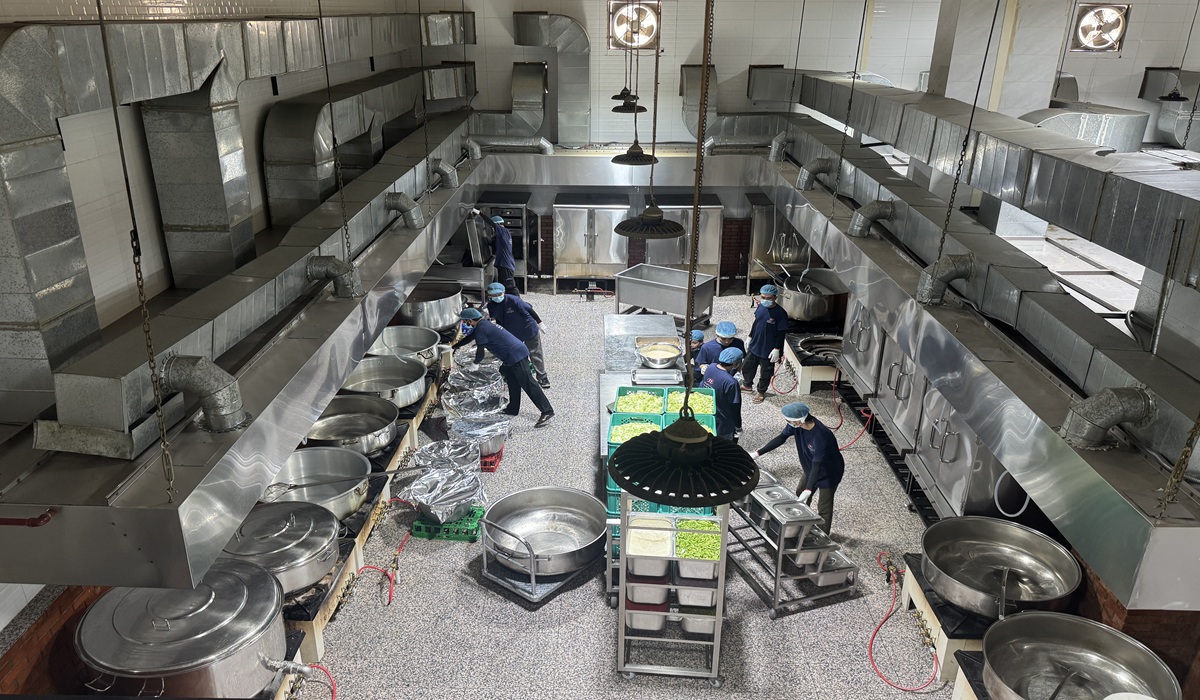
The Ministry of Religious Affairs is ensuring the readiness of catering services for Indonesian Hajj pilgrims in preparation for the peak of the 1447 H/2026 M Hajj season. A total of 15 portions of ready-to-eat (RTE) meals with distinctive Indonesian flavors have been prepared to guarantee the comfort of pilgrims.
The Director General of Hajj Ecosystem Development at the Ministry of Religious Affairs, Jaenal Effendi, stated that the selection of menus, such as rendang, was done intentionally. In addition to meeting nutritional needs, this menu is expected to be a “nostalgic remedy” for pilgrims who miss Indonesian cuisine.
“From the kitchen, it will be distributed to all hotels. Hopefully, this can run smoothly so that our prospective Hajj pilgrims can perform their worship in peace,” said Jaenal after coordinating with catering service providers in Mecca, Friday (May 15) evening.
Jaenal explained that the distribution of ready-to-eat meals to pilgrims’ hotels will begin on May 23, 2026, or coinciding with the 6th of Dzulhijjah 1447 H. This step is taken to ensure that the pilgrims’ food supply is secure before moving to Arafah, Muzdalifah, and Mina (Armuzna).
During the peak Hajj period in Armuzna (8-13 Dzulhijjah), the responsibility for providing catering will be transferred to the syarikah or Saudi Arabian Hajj service provider companies.
“This is complete and ready to be distributed,” Jaenal affirmed regarding the readiness of the syarikah.
To maintain quality, the Ministry of Religious Affairs, through the Hajj Pilgrimage Organizing Officers (PPIH) in Saudi Arabia, implements multi-layered supervision. There are three main indicators that must be met by the catering providers:
The Ministry of Religious Affairs stated that it will continue to conduct periodic evaluations in the field to ensure that all of God’s guests receive the best service until the end of the Hajj pilgrimage. (Ant/H-4)
The 2026 Hajj organization focuses on inclusive services for 170,000 high-risk pilgrims, the elderly, and people with disabilities for a safe and dignified worship experience.
All 2026 first-wave Hajj pilgrims have arrived in Mecca, Saudi Arabia, to perform the Hajj pilgrimage. The city of Medina has officially completed the service phase for the first wave of regular Hajj pilgrims.
This year, the Hajj quota for Cianjur Regency is 73 people plus 3 Hajj officers. So the total number is 76 people.
Dahnil began the inspection by surveying the Mecca Route service flow—a fast-track facility that allows pilgrims to complete Saudi Arabian immigration procedures at the airport of origin.
Doctor of PDG 12 Cluster, Dr. Maulidya Rahmi, said that pilgrims are starting to be asked to reduce excessive physical activity and conserve energy in preparation for the peak of the Hajj.