
Ministry of Religious Affairs: Majelis Taklim Must Become a Centre for Strengthening Family Resilience
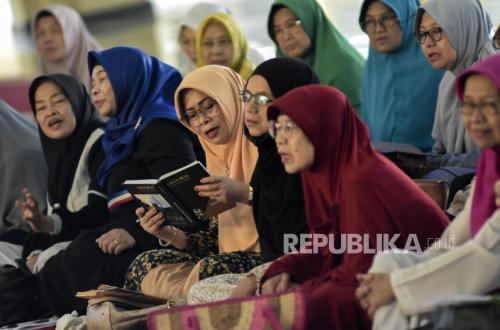
Jakarta — The Ministry of Religious Affairs (Kemenag) of the Republic of Indonesia is urging majelis taklim to become centres for strengthening family resilience. This was stated by Muchlis M Hanafi, Director of Information on Islamic Affairs. He said the role of study circles has become increasingly urgent amid rising social, economic and digital challenges in modern life.
‘The resilience of the nation is closely linked to the resilience of the family. When families are strong, society is strong. Conversely, when families are weak, various social problems will easily arise,’ Muchlis M Hanafi said in Jakarta on Thursday (21 May 2026).
He emphasised that the family is the fundamental foundation of community life and the nation. Therefore, strengthening families must be a collective concern, especially in the face of rising social, economic and digital challenges affecting household life today.
According to him, modern families face a range of issues, from weakened family communication due to excessive use of technology, economic pressures, changes in relationship patterns within households, rising divorce rates, to parenting challenges in the era of social media.
‘Strengthening families is not enough through administrative or legal approaches alone; it also requires strengthening values, morality and spirituality,’ he said.
In this context, majelis taklim occupy a highly strategic position because they are present directly in the community.
‘Majelis taklim must elevate their status. They should not merely be places for religious study, but also centres for family education, spaces for socio-religious consultation, and instruments to reinforce the values of mawaddah, rahmah, and social responsibility within families,’ he said.
Muchlis also emphasised that Kemenag continues to push for transforming religious services that are more relevant to the needs of the community. Dawah must be able to address real issues of the ummah, including family concerns, education of children, mental health, digital ethics, and social harmony.