
Ministry of Religious Affairs Launches Nationwide Mosque Cleanliness Movement Involving 50,000 Mosques
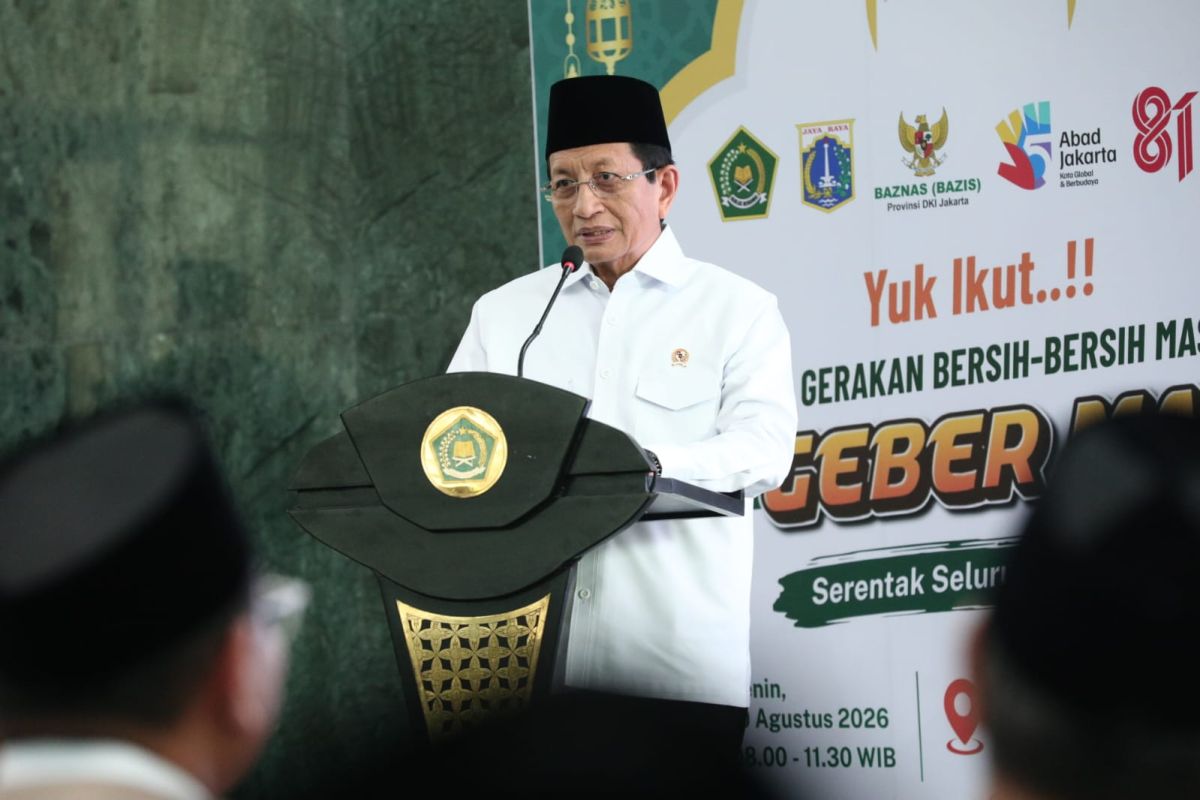
A place of worship is a meeting point between a servant and God. How can people concentrate on worship if the place is dirty, stuffy, or uncomfortable?
The Ministry of Religious Affairs reported that the 2026 Geber Mas (Mosque Clean-Up Movement) was nationally followed by more than 50,000 mosques and prayer rooms in Indonesia that took part in the mass community clean-up movement.
“A place of worship is a meeting point between a servant and God. How can people concentrate on worship if the place is dirty, stuffy, or uncomfortable?” said Religious Affairs Minister Nasaruddin Umar in his statement in Jakarta on Tuesday.
Geber Mas 2026 was centred at Fatahillah Mosque, Jakarta City Hall. The movement is not merely a mass community clean-up, but an effort to build ecological awareness through places of worship.
The Religious Affairs Minister placed the cleanliness of places of worship in a broader perspective. He said a mosque is not merely a physical building, but a sacred space that serves as a meeting point between humans and God.
Therefore, according to the Minister, maintaining the cleanliness of mosques is essentially an effort to preserve the honour of places of worship while strengthening the spiritual quality of society.
He explained that the concept of cleanliness in religious teachings does not only concern the physical aspect, but also encompasses inner cleanliness. However, physical cleanliness remains an important prerequisite for creating a solemn atmosphere of worship.
According to him, the culture of mutual cooperation in cleaning places of worship needs to be revived so that mosques are not only crowded during prayers, but also become spaces that are cared for together by the congregation.
“Come to the mosque with your family. Clean the carpets, the toilets, the surroundings, repair what is damaged. Do not only clean the mosque itself, but also the drains and the surrounding area,” he said.
The Religious Affairs Minister linked Geber Mas to the Ministry of Religious Affairs’ broader agenda of building places of worship that have an impact on society.
He stressed that mosques must develop into centres of community empowerment that serve not only spiritual needs, but also social, educational, economic, and cultural needs.
Director General of Islamic Community Guidance at the Ministry of Religious Affairs Abu Rokhmad said Geber Mas is part of a series of activities commemorating Muharram as well as the implementation of two priority programmes of the Religious Affairs Minister, namely strengthening eco-theology and empowering places of worship.
“This movement is also part of efforts to support a clean, healthy, tidy, and beautiful Indonesia. Therefore, today it was followed by more than 50,000 mosques and prayer rooms throughout Indonesia,” he said.
He stressed that Geber Mas must not stop at the launch alone. According to him, the movement must become a new culture that is continuously carried out by mosque administrators, the community, and especially religious counsellors.
Abu Rokhmad mentioned a number of areas that have often been overlooked as the main focus of the movement, such as toilets, bathrooms, ablution areas, water channels, and the surroundings of places of worship.
Source: jawawa.id (https://jawawa.id/newsitem/ministry-of-religious-affairs-launches-nationwide-mosque-cleanliness-movement-involving-50-000-mosques-1786424064)
Originally published by Antara (Indonesian) (https://www.antaranews.com/berita/5688669/gerakan-bersih-bersih-masjid-libatkan-50-ribu-masjid-dan-mushala), translated from Indonesian