
Ministry of Religious Affairs: LAMGAMA must utilise accreditation as a quality instrument
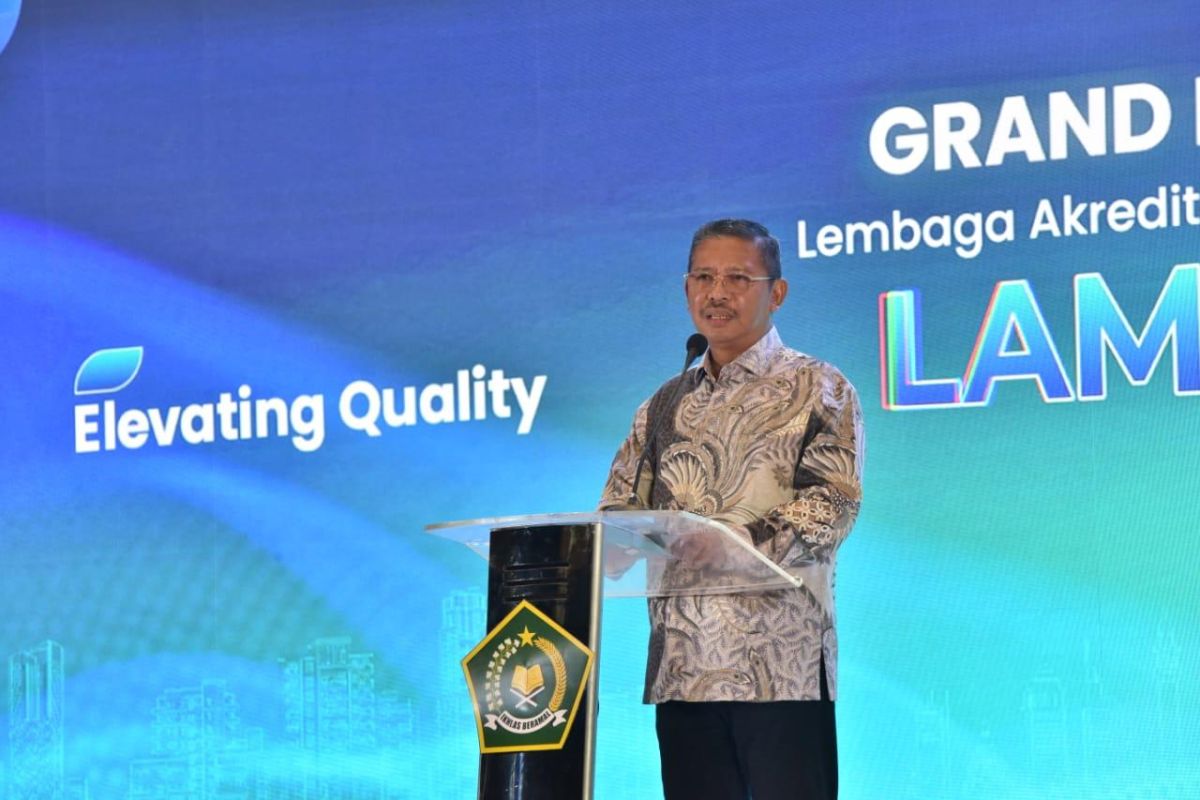
Jakarta (ANTARA) - The Ministry of Religious Affairs (Kemenag) has emphasised that the Religious Independent Accreditation Agency (LAMGMA) must shift the paradigm of accreditation for Religious Science Cluster (PSRIA) study programmes from merely fulfilling administrative requirements to becoming an instrument for driving the improvement of religious higher education quality.
“Accreditation must not only be interpreted as administrative compliance, but must serve as an instrument to ensure that study programmes continuously improve their quality,” stated the Director General of Islamic Education at Kemenag, Amien Suyitno, in a statement in Jakarta on Thursday.
Kemenag has officially introduced LAMGAMA as an independent accreditation agency specifically handling the accreditation of PSRIA. The agency envisions becoming a credible, acceptable, and accountable accreditation body at both national and international levels.
In performing its duties, LAMGAMA will develop an accreditation system relevant to quality improvement needs and conduct the accreditation process independently, professionally, and objectively.
The presence of LAMGAMA marks an important momentum in strengthening the quality assurance system for higher education, particularly for PSRIA in Indonesia.
“The presence of LAMGAMA is a collective effort to strengthen the quality assurance of religious higher education,” he said.
The Secretary-General of Kemenag, Kamaruddin Amin, emphasised the importance of synergy between LAMGAMA, universities, the government, scientific associations, and quality assurance institutions. Such collaboration is necessary so that the accreditation process can run professionally, objectively, transparently, and with an orientation towards quality enhancement.
Kamaruddin Amin assessed that strengthening independent accreditation agencies is part of the effort to build a more professional and accountable governance system for religious higher education.
“Strengthening the quality of religious higher education must be a shared agenda. The presence of LAMGAMA shows that we are continuously building a stronger, more professional quality assurance system that aligns with the characteristics of religious higher education,” he said.
According to him, LAMGAMA has undergone several stages of institutional formation. This process began with the formation of the Religious Accreditation Task Force in 2022, followed by the establishment of the Religious Science Cluster Scientists Association (PIRIA).
LAMGAMA subsequently obtained legal entity status in 2024 and received approval for its designation as the Religious Independent Accreditation Agency in 2025.
These preparatory stages will continue to be strengthened through 2026, including assessments and field visits by the BAN-PT Accreditation Council and the refinement of various accreditation tools. LAMGAMA is also beginning to prepare assessor resources to support the accreditation of study programmes within its scope.
“Synergy between accreditation agencies, universities, the government, scientific associations, and the academic community is a vital factor in ensuring that the accreditation process does not stop at administrative assessment, but encourages continuous quality improvement,” he concluded.
Source: jawawa.id (https://jawawa.id/newsitem/ministry-of-religious-affairs-lamgama-must-utilise-accreditation-as-a-quality-instrument-1789020552)
Originally published by Antara (Indonesian) (https://www.antaranews.com/berita/5734364/kemenag-lamgama-harus-jadikan-akreditasi-sebagai-instrumen-mutu), translated from Indonesian