
Ministry of Religious Affairs Explains Why 1 Muharram Falls Today, Differing from NU
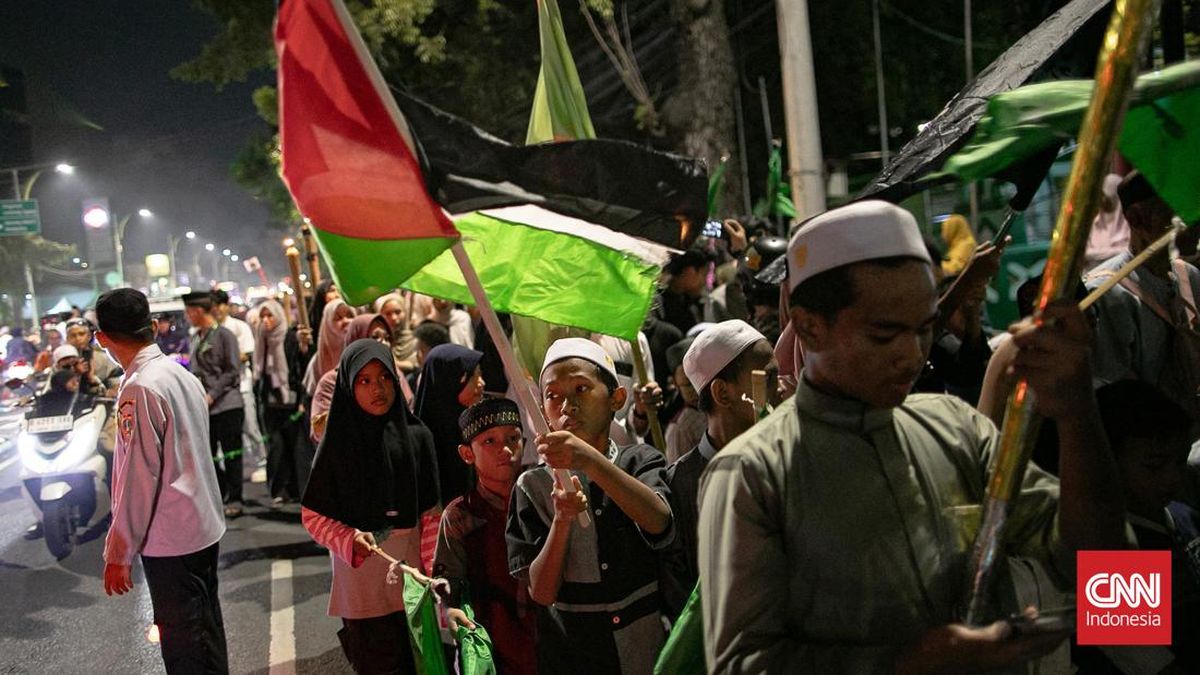
The Ministry of Religious Affairs has disclosed the reason 1 Muharram 1448 H falls today, Tuesday (16/6). This decision differs from that of Nahdlatul Ulama (NU), which determined that 1 Muharram 1448 H falls tomorrow, Wednesday (17/6).
Director of Islamic Religious Affairs and Sharia Guidance at the Ministry, Arsad Hidayat, stated that the new crescent moon marking the start of Muharram had already met the imkanur rukyat criteria of the Ministers of Religious Affairs of Brunei Darussalam, Indonesia, Malaysia, and Singapore (MABIMS).
According to calculations made on 15 June 2026, the altitude of the new Muharram crescent at sunset ranged from 0.92 degrees in Merauke to 4.02 degrees in Sabang. Meanwhile, its elongation angle ranged between 5.64 degrees and 6.98 degrees.
“With these parameters, most of Indonesia’s territory has met the minimum MABIMS criteria. Therefore, the start of Muharram 1448 H falls on Tuesday, 16 June 2026,” Arsad said on Tuesday (16/6). He added that the MABIMS criteria are also used in compiling the Indonesian Hijri calendar and were formulated together with astronomy experts.
Regarding the difference with NU, the Ministry respects the decision of the NU Executive Board (PBNU) to set the start of Muharram on Wednesday, 17 June 2026. That decision was taken after PBNU conducted rukyatul hilal and declared the crescent was not sighted.
“We respect the decision of PBNU,” said Head of the Bureau of Public Relations and Public Communication, Thobib Al Asyhar.
Meanwhile, Head of the Sub-directorate for Hisab Rukyat and Sharia, Ismail Fahmi, explained there are several approaches to determining the start of a lunar month, namely rukyatul hilal, wujudul hilal, and imkanur rukyat. He noted that the imkanur rukyat method bridges the observational approach and astronomical calculation through criteria based on long-term rukyat data analysis, and that hisab calculations are scientifically accountable.
“Therefore, when weather conditions do not support observation, hisab data still provides accurate information regarding the crescent’s position and remains an important part of compiling the Hijri calendar,” he said. He added that the phenomenon of the crescent not being visible due to cloud cover is common and does not diminish the validity of astronomical data showing the crescent’s position has met the established parameters.
Previously, the Nahdlatul Ulama Executive Board (PBNU) announced that 1 Muharram 1448 H falls on Wednesday, 17 June 2026. PBNU made this determination because the crescent was not sighted yesterday. Consequently, the month of Zulhijah was completed to 30 days, and 1 Muharram 1448 H was decided to fall the following day.
“As a follow-up, the start of the month of Muharram 1448 H coincides with Wednesday Kliwon, 17 June 2026 CE (beginning Wednesday night) on the basis of istikmal,” read the NU statement.