
Ministry of Religious Affairs Develops Sign Language Vocabulary for Islamic Jurisprudence and Theology to Assist the Deaf
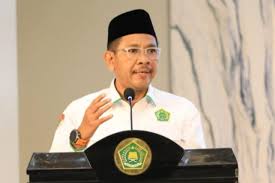
The Ministry of Religious Affairs has launched an affirmative programme called Indonesian Islamic Sign Vocabulary (KOSMIN) in an effort to standardise religious sign language for people with sensoric hearing and speech disabilities (the Deaf). This programme aims to unify the use of Islamic terms that have so far lacked an agreed standard sign.
The launch of KOSMIN took place during a kick-off event at Istiqlal Mosque, Jakarta, coinciding with the Islamic New Year 1 Muharram 1448 Hijriah commemoration on Tuesday (16/6). The programme represents an inclusive step by the Ministry of Religious Affairs to expand access to religious services for all communities, including disabled groups.
Director General of Islamic Community Guidance, Abu Rokhmad, stated that the development of KOSMIN was motivated by the large number of religious terms that remain difficult for Deaf friends to understand due to the absence of a uniform sign language standard.
‘There are quite a lot of terms related to Islam, but there is no standard that unites Deaf friends when expressing thoughts or delivering explanations. It is said that there is not even an agreed standard sign for the basic concepts of heaven and hell. This includes daily fiqh terms such as menstruation, postpartum bleeding, istihadhah, and even wet dreams. Therefore, the Ministry of Religious Affairs is here to provide an extraordinary achievement in the form of this standardisation,’ said Abu Rokhmad.
According to him, KOSMIN is part of strengthening the inclusion programme that the Ministry of Religious Affairs has been running. Previously, the ministry had completed the development of the Master Sign Qur’an along with its tafsir components. This year, the government is targeting the completion of the Islamic sign vocabulary standardisation to strengthen religious literacy for the Deaf community.
The programme also serves as a form of implementation of Law Number 18 of 2018 concerning Persons with Disabilities. Under this regulation, persons with disabilities have five religious rights, ranging from the right to embrace and practise religious teachings, access places of worship, religious services, holy scriptures, to involvement in religious organisations.
On the occasion of the Hijri New Year, the Ministry of Religious Affairs also invited the younger generation, especially Gen Z Muslims, to play an active role in creating a more inclusive and disability-friendly environment, particularly in access to religious education.
‘We invite, especially the younger generation, Gen Z, to fill today and the days ahead in this new year with various positive activities. This will be a provision for all of you, younger siblings, to navigate the life to come, whose challenges will be far more extraordinary than during our youth,’ he said.