
Ministry of Religion Registers Over 2 Million Sacrificial Animals for Eid al-Adha 1447 H, Economic Value Estimated at Rp18.28 Trillion
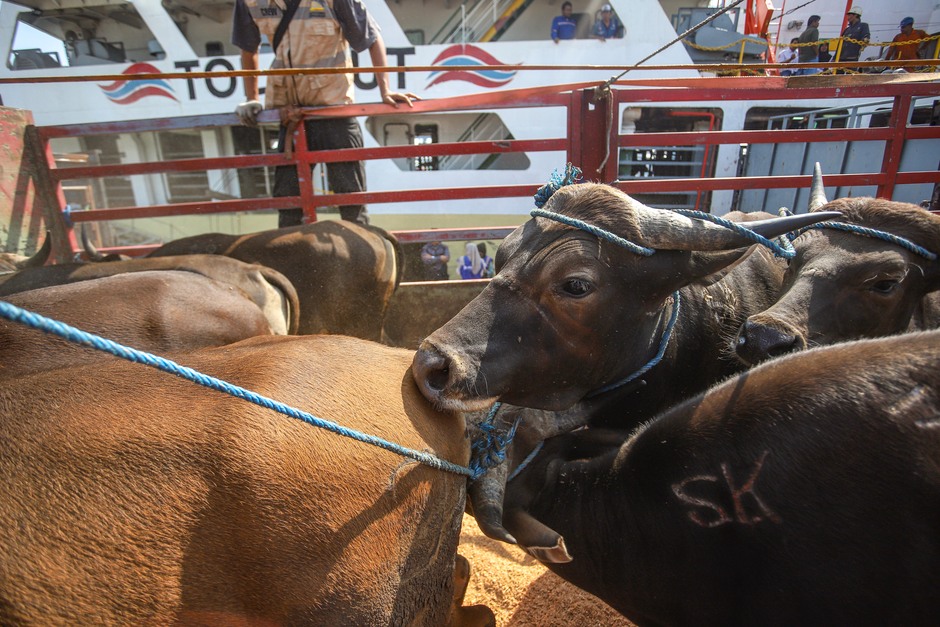
The Ministry of Religion, through the Directorate of Islamic Affairs and Sharia Development, reported that the number of sacrificial animals during the 1447 Hijri Eid al-Adha celebration reached 2,032,753 across Indonesia. The figure comprised 676,866 cows and 1,355,887 goats. Director of Islamic Affairs and Sharia Development, Arsad Hidayat, stated that the high number of sacrificial animals reflects the enthusiasm of Muslims in performing worship while strengthening social care within the community. “This year’s sacrifice shows excellent participation from the Muslim community. More than 2 million sacrificial animals were distributed across various mosques in Indonesia. This is not only a form of obedience in worship but also a real manifestation of care and the spirit of sharing with others,” Arsad Hidayat confirmed from Jakarta on Friday. According to Arsad, the data indicates high community involvement in performing the sacrifice while reinforcing the social values that are the essence of the Eid al-Adha celebration. He explained that the sacrifice has broad social benefits by helping meet the needs of communities that still have limited access to animal protein sources. Therefore, Eid al-Adha is understood not only as a mere ritual but also as a means to strengthen social solidarity and promote equitable distribution of benefits for the community. In addition to providing a social impact, this year’s sacrifice also generated a significant economic turnover. Based on the sacrificial animal price estimation used by the National Amil Zakat Agency (Baznas), which is around Rp21 million per cow and Rp3 million per goat, the total economic value of all sacrificial animals is estimated to reach Rp18.28 trillion. Of that total, the economic contribution from sacrificial cows is estimated at around Rp14.21 trillion, while the economic value of sacrificial goats is estimated at Rp4.07 trillion. The magnitude of this economic value shows that the sacrificial worship activity also drives economic activity in various sectors, from livestock farming and animal trading to the distribution of meat to beneficiary communities. Referring to Baznas estimates, the average weight of a sacrificial cow is in the range of 220–250 kilograms, while goats range between 27–29 kilograms. With an assumed carcass rate of about 50 percent for cows and 45 percent for goats, more than two million sacrificial animals slaughtered this Eid al-Adha are estimated to have produced around 96.27 thousand tons of meat and carcass, which were then distributed to communities across various regions. The implementation of the sacrifice is also considered to further strengthen the function of mosques as centres for empowering the people’s economy as well as a means of social security for the community. Through the distribution of sacrificial meat reaching various community groups, mosques not only perform religious functions but also act as social service centres providing direct benefits to residents. Arsad also conveyed Minister of Religion Nasaruddin Umar’s message regarding the meaning of Eid al-Adha as a moment for sharing. “This Eid al-Adha is synonymous with a month of sharing. We hope that through this momentum, everyone can taste animal nutrition, whether through the path of sacrificial worship or social assistance schemes like the ones we carry out,” said Arsad. Based on data compiled by the Ministry of Religion, East Java was the province with the highest number of sacrificial animals, reaching 455,007 head. The next positions were occupied by Central Java with 405,065 head and West Java with 374,482 head. Meanwhile, several other provinces also recorded high numbers of sacrificial animals, including West Sumatra with 106,276 head, Lampung with 105,913 head, and Jambi, which reached 87,319 head. On the occasion, Randi Zulmariadi conveyed that Eid al-Adha is not only an annual worship but also teaches the value of sincerity and togetherness. His party also conveyed that national data shows a trend of increasing community participation in the implementation of the sacrifice.