
Ministry of Public Works Strengthens Irrigation and Water Supply for National Food Security
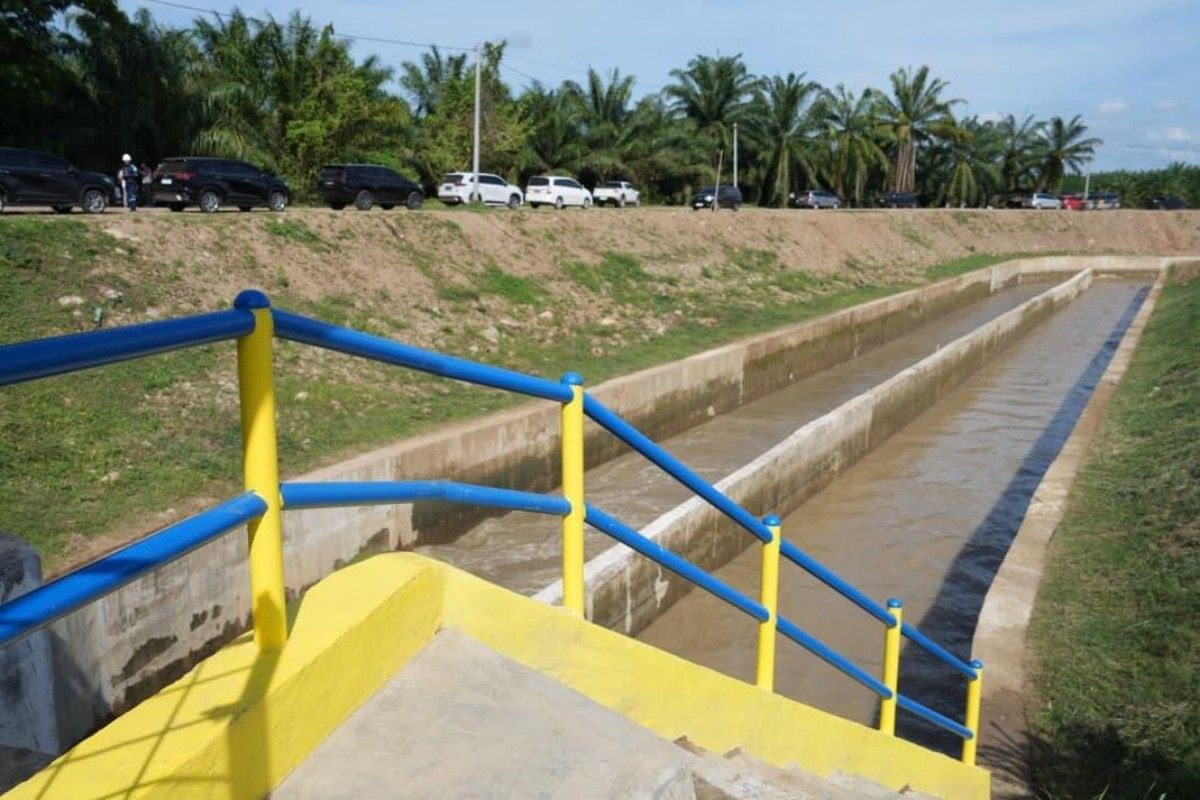
The Minister of Public Works, Dody Hanggodo, stated that the ministry is strengthening anticipatory measures against the potential El Niño phenomenon by reinforcing irrigation systems and securing water availability to support national food security.
He noted that the impact of El Niño could not only lead to droughts in agricultural lands but could also affect water availability for the public through the Drinking Water Supply System (SPAM) and reduce water storage levels in several dams.
“I have requested that, in addition to conducting deep-well drilling specifically for water intended for paddy and plantation irrigation, tertiary irrigation networks must also be constructed,” Dody said in a statement in Jakarta on Wednesday.
These efforts include deep groundwater drilling, the construction of tertiary irrigation networks, and the formation of cross-unit task forces to ensure an integrated response.
Mitigation efforts have actually been underway since the beginning of the year. Through the Directorate General of Water Resources, the Ministry of Public Works has implemented deep groundwater drilling programmes in several regions that have historically been prone to drought.
“In truth, initial anticipations have already been carried out by the Water Resources team. Since the start of the year, deep drilling programmes have been conducted at several points identified as drought-prone areas across Indonesia,” he said.
One of the priority areas includes Gunungkidul Regency in the Special Region of Yogyakarta, as well as several other regions such as East Nusa Tenggara, which frequently experience water crises during the dry season.
In addition to increasing water source availability, Dody also emphasised the importance of developing tertiary irrigation networks to ensure that water distribution to agricultural land is more effective and efficient.
This strengthening of irrigation infrastructure aligns with the implementation of Presidential Instruction Number 2 of 2025 regarding the Acceleration of Development, Improvement, Rehabilitation, as well as the Operation and Maintenance of Irrigation Networks to Support Food Self-Sufficiency.
Through this policy, the Ministry of Public Works, alongside local governments, continues to ensure that irrigation networks function optimally to maintain national agricultural productivity.
To optimise the implementation of this Presidential Instruction, the Ministry of Public Works and the Ministry of Agriculture have agreed to conduct simultaneous data collection and irrigation network construction.
This synergy is expected to result in more precise planning, allowing irrigation programmes for 2026 and subsequent years to be implemented earlier, more accurately, and based on more precise data.
“We have agreed with the Ministry of Agriculture that we will execute the Irrigation Presidential Instruction alongside the data collection of regional irrigation. Consequently, from 2026 onwards, we can work earlier and more precisely. However, the objective remains the same: how to achieve food self-sufficiency,” Minister Dody asserted.
Through the strengthening of irrigation systems, increased water source availability, and cross-sector collaboration, the Ministry of Public Works continues to strive to maintain agricultural productivity amidst the threats of climate change, while ensuring the sustainability of the water supply for the public as a foundation for achieving national food self-sufficiency.
Source: jawawa.id (https://jawawa.id/newsitem/ministry-of-public-works-strengthens-irrigation-and-water-supply-for-national-food-security-1782319982)
Originally published by Antara (Indonesian) (https://www.antaranews.com/berita/5621903/kementerian-pu-perkuat-irigasi-dan-pasokan-air-untuk-pangan-nasional), translated from Indonesian