
Ministry of Public Works Reorganisation Requires Internal Support
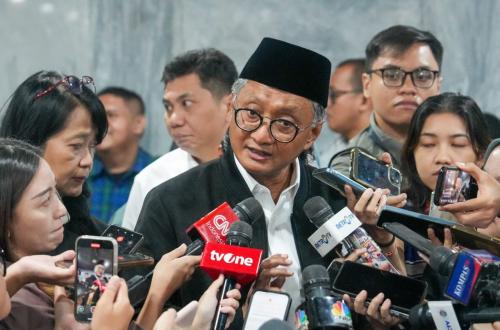
The reorganisation of the Ministry of Public Works is considered to require support from all internal ranks for bureaucratic reform to run effectively. Public policy expert Trubus Rahardiansyah assessed that every change in organisational governance generally faces challenges, especially when it involves adjustments to structures, work mechanisms, and human resource rotations.
Trubus stated that the dynamics arising in the reform process are common. According to him, changes in governance often elicit various responses from within the organisation, so transparent communication and policy implementation are necessary.
“Looking at the massive coverage, coupled with information mixed with disinformation, this situation certainly needs to be handled carefully. In every organisational reform process, various dynamics usually emerge,” said Trubus, who is also a Professor of Legal Sociology at Trisakti University, on Wednesday (5/8/2026).
Minister of Public Works Dody Hanggodo has recently been in the spotlight following several issues, ranging from plans for an overseas official trip, the use of an aircraft said to be a private jet, to employee mutation policies. The Ministry of Public Works has previously provided clarification on these various issues.
According to Trubus, the government’s main focus should remain on strengthening bureaucratic governance. He assessed that the reform process requires the support of all employees so that changes can be carried out consistently.
“The most important thing is to ensure the reform process is carried out according to the rules and supported by all elements of the organisation. Bureaucratic reform requires a shared commitment,” he said.
He considered that rotation and evaluation of employees are common instruments in organisational reform. However, the implementation must be based on performance evaluations, organisational needs, and objective mechanisms.
In addition to human resource reform, Trubus stated that strengthening the supervisory system is also necessary, including oversight of procurement processes, project implementation, and internal monitoring mechanisms. This step is considered important to improve accountability in infrastructure development implementation.
According to him, evaluation should not only target individuals but also the work system so that potential irregularities can be minimised. “Reform is not enough if it only targets people, but the system must also be addressed. Supervision must be strengthened so that every process can be accounted for,” he said.
Trubus added that the bureaucratic reform process will be more effective if fully supported by the ministry’s leadership and the government. This support is needed so that reform policies can be implemented consistently without neglecting the principles of professionalism.
“The most important thing is that reforms are carried out based on rules, evidence, and objective evaluations so that the goals of bureaucratic reform are truly achieved,” said Trubus.