
Ministry of Primary and Secondary Education Trains Teachers in Balikpapan on Reasoning-Based Learning Methods
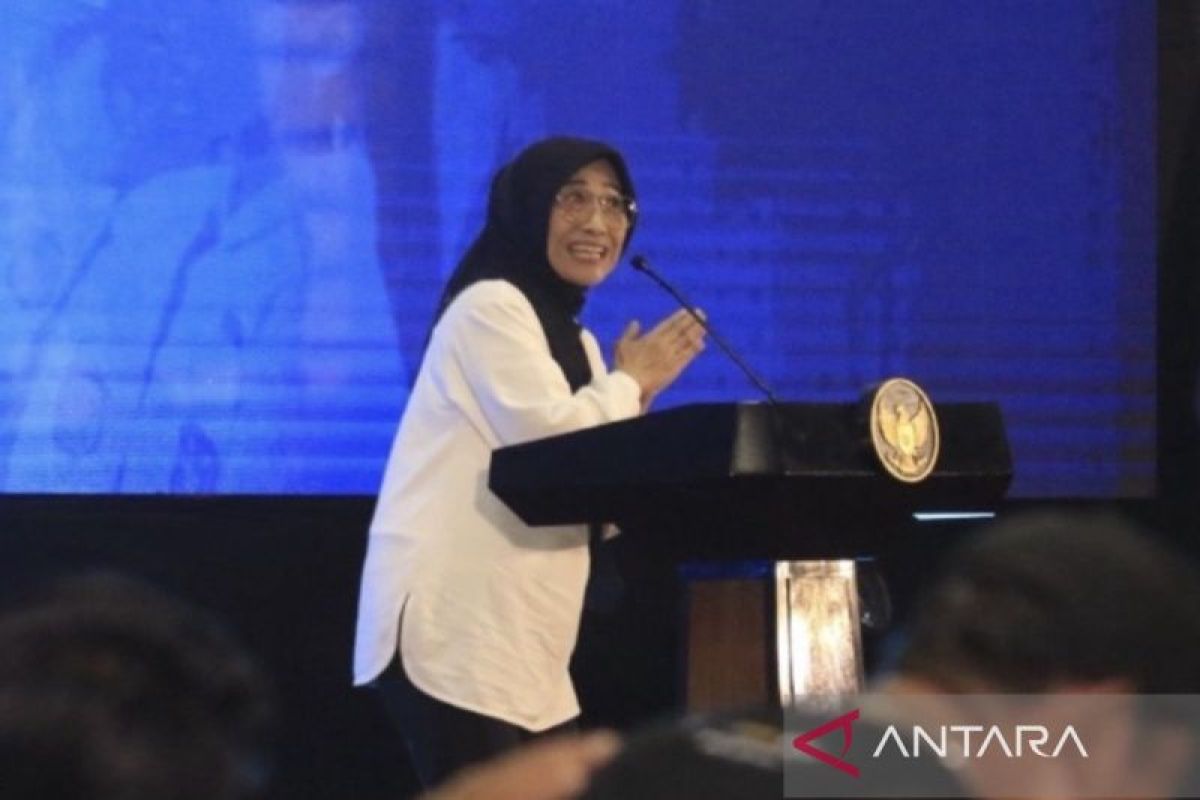
The Ministry of Primary and Secondary Education (Kemendikdasmen), through the Agency for Basic and Secondary Education Policy (BKPDM), has trained several school principals and teachers in Balikpapan, East Kalimantan, to implement deep learning methods and the Science, Technology, Engineering, and Mathematics (STEM) approach.
“We are very pleased to collaborate with Ms Hetifah to conduct various socialisations and workshops regarding our priority programmes, ensuring that the achievement of these priorities can be measured within our established timeframe,” said the Head of BKPDM, Toni Toharable, in Balikpapan on Thursday.
The strengthening of this policy was realised through a Workshop on Reasoning-Based and Practice-Based Learning for teachers in Balikpapan. The event brought together school principals from primary, junior high, senior high, and vocational schools, as well as madrasahs across Balikpapan.
Deep learning is a learning method that encourages students to understand the core essence of concepts deeply, think critically, and connect lessons to real life, ensuring that students do not merely memorise material to chase exam grades. Meanwhile, the STEM approach integrates science, technology, engineering, and mathematics to train students in solving real-world problems.
In practice, students are encouraged to conduct experiments, create projects, or design solutions to everyday problems by utilising scientific logic and technology. This activity serves as a strategic step to accelerate educators’ understanding of Kemendikdasmen’s priority programmes, as they are the spearhead of the learning process in educational units.
Toni explained that reasoning-based learning and STEM-based problem-solving are designed to massively boost the quality of the teaching and learning process. Therefore, understanding these new methods needs to be expanded to the regions, involving the Indonesian House of Representatives (DPR RI) through its supervisory function and the strengthening of socialisation.
“This priority programme can significantly drive accelerated quality, so we must implement it massively, including through members of the DPR,” said Toni.
To ensure the implementation of these new teaching methods in schools, BKPDM is preparing a monitoring mechanism for changes in learning patterns in every educational unit. Monitoring will be conducted periodically through a digital monitoring dashboard system.
On the same occasion, Member of the Indonesian House of Representatives for the East Kalimantan constituency, Hetifah Sjaifudian, expressed hope that various good practices and teaching innovations developed in Balikpapan and East Kalimantan could be adopted by the central government as input for national policy.
“I hope that the experiences in Balikpapan and East Kalimantan, which involve many practical applications, can also receive attention from Kemendikdasmen, specifically the Agency for Basic and Secondary Education Policy,” said Hetifah.
Hetifah emphasised that the workshop should not stop at being a formal forum but should result in an understanding that serves as a practical guide for teachers in the classroom. She added that the DPR has a responsibility to ensure that all central education policies are implemented effectively in the regions.
“The duty of the DPR is also, of course, to see to what extent policies from the centre can indeed be implemented well,” said Hetifah.
Source: jawawa.id (https://jawawa.id/newsitem/ministry-of-primary-and-secondary-education-trains-teachers-in-balikpapan-on-reasoning-based-learning-methods-1790863043)
Originally published by Antara (Indonesian) (https://www.antaranews.com/berita/5767140/kemendikdasmen-latih-guru-di-balikpapan-metode-belajar-bernalar), translated from Indonesian