
Ministry of Primary and Secondary Education Strengthens Pancasila Education through Deep Learning
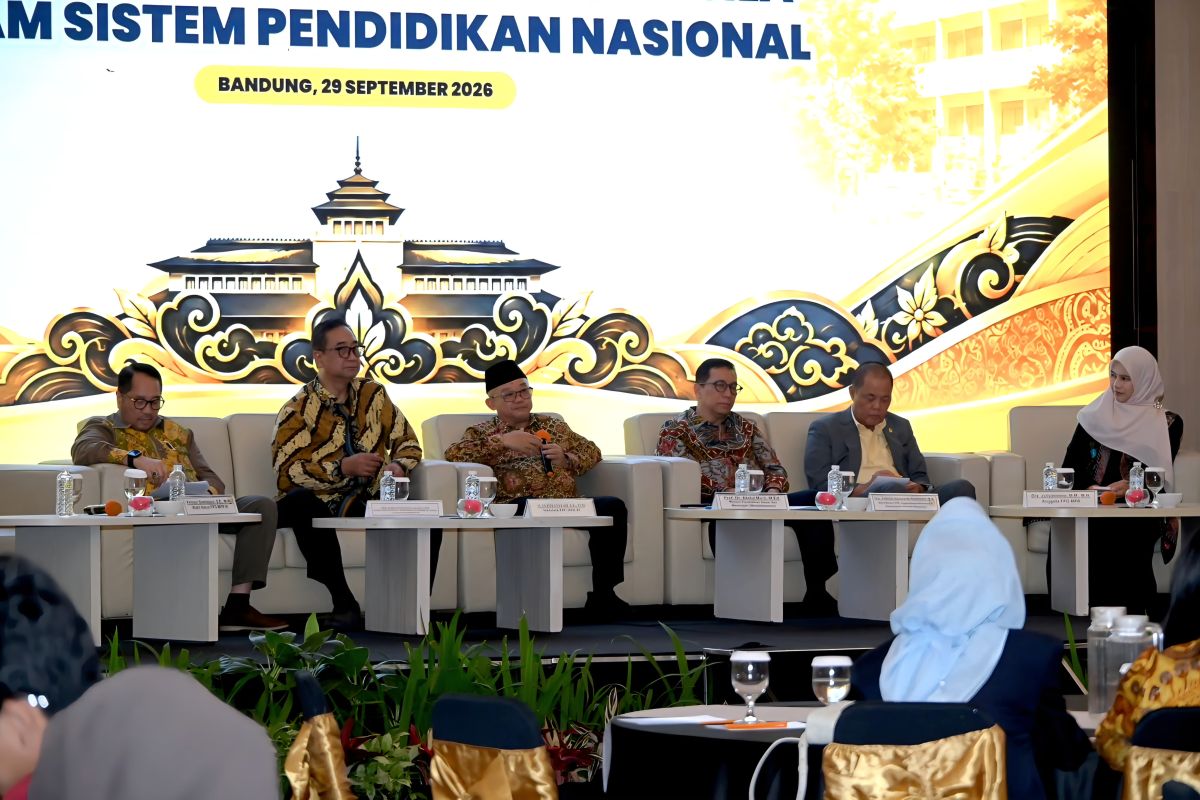
The Ministry of Primary and Secondary Education (Kemendikdasmen) is continuing to strengthen Pancasila education as a pillar for forming the character and personality of students through a deep learning approach in classrooms and school culture.
In a written statement in Central Jakarta on Wednesday, the Minister of Primary and Secondary Education, Abdul Mu’ti, stated that the strengthening of Pancasila education is conducted not only through classroom learning but also through school culture, extracurricular activities, habituation, and the real-life experiences of students in their daily lives.
According to the Minister, Pancasila education needs to be understood holistically through three aspects: knowledge of Pancasila, the practice of Pancasila values in real life, and the internalisation of Pancasila as the national identity of Indonesia.
He assessed that Pancasila learning needs to be continuously developed so that it does not stop at the level of mere knowledge. Therefore, reinforcement is being carried out through deep learning and the optimisation of the ‘hidden curriculum’ so that Pancasila values can be present in various school activities and cultures.
“We want to further strengthen the hidden curriculum. Therefore, we now have a deep learning policy, where we strive to ensure that the context and implementation of the subject matter become even stronger,” said Minister Mu’ti.
Mu’ti continued that interactions between teachers and students, relationships between students, and various school activities are vital components in building a culture that reflects national life.
In addition to formal learning, the strengthening of nationalism is being conducted through extracurricular activities and habituation. Scouting (Pramuka) serves as one of the means for character building, while various extracurricular options provide opportunities for students to develop skills outside of formal instruction.
“We hold the principle that extracurricular options need to be expanded. This allows students to acquire skills and abilities beyond the subjects taught in formal lessons,” he said.
Kemendikdasmen is also strengthening the implementation of flag ceremonies and activities on national holidays. During these activities, students are encouraged to reflect on national values through the Indonesian Student Pledge (Ikrar Pelajar Indonesia), which encompasses faith and piety, respect for parents and teachers, diligence in studying, harmony with peers, and love for the motherland.
Love for Indonesia, for instance, should be reflected in environmental care, respect for diversity, the ability to live together, and attitudes that reflect unity.
“Attitudes such as these can be nurtured if students have ample experience within educational institutions that actively practice Pancasila values,” said the Minister.
Through the strengthening of learning, school culture, exemplary behaviour, habituation, and collaborative activities, Pancasila education is expected to become increasingly meaningful for students. This effort, according to Mu’ti, is part of a shared commitment to forming an Indonesian generation that is characterised by strong values, respects diversity, loves the motherland, and is ready to contribute to the nation’s progress.
Source: jawawa.id (https://jawawa.id/newsitem/ministry-of-primary-and-secondary-education-strengthens-pancasila-education-through-deep-learning-1790773520)
Originally published by Antara (Indonesian) (https://www.antaranews.com/berita/5765101/kemendikdasmen-perkuat-pendidikan-pancasila-lewat-deep-learning), translated from Indonesian