
Ministry of Primary and Secondary Education shares PISA-based school transformation models
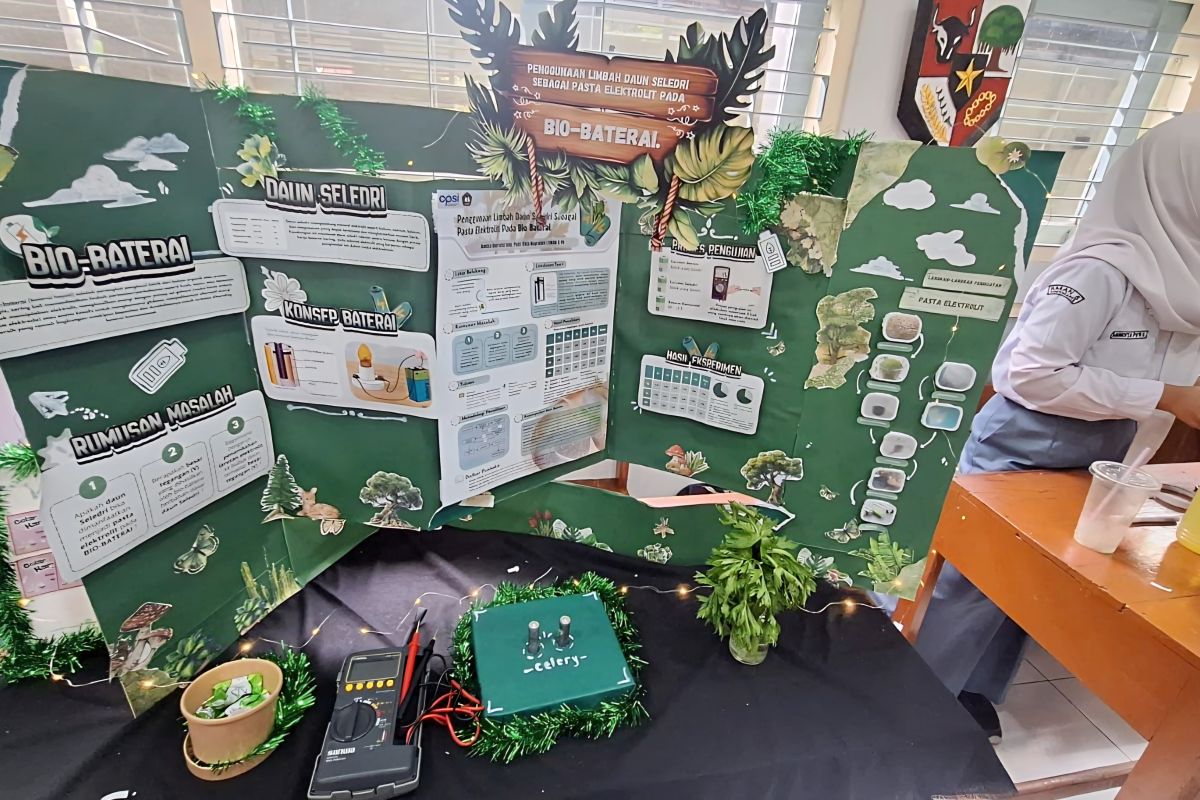
The Ministry of Primary and Secondary Education (Kemendikdasmen) is sharing transformation practices implemented in several schools through the strengthening of literacy and numeracy cultures, as well as the integration of Science, Technology, Engineering, and Mathematics (STEM) approaches based on PISA (Programme for International Student Assessment) competencies.
The Minister of Primary and Secondary Education, Abdul Mu’ti, stated in Jakarta on Saturday that the ministry continues to strengthen the quality of education through a ‘Deep Learning’ approach, which encourages the learning process to be more mindful, meaningful, and joyful.
Mu’ti noted that this approach is supported by enhancing teacher competencies in the fields of AI, coding, STEM, and character education, alongside the development of educational data governance, the revitalisation of educational units, and the use of more interactive learning technologies.
In a separate instance, the Principal of SMPN 9 Yogyakarta, Agus Margono, explained that his school implements a Literacy and Numeracy Mentoring programme specifically focused on strengthening student abilities based on PISA competencies.
“We are implementing a Literacy and Numeracy Mentoring programme that focuses on strengthening students’ literacy and numeracy skills based on PISA. This programme is realised through the integration of Higher Order Thinking Skills (HOTS) based questions into daily assessments, and the strengthening of project-based learning using the STEM approach,” said Agus Margono.
Agus explained the positive impact of implementing this PISA-based programme on student mindsets and school achievements. He noted that significant changes are visible in the students’ mindsets and critical thinking abilities.
Students at SMPN 9 Yogyakarta are no longer merely memorising material but are able to analyse environmental and social problems around them using logical and mathematical approaches.
“This has a direct impact on the increase in National Assessment achievement scores for the school’s Literacy and Numeracy indicators, as well as an increase in the number of students achieving excellence in science and technology competitions,” said Agus.
He added that to optimise STEM-based learning, SMP Negeri 9 Yogyakarta also facilitates teacher capacity building through internal Learning Communities and in-house training regarding interactive teaching modules, while encouraging cross-subject collaboration between Science, Mathematics, and Informatics.
“The school implements differentiated learning and peer mentoring among teachers to address the challenges of diverse initial student readiness levels and the shift in teaching methods from conventional methods,” said Agus.
Meanwhile, SMAN 5 Yogyakarta organises Integrated Literacy activities covering various essential literacy areas, including digital, cultural and citizenship, science, financial, and numeracy literacy.
The Vice Principal of Curriculum at SMAN 5 Yogyakarta, Rizky Puspitadewi, explained that the strengthening of literacy does not stop at weekly habits; it is also systematically integrated into learning evaluations through the practice of writing and completing literacy and numeracy-based questions in every school assessment.
“The real impact of the consistent implementation of the literacy programme and assessment practices can be seen in the School Education Report indicators, where achievements in the Literacy and Numeracy domains have successfully recorded and consistently maintained top scores,” said Dewi.
She explained that increasing teacher competence is also a priority, realised through various training sessions such as STEM Learning Implementation, Deep Learning, Coding, and Artificial Intelligence, supported by the provision of media and project-based teaching materials.
“In addition to increasing pedagogical and technical competence, the school concretely supports classroom operationalisation by providing various learning media and relevant teaching materials for STEM projects,” said Dewi.
Beyond focusing on academic achievement, SMAN 5 Yogyakarta also places great importance on developing students’ soft skills and character through co-curricular and extra-curricular activities.
In the co-curricular track, she stated that strengthening is carried out through projects themed ‘Engineering & Technology’ and ‘Entrepreneurial Innovation’. In these activities, students are trained to think critically and creatively through brainstorming sessions with experienced experts in their respective fields.
In the extra-curricular track, students’ interests and skills in innovation, collaboration, and problem-solving are channelled specifically through the Youth Scientific Group (KIR) and the Robotics Club.
Source: jawawa.id (https://jawawa.id/newsitem/ministry-of-primary-and-secondary-education-shares-pisa-based-school-transformation-models-1789196291)
Originally published by Antara (Indonesian) (https://www.antaranews.com/berita/5737668/kemendikdasmen-bagikan-transformasi-sekolah-berbasis-kompetensi-pisa), translated from Indonesian