
Ministry of Primary and Secondary Education Refines Religious and Moral Education Learning Outcomes
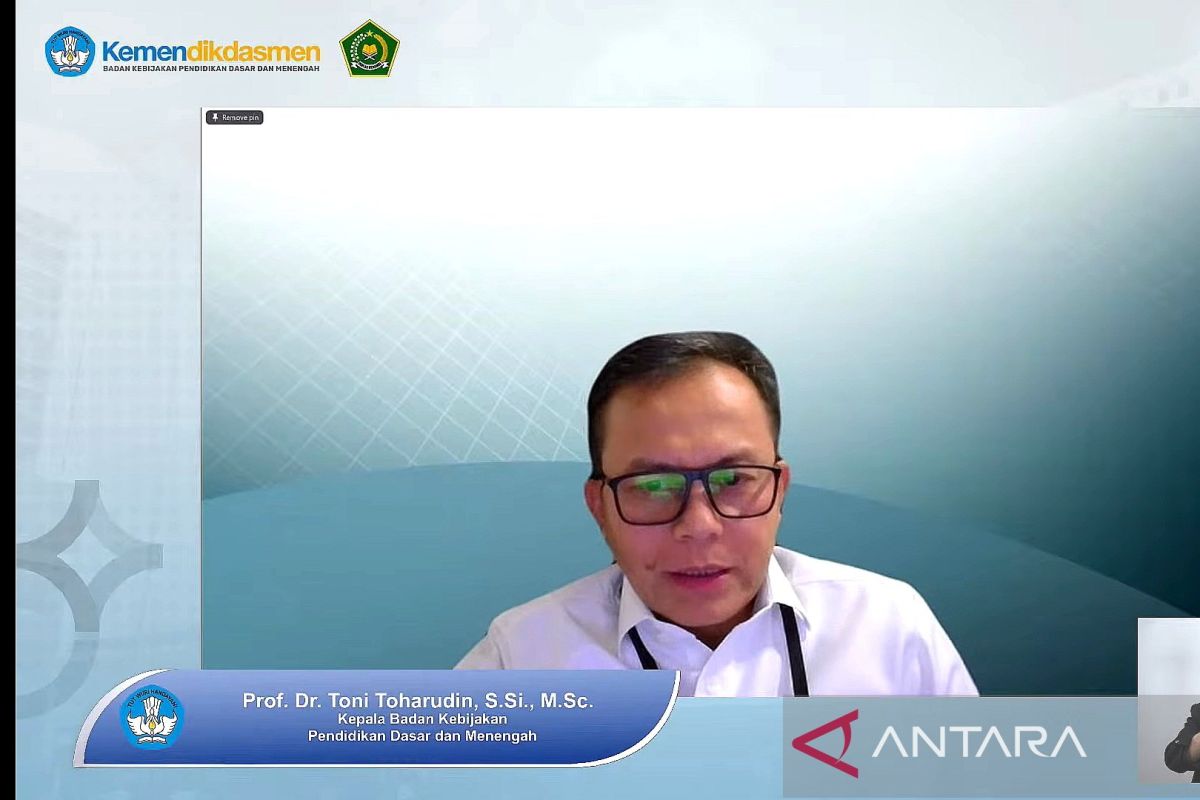
The Agency for Primary and Secondary Education Policy (BKPDM) under the Ministry of Primary and Secondary Education (Kemendikdasmen) has amended and refined the learning outcomes for religious education and moral character subjects at the early childhood, primary, and secondary education levels.
Head of BKPDM Kemendikdasmen Toni Toharudin stated that the changes and refinements, formalised in Decree of the Head of BKPDM Kemendikdasmen Number 020 of 2026, seek to strengthen character building, moral values, and student competencies in accordance with the goals of national education through religious education and moral character. “This adjustment is expected to strengthen character building, moral values, and student competencies in line with the goals of national education,” Toni said during a webinar titled Understanding Changes to Learning Outcomes for Religious Education and Moral Character in Central Jakarta on Monday.
He further emphasised that the learning outcomes for other subjects remain governed by previous provisions and have not been altered, meaning the decree issued by his agency is limited and specific to the religious education and moral character subjects. “This clarification is very important for us to convey because there is still a perception in the public sphere that this decision changes all learning outcomes, whereas the changes made are limited and specific to the religious education and moral character subjects. Therefore, we urge all regional governments, education offices, school principals, teachers, and all stakeholders to convey this information completely and accurately to the public,” Toni stressed.
On the same occasion, Head of the Curriculum and Learning Centre at Kemendikdasmen Laksmi Dewi explained that two adjustments were made. The first adjustment involved simplifying the material within the learning outcome aspects. The second adjustment allows the formulation of competencies in the learning outcomes to use the Structure of the Observed Learning Outcome (SOLO) taxonomy or other taxonomies, such as those by Bloom, Wiggins and Tighe, or Marzano, appropriate to the scientific field of each subject.
“The general change in formulating the learning outcomes for these two subjects is that we aim to strengthen student character by integrating the Love-Based Curriculum (KBC), the Eight Dimensions of the Graduate Profile, and Religious Moderation into the rationale, objectives, and characteristics, as well as making the competency formulation more concrete and observable,” Laksmi said. She further explained that, broadly, the development of learning outcomes for Islamic Religious Education and Moral Character uses the SOLO Taxonomy, while Christian Religious Education and Moral Character uses the Wiggins Taxonomy. The learning outcomes for Catholic Religious Education and Moral Character refer to a framework developed by Wiggins and McTighe, Hindu Religious Education and Moral Character uses the SOLO Taxonomy, Buddhist Religious Education and Moral Character uses the SOLO Taxonomy, and Confucian Religious Education and Moral Character uses the Wiggins and McTighe Taxonomy.