
Ministry of Primary and Secondary Education refines inclusive education guide for equitable learning
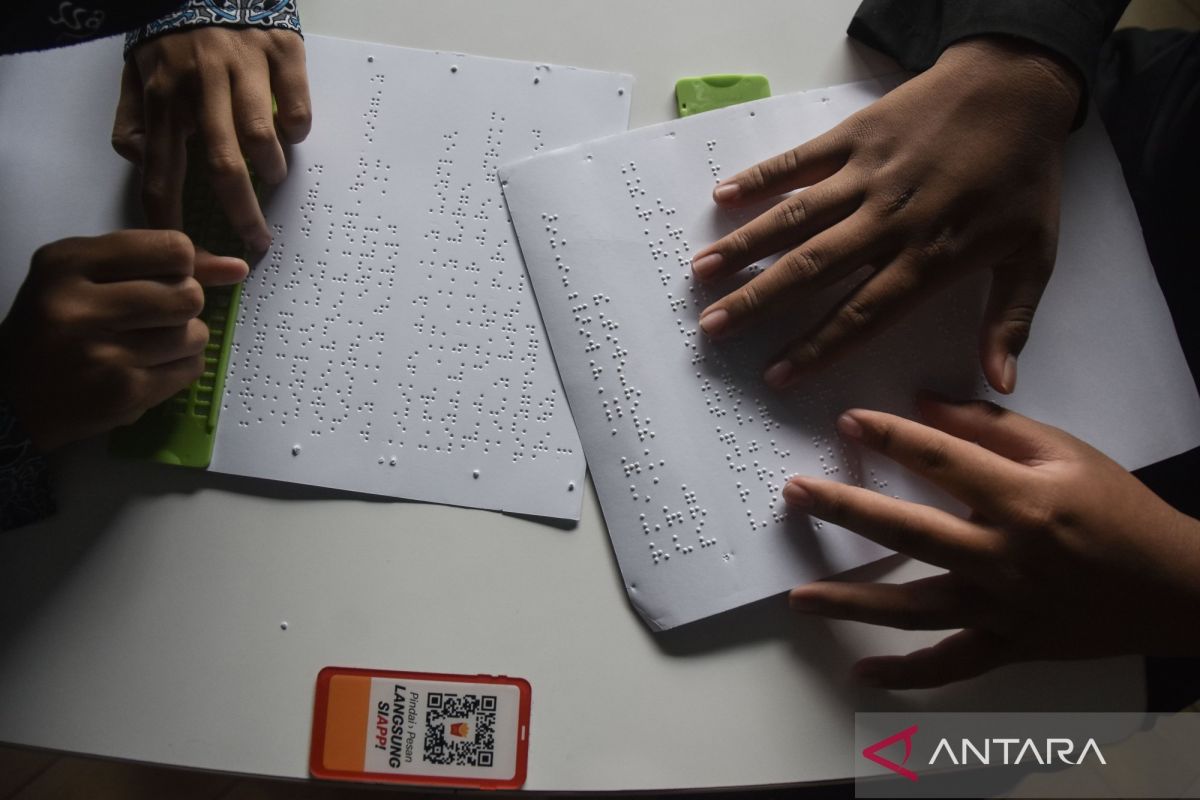
The Ministry of Primary and Secondary Education (Kemendikdasmen) has refined the Inclusive Education Implementation Guide as a reference for educational units in understanding policy, the characteristics of students with special needs, and quality assurance of educational units.
Head of the Basic and Secondary Education Policy Agency (BKPDM) at Kemendikdasmen, Toni Toharudin, said in Jakarta on Thursday that the guide was prepared to provide information, direction, and practical references for general educational units and stakeholders in planning, implementing, and developing inclusive education according to the level, pathway, and characteristics of each educational unit.
Toni said every student brings different backgrounds, abilities, characteristics, and learning needs to the same classroom. The implementation of inclusive education stems from this reality, to ensure that diversity does not cause some students to fall behind in learning, participating, and developing their potential.
On the same occasion, education observer Doni Koesoema assessed that inclusive education must become the spirit and soul of national education. According to him, every child has the right to receive the same education in both formal and non-formal pathways, without discriminating based on their background and condition. Doni also argued that the principle of inclusive education is to ensure all children can attend education in general or regular schools.
Thus, students with special needs, including students with disabilities, students requiring special service education, and even students in vulnerable groups can learn together with other students in the same school environment.
He also explained that the implementation of inclusive education needs to be supported by an assessment system to identify the needs of each student. The results of the assessment, he continued, can be used as a basis for schools to provide appropriate accommodations during the learning process.
“If a school, for example, has children who only have visual impairment or hearing impairment, it means these children still attend general schools, not special schools. They attend general schools and join other children, but during learning they are given accommodations,” said Doni.
In practice, children with disabilities can choose to pursue education in general educational units or special educational units (SLB), according to their respective needs and conditions. For children who choose general educational units, the learning process can be carried out together with other students while still receiving accommodations and support according to their needs.