
Ministry of Primary and Secondary Education Outlines Implementation of ESD in Schools
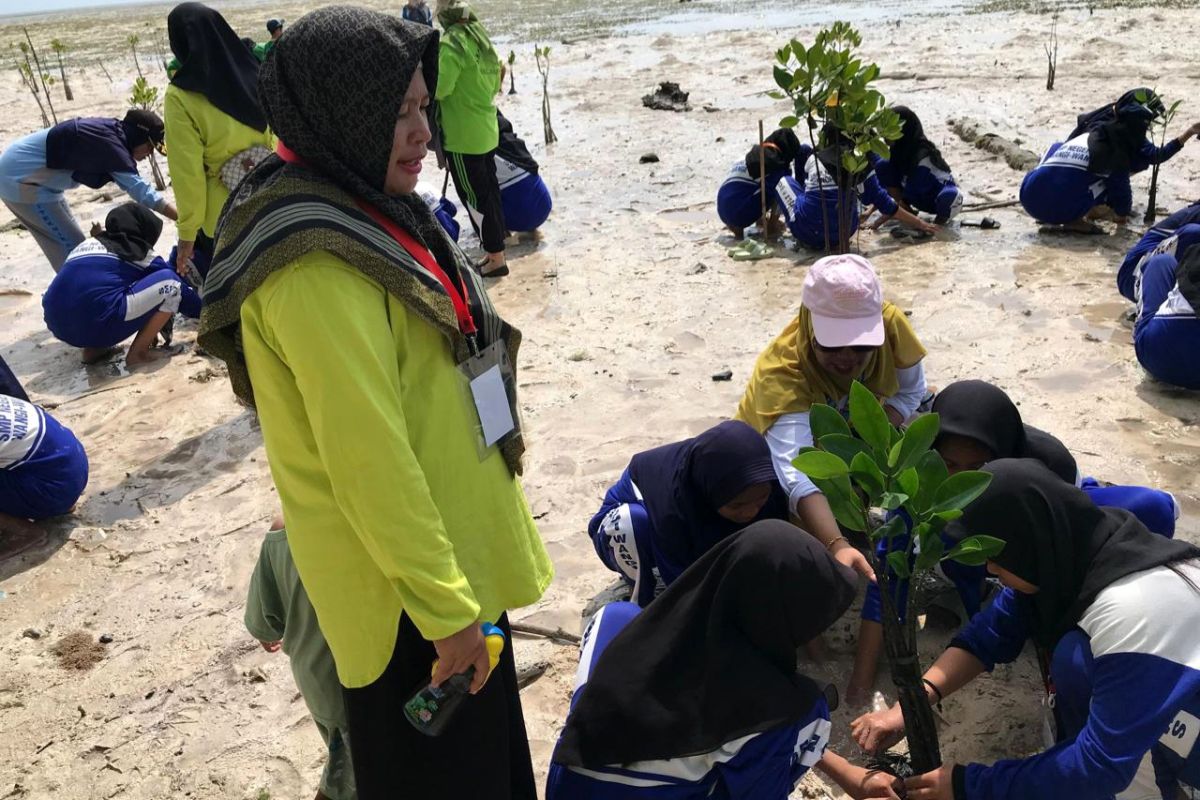
Jakarta (ANTARA) - The Ministry of Primary and Secondary Education (Kemendikdasmen) has outlined the implementation of Education for Sustainable Development (ESD) in schools, aiming to prepare a generation capable of facing various future challenges.
Head of the Agency for Education and Training Policy Development (BKPDM) at Kemendikdasmen, Toni Toharudin, stated that these challenges include climate change, environmental degradation, and increasingly complex social issues. Therefore, education must not only focus on improving academic achievement but also on building students’ awareness, character, and ability to contribute to realising sustainable development.
“In Indonesia, ESD is not viewed as a new subject, but rather as a perspective that is integrated into the entire learning process,” Toni said in a written statement in Jakarta on Thursday.
He added that climate change is not just an environmental issue, but also an educational one. Consequently, education must equip the younger generation with the knowledge, awareness, and ability to act for a sustainable future.
The implementation of education for sustainable development has been carried out in various regions through contextual approaches closely linked to students’ lives. One example of good practice comes from Wakatobi Regency, which utilises the region’s natural wealth as a learning resource, including the UNESCO Biosphere Reserve and Wakatobi National Park.
Wakatobi Regent Haliana explained that the launch of the ‘Wakatobiku’ Learning Package is a crucial step in instilling conservation values in the younger generation from an early age. The learning package was developed using various interactive media, ranging from storybooks and educational games to animated videos that highlight the richness of coral reef ecosystems, mangroves, and the lives of coastal communities.
The spirit of sustainable education is also reflected in practices carried out at various schools. Nining, a teacher at SDN Kelapa Dua Wetan in East Jakarta, explained that her school has implemented various environmental care programmes. These include sorting waste by type, processing waste into fertiliser, eco-enzymes, and maggot cultivation, creating recycled products, forming cadres of environmental care activists, and establishing a school waste bank.
Nining believes that programmes like Adiwiyata are important to implement not merely for the sake of obtaining awards, but to build a culture of environmental care starting from the students’ immediate surroundings. Students become accustomed to sorting waste according to its type, are more prudent in using water and electricity, and develop a higher level of concern for the environment. At the school level, the volume of waste has decreased significantly, and the use of electricity and water has become more efficient.
Source: jawawa.id (https://jawawa.id/newsitem/ministry-of-primary-and-secondary-education-outlines-implementation-of-esd-in-schools-1781765637)
Originally published by Antara (Indonesian) (https://www.antaranews.com/berita/5612644/kemendikdasmen-paparkan-penerapan-esd-di-satuan-pendidikan), translated from Indonesian