
Ministry of Primary and Secondary Education Activates 'Universal Participation' Movement to Unify Education Partners
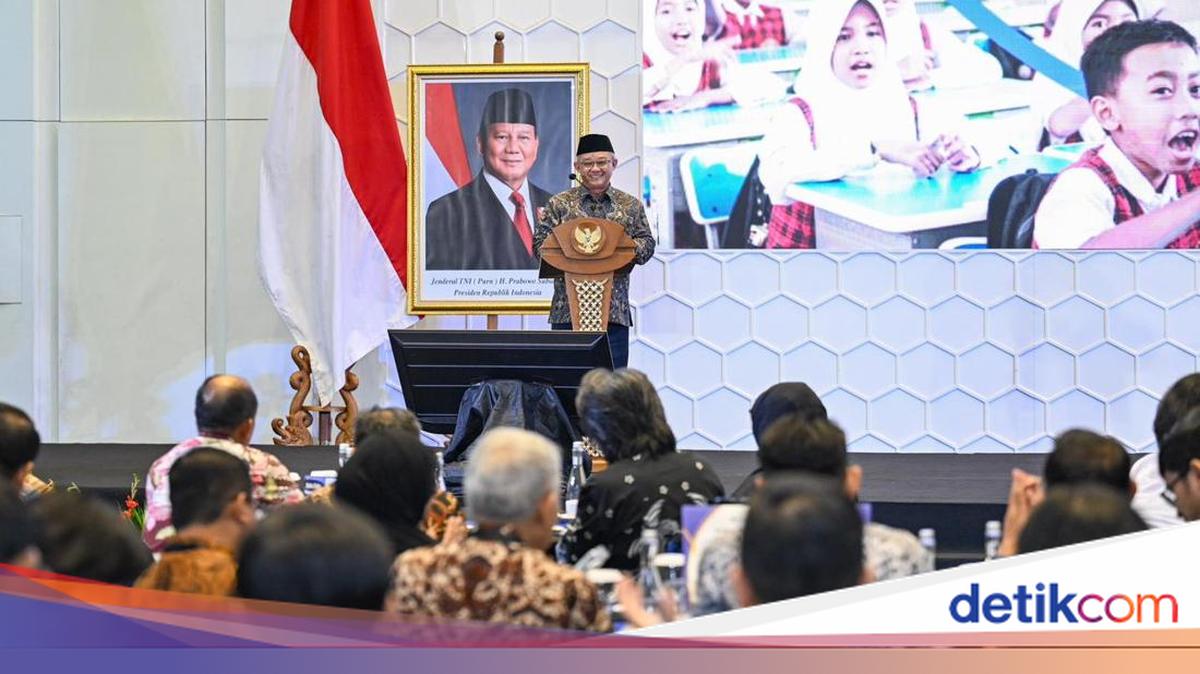
The Ministry of Primary and Secondary Education (Kemendikdasmen) has activated the Universal Participation for Quality Education (PSPB) Movement. This programme serves as a collaborative platform to support the improvement of education quality in Indonesia. The programme brings together the government, the business and industrial sectors, philanthropic institutions, community organisations, universities, media, communities, international organisations, and individuals. This initiative aims to integrate various forms of assistance and collaboration that have so far been running separately. Through PSPB, Kemendikdasmen wants to ensure that every support provided is more targeted, aligned with the needs of educational units, and capable of delivering a broader and more sustainable impact for improving the quality of national education.
Minister of Primary and Secondary Education, Abdul Mu’ti, asserted that the spirit of participation is born from the belief that every kindness given to others will benefit oneself and society. Therefore, according to him, everyone has an equal opportunity to contribute, not limited to material assistance. ‘It is not about how much we give others, but how meaningful, how much meaning we can give from our giving to others. That is why we are opening the door through the Education House to anyone who wants to participate,’ Mu’ti said in a statement on Tuesday (7/7/2026). He stated that President Prabowo has granted permission to Kemendikdasmen to build partnerships in supporting the implementation of the President’s Asta Cita. This step is carried out through public participation implemented in accordance with statutory regulations. ‘Universal participation is in the context of fulfilling needs, accelerating programme implementation, improvement, and expansion,’ he explained.
Mu’ti stressed that collaboration is needed because many educational needs still require cross-sector support, ranging from developing students’ talents and interests, improving teacher competence, strengthening character education, to creating a safe and comfortable learning environment. ‘We continue to open ourselves to partnering with various parties because it is through partnership that we can fulfil needs, accelerate, improve, and expand,’ he said. He also emphasised that educational development cannot be achieved solely through physical construction, but also through changes in mindset and character strengthening. ‘What we are building is a mindset. What we are building is human beings. That is why a touch from various parties is needed,’ he stated. ‘The DNA of the Indonesian nation is gotong royong. Let us together realise quality education for all equally, building a great and quality Indonesian generation,’ he added.
Meanwhile, Secretary General Suharti explained that PSPB was built to address the challenge of educational partnerships that have so far been running in a fragmented manner. ‘Contributions to education are actually very numerous, but they run scattered, each with its own path. As a result, support has not always met national priority needs,’ Suharti revealed. Suharti disclosed that Indonesia has more than 447,000 educational units serving over 53 million students. However, there are still around 2.92 million out-of-school children, while literacy and numeracy achievements also still require serious attention. Under these conditions, Suharti indicated that improving education quality cannot be done by the government alone, but requires the gotong royong of all elements of the nation. The Universal Participation Space is now available through the Education House Superapp in the Partner Space, which can be accessed at pspb.pendidikan.go.id. ‘Education in Indonesia has always been a collaborative effort. The needs of education are enormous and cannot be handled by Kemendikdasmen alone,’ she explained.
On a separate note, the Chairperson of Commission X of the Indonesian House of Representatives (DPR RI), Hetifah Sjaifudian, welcomed the initiative by Kemendikdasmen to build a collaborative space through the Universal Participation for Quality Education Movement. According to her, the movement forms an important foundation for building a sustainable public participation ecosystem. ‘What will be created is not just a programme, but a participation ecosystem. Shared solutions and participation spaces are opened not only to teachers, principals, educational units, and local governments, but also to development partners. It is this approach that we believe will strengthen the quality of our policies,’ said Hetifah.
The event was attended by 58 education development partners from the business and industrial sectors, philanthropy, community organisations, universities, media, communities, international organisations, and various other institutions as a manifestation of a shared commitment to strengthening the collaboration ecosystem to realise quality education for all Indonesian children. Through this activity, it is hoped that Kemendikdasmen can develop a data-based partnership system that matches the needs of educational units with potential contributors through a process of needs identification, support matching, implementation coordination, monitoring, and reporting. The focus of collaboration includes digitalisation of learning, rehabilitation of educational facilities and infrastructure, provision of scholarships, improvement of teacher competence, strengthening of character education, and handling of out-of-school children.