
Ministry of PANRB: Synergy is Key to Post-Disaster Public Service Recovery
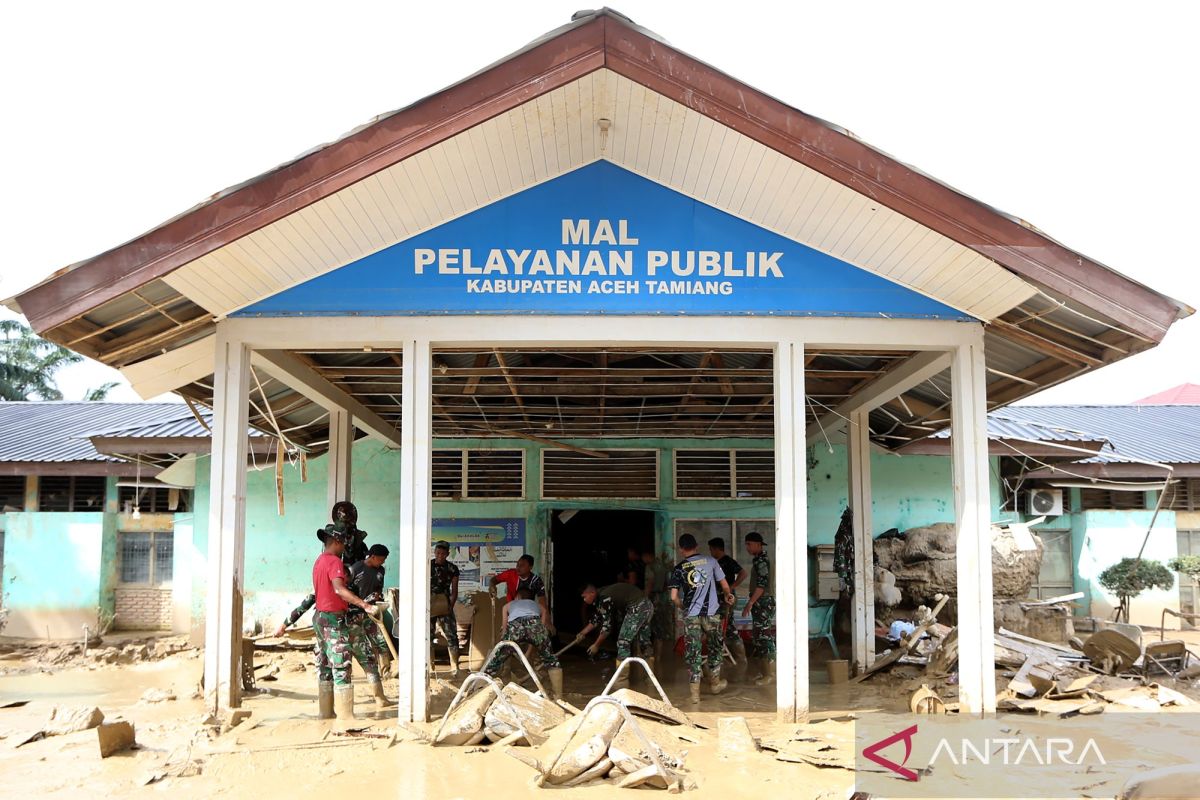
The Ministry of Administrative Reform and Bureaucratic Reform (PANRB) has stated that post-disaster recovery involves more than just rebuilding damaged infrastructure; it also requires ensuring that public services remain present and accessible to the community.
To this end, the government is continuously strengthening cross-agency synergy to restore public service delivery, particularly across 20 Public Service Malls (MPP) affected by hydrometeorological and geological disasters in the provinces of Aceh, North Sumatra, and West Sumatra.
“The government continues to strive for the recovery of public services by ensuring that the community can still obtain basic services in a fast, easy, integrated, and sustainable manner as part of the post-disaster rehabilitation and reconstruction process,” said Yanuar Ahmad, Assistant Deputy for Expansion of Accessibility and Inclusive Services at the Ministry of PANRB, in a statement in Jakarta on Thursday.
These remarks were made during the Preparatory Meeting for the Synergy Forum for the Recovery of 20 Post-Disaster MPPs in Jakarta on Wednesday.
As the supervisor of public services, the Ministry of PANRB plays a strategic role in ensuring the continuity of public service delivery while simultaneously driving service recovery in affected regions. One of its primary focuses is the restoration of integrated public services through mobile outreach (jemput bola) and the provision of temporary services.
The mobile outreach mechanism serves as a strategy to bring services closer to affected populations. With the support of service-providing ministries, agencies, and local governments, priority services can continue to be provided without waiting for primary service facilities to be fully restored.
“Through mobile outreach services, the government is working to ensure that the community continues to receive priority services, where services can be brought closer to the people according to field needs and conditions, even if primary service facilities are damaged or cannot yet operate optimally,” Yanlag Yanuar added.
These efforts are part of the post-disaster recovery collaboration as directed by Presidential Decree Number 1 of 2026 regarding the Task Force for the Acceleration of Natural Disaster Rehabilitation and Reconstruction in the provinces of Aceh, North Sumatra, and West Sumatra. This policy emphasises a cross-sectoral collaborative approach and data integration to strengthen inter-agency synergy and overcome sectoral barriers in post-disaster management.
To strengthen this collaboration, task force teams from the Ministry of PANRB, service-providing ministries/agencies, and the district/city governments managing the 20 affected MPPs are currently preparing concrete, measurable, and collaborative synergy steps for service recovery. This serves as the initial step in preparing the synergy forum through enhanced coordination, alignment of perceptions, and the mapping of needs and support.
In addition to restoring operational services, the Ministry of PANRB is also encouraging the adjustment of service standards to suit post-disaster conditions. Furthermore, the ministry will monitor and facilitate the resolution of public service issues, strengthen public complaint management through the SP4N-LAPOR! system, and develop service innovations that are responsive to disaster situations.
Through cross-sector synergy, the government ensures that the post-disaster rehabilitation and reconstruction process also delivers public services that are increasingly responsive to community needs. This is expected to help affected populations not only regain access to services but also receive services that are easier, faster, integrated, and needs-oriented.
Source: jawawa.id (https://jawawa.id/newsitem/ministry-of-panrb-synergy-is-key-to-post-disaster-public-service-recovery-1789049568)
Originally published by Antara (Indonesian) (https://www.antaranews.com/berita/5735384/kemenpanrb-sinergi-kunci-pemulihan-pelayanan-publik-pascabencana), translated from Indonesian