
Ministry of Marine Affairs and Fisheries Calls for Multi-Stakeholder Collaboration to Manage Oceans in World Ocean Day Commemoration
The Ministry of Marine Affairs and Fisheries (KKP) has invited various elements of society to participate in the effective management of the ocean in commemoration of World Ocean Day.
Speaking in Badung, Bali, the Director General of Marine Affairs Management at KKP, A. Koswara, emphasised that managing the vast ocean cannot be achieved by central or regional governments alone. He stated that the commemoration serves as a momentum for all partners to strengthen their commitment to ocean management in accordance with blue economy policies.
The blue economy framework consists of five key policies. Two focus on direct economic development through measured capture fisheries and sustainable aquaculture, while the remaining three focus on ecosystem sustainability through the expansion of conservation areas, the protection of coasts and small islands, and waste management.
“This is truly a collaborative task; it cannot be performed by the government alone, whether at the central or regional level, but it is also the responsibility of the entire community, the business world, and other community institutions,” Koslar added.
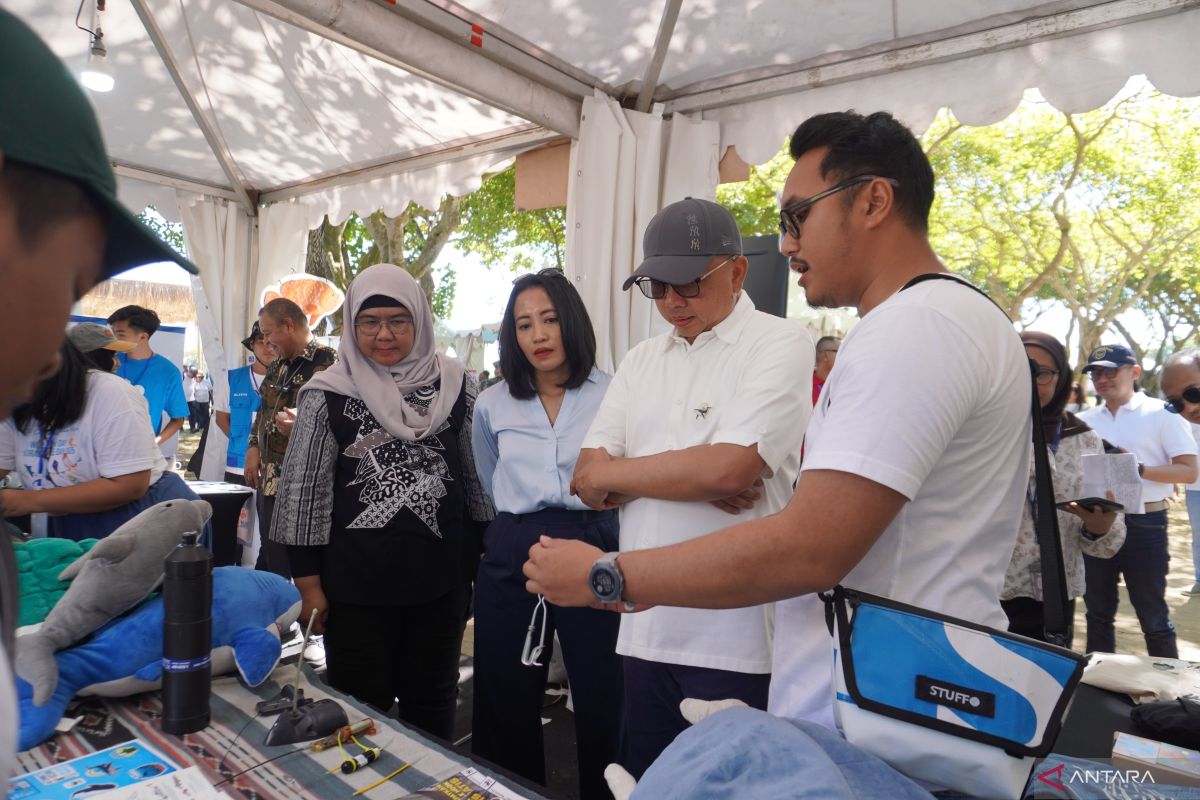
The 2024 World Ocean Day and Coral Triangle Day celebrations in Bali featured collaborations between KKP, the Bali Provincial Government, WWF Indonesia, GIZ, the Coral Triangle Center, the Coral Triangle Initiative on Coral Reefs, Fisheries, and Food Security, and STC, showcasing marine innovation products and educational exhibitions.
Various activities were organised, including discussions on marine biodiversity conservation, climate change, illegal marine wildlife trade, bycatch mitigation technology, and sustainable fisheries. Creative workshops such as kite making, recycling, and coral clay crafting were also held for children.
Dewi Lestari Yani Rizki, Director of Conservation at WWF Indonesia, noted that their organisation is actively working with local governments to reduce plastic waste leakage from land to sea. According to their data, 90 per cent of marine plastic waste originates from land-based sources, meaning ocean management must begin with land-based management by all stakeholders.
“Let us protect our waters from upstream to downstream, free them from plastic waste, restore the ecosystems, and establish a healthy ocean as the foundation for a strong Indonesian economy,” she concluded.