
Ministry of Marine Affairs and Fisheries begins discussions on offshore Carbon Capture Storage options
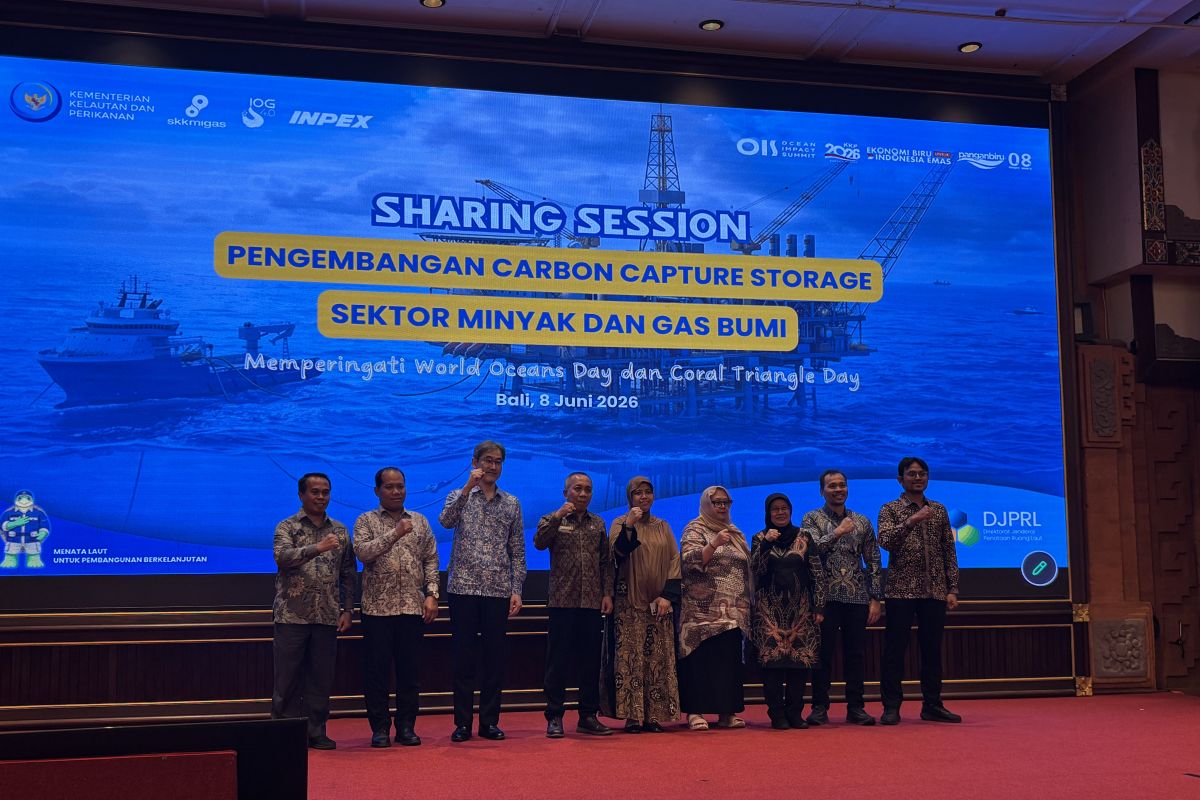
The Ministry of Marine Affairs and Fisheries (KKP) has commenced discussions regarding options for developing Carbon Capture Storage (CCS) to capture carbon dioxide from the offshore oil and gas sector.
“Carbon Capture Storage is actually one of the strategic options that needs collective support; Indonesia possesses great potential, both in terms of emission sources from industrial activities themselves and from other activities,” stated Kartika Listri Carbon, Director General of Marine Spatial Planning at the KKP.
Speaking in Badung, Bali, on Monday, Kartika convened various stakeholders, including central and local governments, academics, and business actors, to examine marine spatial planning efforts aimed at maintaining ecology within the upstream oil and gas sector.
The KKP views the development of CCS on the seabed as a solution for carbon storage to prevent environmental pollution. However, its development requires technological support, policy frameworks, regulatory certainty, cross-sector coordination, and good governance. One key instrument mentioned is the Marine Spatial Utilisation Suitability (KKPRL), which serves to provide business certainty, prevent potential spatial conflicts, and support sustainable investment in marine areas.
Kartika explained that the global community currently faces the dual challenges of climate change and increasing energy demands. Increasing energy supply presents both a challenge and an opportunity, as marine space is highly strategic for meeting energy needs. Furthermore, Indonesia prioritises environmental protection and sustainable resource management, as evidenced by its independent target to reduce greenhouse gas emissions by 31.89 per cent by 2030.
“Achieving this certainly requires various efforts and synergy from all parties, including the utilisation of technology capable of reducing emissions, particularly from the energy and industrial sectors,” she added.
CCS technology has already advanced in Japan, applied not only to the gas sector but also to metropolitan areas, presenting an opportunity for Indonesia to eventually achieve net-zero emissions in line with its targets.
“Therefore, in supporting the development of CCS and various construction activities in coastal and marine areas, marine spatial planning is of critical urgency. Marine spatial planning does not only function as a licensing instrument but can also balance all competing interests,” said Kartika.
She concluded that the utilisation of marine space must be conducted in an orderly, optimal, and responsible manner, ensuring that marine spatial planning can realise integrated and sustainable maritime development that addresses climate change challenges and supports national economic growth.
Source: jawawa.id (https://jawawa.id/newsitem/ministry-of-marine-affairs-and-fisheries-begins-discussions-on-offshore-carbon-capture-storage-options-1780927913)
Originally published by Antara (Indonesian) (https://www.antaranews.com/berita/5599416/kkp-mulai-diskusi-opsi-carbon-capture-storage-di-laut), translated from Indonesian