
Ministry of Manpower states government spending can strengthen labour-intensive industries
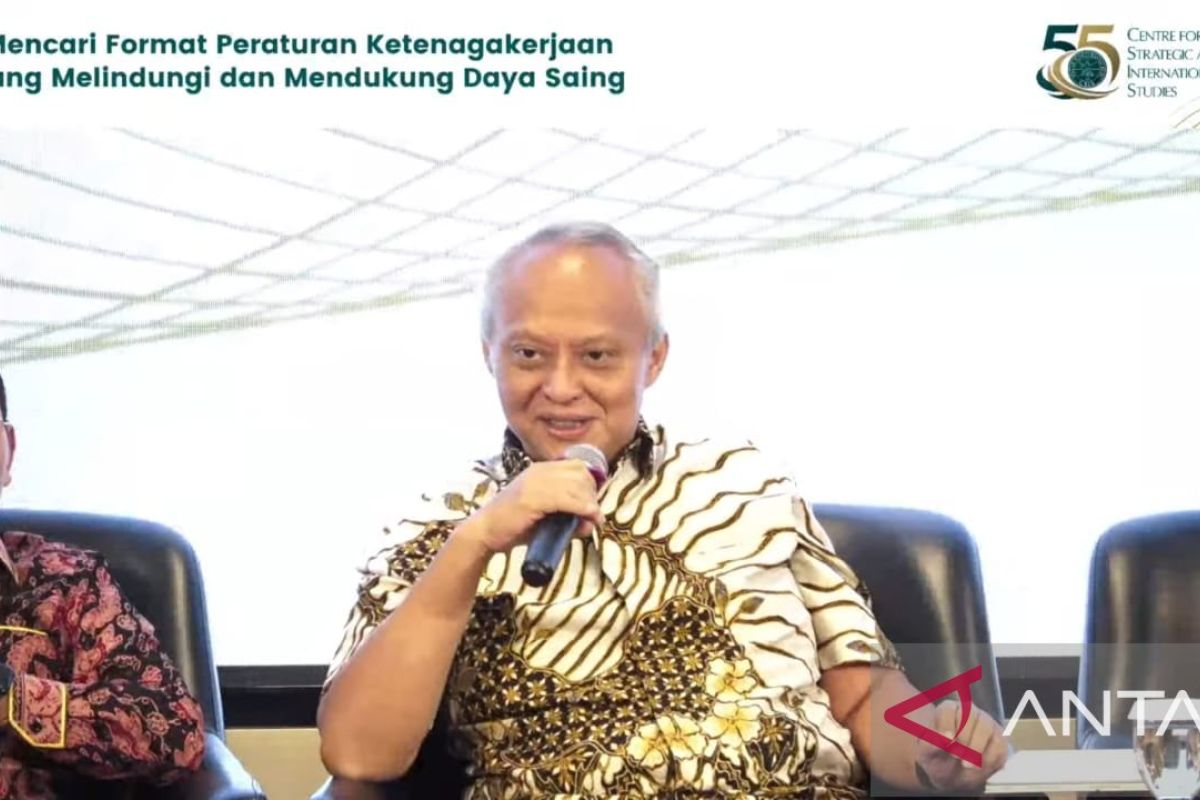
C. Heru Widianto, a Senior Expert Industrial Relations Mediator at the Ministry of Manpower (Kemnaker), stated that government spending could serve as a lever to strengthen Indonesia’s labour-intensive industries, particularly the textile and textile products (TPT) sector.
Heru highlighted the decline in the proportion of labour-intensive industries in Indonesia’s exports, which dropped from approximately 15 per cent in the 1990s to around 7 per cent today. This indicates a need to rebuild the labour-intensive industrial ecosystem, including through the creation of domestic markets.
“If there is a supporting ecosystem spirit, I believe our labour-intensive sector will prosper again,” he said during an online discussion with CSIS in Jakarta on Thursday.
He cited the requirement for civil servant (ASN) uniforms as an opportunity to bolster demand for domestic textile products. With approximately 8 million civil servants, he believes this could serve as a potential market for the textile sector if procurement policies and the use of domestic products are managed consistently.
According to him, demand originating from the government can create market certainty for labour-intensive industries. With a more guaranteed market, the sector is expected to have the space to increase production while simultaneously absorbing labour.
He assessed that strengthening labour-intensive industries is crucial because the sector is directly linked to job creation. This is increasingly relevant as Indonesia’s employment elasticity is reported to have declined.
In his presentation, he noted that employment elasticity, which was above 0.4 in the period before 2016, fell to approximately 0.16–0.27 in the 2020s. Under these conditions, every one per cent of economic growth is estimated to generate only about 170,000–190,000 job opportunities.
“If we want to create labour-intensive growth given our large working population, the government could implement a policy, for example, requiring all civil servant uniforms to be produced by the textile industry within Indonesia. I believe companies would also be willing to help if requested to produce uniforms for their employees,” said Heru.
Beyond the textile sector, Heru also touched upon the importance of building an industrial relations ecosystem that can support the sustainability of labour-intensive industries. He noted that government policy, support from the House of Representatives (DPR), and corporate involvement must work in tandem for labour-intensive industries to flourish again.
These efforts are ultimately not just about protecting workers through labour regulations, but also about how to create demand and business conditions that allow labour-intensive industries to survive and open up more employment opportunities.
Source: jawawa.id (https://jawawa.id/newsitem/ministry-of-manpower-states-government-spending-can-strengthen-labour-intensive-industries-1790262251)
Originally published by Antara (Indonesian) (https://www.antaranews.com/berita/5757312/kemnaker-sebut-belanja-pemerintah-bisa-perkuat-industri-padat-karya), translated from Indonesian