
Ministry of Manpower prepares strengthening of national industrial relations system for 2026
Jakarta (ANTARA) - The Ministry of Manpower is preparing a policy to strengthen the national industrial relations system for 2026, aimed at preventing potential disputes from an early stage, protecting workers, and maintaining certainty for the business sector.
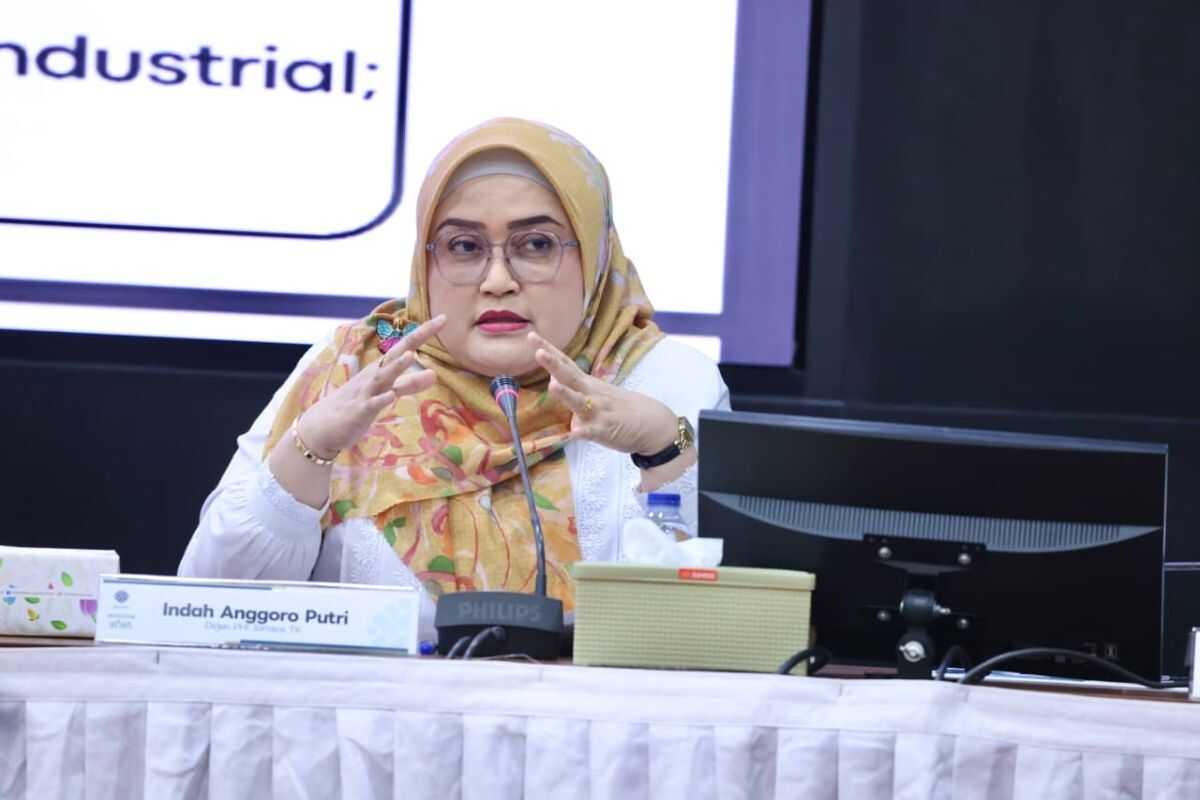
Director General of Industrial Relations Development and Social Security at the Ministry of Manpower, Indah Anggoro Putri, stated in Jakarta on Saturday that this strategic programme is directed at creating industrial relations that are harmonious, dynamic, equitable, adaptive and transformative, with measurable targets.
“We want to build an industrial relations system that is not reactive to conflict but capable of preventing potential disputes from the outset. Industrial relations must provide a sense of security for workers whilst also offering certainty for the business community,” said Indah.
On the regulatory and corporate governance front, the Directorate General of Industrial Relations and Social Security is targeting capacity building for the drafting of Company Regulations and Collective Labour Agreements at 1,744 companies, as well as the implementation of wage structures and scales at 1,459 companies.
“Strengthening regulations at the company level is key. Companies must have work rules that are fair, transparent and non-discriminatory so that industrial relations function in a healthy manner,” said Indah.
In the area of employment social security, the directorate general is targeting increased enrolment of 416,000 wage-receiving workers and 2,751,400 non-wage-receiving workers.
These efforts are accompanied by the provision of welfare facilities for 830 workers and the socialisation of subsidised affordable housing programmes to 10,000 workers and labourers.
Strengthening institutional industrial relations is also a priority through the establishment of Bipartite Cooperation Bodies at 5,256 companies, education on the registration and verification of trade unions for 220 individuals, and fostering innovative and productive social dialogue for 300 individuals.
As a preventive measure, the Ministry of Manpower is conducting vulnerability mapping of industrial relations and strengthening early warning systems at 787 companies to suppress potential conflicts before they develop into disputes that harm workers or business activities.
In terms of dispute resolution, the directorate general is targeting technical guidance for 500 individuals and competency strengthening for 707 industrial relations mediators.
Additionally, the targets include resolving 140 cases outside of court, competency enhancement for 920 mediators, conducting competency tests three times, and developing mediator performance assessment instruments.
“These figures demonstrate our seriousness. The year 2026 is a year for strengthening systems so that workers are protected, social dialogue is increasingly robust, and potential conflicts can be suppressed. This is a tangible form of the state’s commitment to workers,” said Indah.