
Ministry of Manpower: Job-Ready Graduates a Solution to Meet Industry Needs
The Ministry of Manpower (Kemnaker) states that job-ready graduates produced by higher education institutions serve as a solution to meet the industry’s needs for competitive workers.
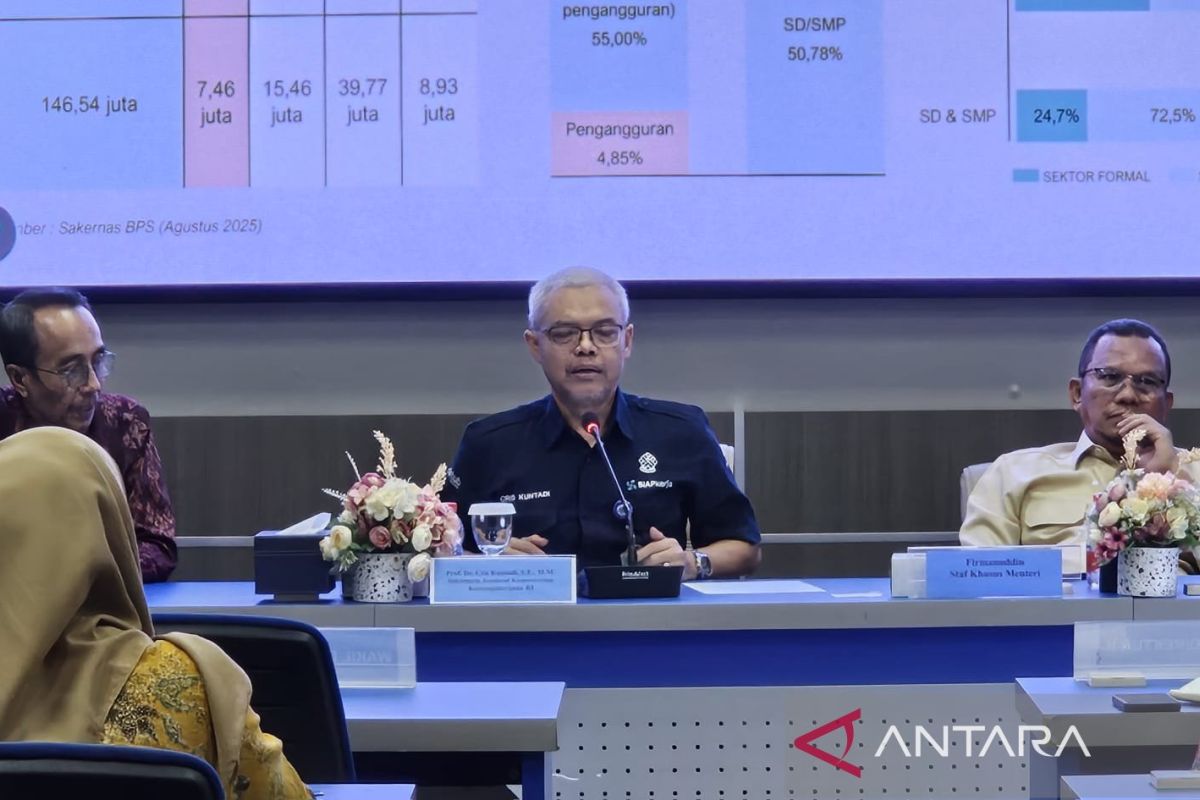
“The needs for workers in the employment sector today cannot be compared to 10 years ago or to the next 20-30 years, so how ready the campus is to provide graduates who are truly ready for the working world,” said Kemnaker Secretary General Cris Kuntadi after delivering a guest lecture at the Malang State Polytechnic in Malang City, East Java, on Thursday.
According to him, the more graduates absorbed into the workforce, the faster efforts to reduce the unemployment rate will be.
“If the capabilities of graduates from campus are already recognised, they are usually immediately asked to join the company,” he said.
Based on a release from the Central Statistics Agency (BPS) on 5 May 2026, the unemployment figure in Indonesia in 2026 was 7.24 million people, down by 35,000 from February 2025.
The number of working population in February 2026 was recorded at 147.67 million people.
The decline in unemployment is reflected in the Open Unemployment Rate which in February 2026 was at 4.68 percent, down 0.08 percent from February 2025.
The agriculture, wholesale and retail trade, and industrial sectors dominated workforce absorption with 60.29 percent of the national workforce.
Cris also conveyed that his side is now continuously encouraging companies to be more disciplined in reporting available job opportunities for the public.
“We will try to make job vacancy reporting mandatory not only for companies that provide them but also for those that do not open vacancies,” he said.
Meanwhile, the Director of Malang State Polytechnic, Ir Supriatna Adhisuwignjo, stated that enhancing students’ technical and non-technical skills by prioritising direct practical experience in the field.
This step is expected to reduce the risk of graduates from his institution obtaining jobs that do not match their field of study during their education.
“So hopefully they can directly apply their skills in the working world,” he said.
He also mentioned that the preparation of education curricula in each study programme is adjusted to the needs and situations in the industry.
“If the issue is deemed possible to enter, it can be directly utilised through project-based problem solving, but if it requires physical activity, it can be resolved through student internships or later through student final projects,” he explained.