
Ministry of Manpower and JICA Strengthen Protection for Indonesian Migrant Workers in Japan
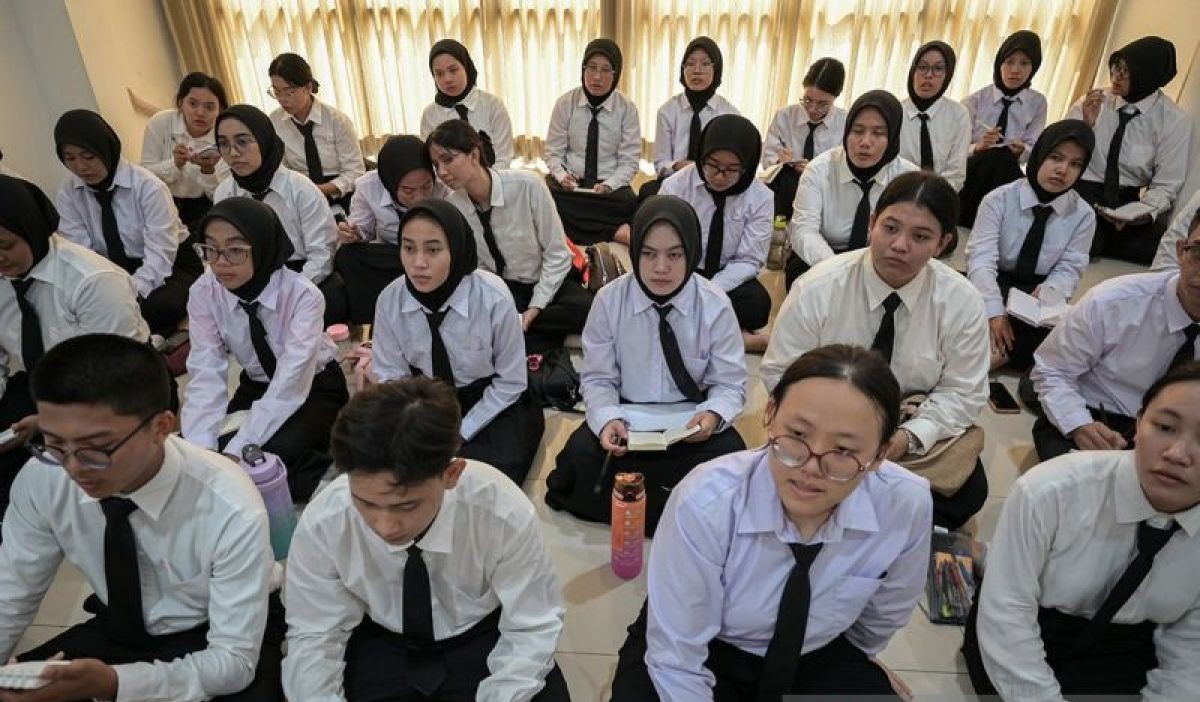
The Ministry of Manpower (Kemnaker) together with the Japan International Cooperation Agency (JICA) continues to strengthen the quality and protection of Indonesian migrant workers (PMI) working in Japan. This is being pursued through the upgrading of training facilities, enhancement of instructor capacity, and alignment of competencies with industry requirements.
The strengthening forms part of the JICA-Kemnaker Final Activity Sharing Seminar titled ‘Overview of Kemnaker and JICA Cooperation Framework and Achievements 2023-2026’. The forum served as a moment to evaluate achievements during the 2023-2026 period while identifying future development needs.
Secretary General of Kemnaker, Cris Kuntadi, stressed that the success of this cooperation should not be measured solely by placement statistics. According to him, the main focus must shift towards a human resource development partnership that provides comprehensive protection.
‘The success of this cooperation must not be measured only by labour placement statistics. The most important thing is to shift the paradigm from merely placing workers to becoming a human resource development partnership that provides comprehensive protection,’ said Cris Kuntadi in a statement in Jakarta on Tuesday (25/8).
Cris explained that increased labour mobility must be accompanied by strong competency readiness and protection. This is crucial given the surge in participant numbers across several Indonesian labour mobility schemes to Japan.
Data shows that under the Technical Intern Training Program (TITP), the number of participants rose sharply from 43,145 in 2022 to 124,967 in 2025. Meanwhile, Specified Skilled Worker (SSW) participants also increased from 12,634 to 86,955 over the same period.
To ensure the surge is matched by adequate preparation, an infrastructure survey was conducted across 21 facilities of the Centres for Vocational Training and Productivity (BBPVP/BPVP). The survey aims to ensure training facilities can support the preparation of prospective workers before departure to Japan.
Beyond infrastructure, strengthening instructor capacity is a key pillar. A total of 200 instructors from seven training institutions have participated in a Japanese language improvement programme. In addition, 48 vocational centre instructors took part in a Training of Trainers (ToT) programme.
Prospective workers are equipped not only with technical skills but also with language, culture, ethics, discipline, and workplace habits in Japan. Competency alignment is carried out through a demand-driven approach to match the needs of industry in the Land of the Rising Sun.
The cooperation also includes the preparation of an SSW Output Matrix across 16 fields and the building of networks with local governments in various Japanese prefectures, including Miyagi, Mie, Ehime, Kagawa, Miyazaki, Yamaguchi, and Kumamoto.
Cris reiterated that the high number of departures must be accompanied by quality assurance. ‘The high number of departures cannot be used as a measure of success if it is not accompanied by appropriate competencies, sufficient information, understanding of the work environment, and guaranteed protection for workers,’ he concluded.
Source: jawawa.id (https://jawawa.id/newsitem/ministry-of-manpower-and-jica-strengthen-protection-for-indonesian-migrant-workers-in-japan-1787669444)
Originally published by Media Indonesia (https://mediaindonesia.com/ekonomi/925869/kemnaker-dan-jica-perkuat-pelindungan-pekerja-migran-indonesia-di-jepang), translated from Indonesian