
Ministry of Law targets 6 million music registrations following free registration policy
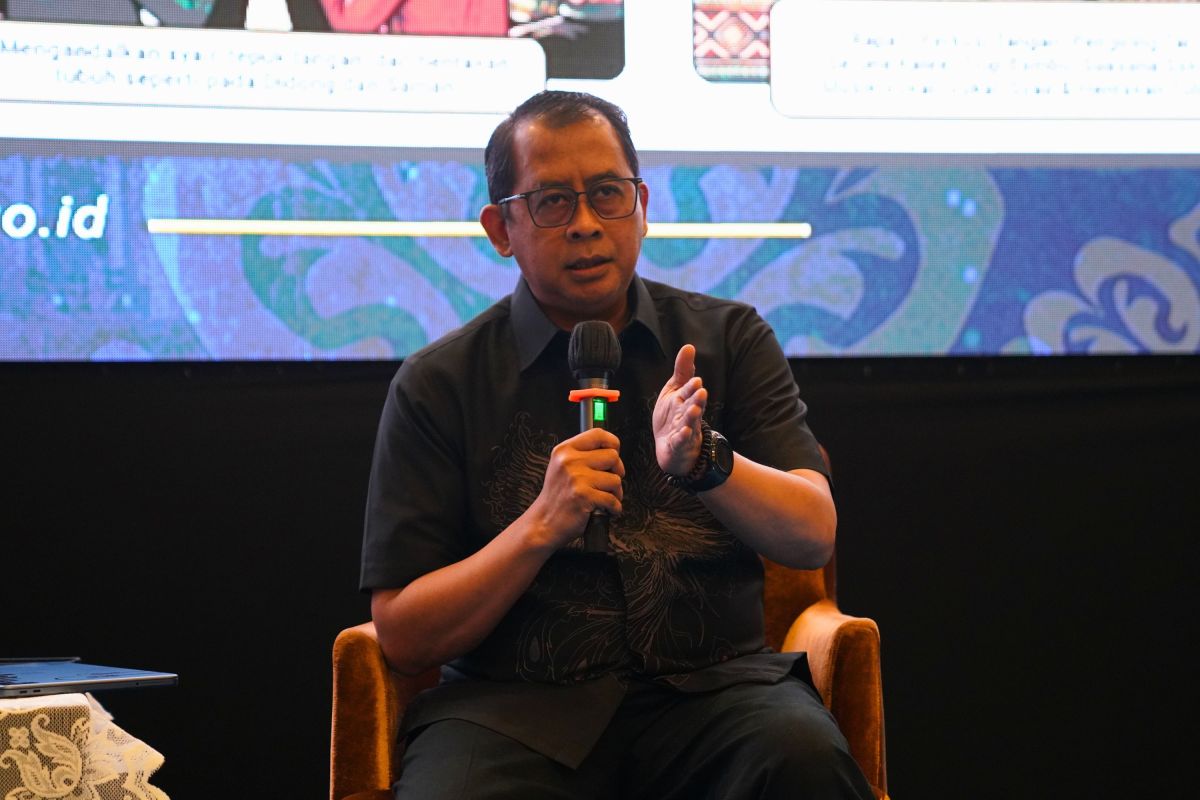
Jakarta (ANTARA) - The Ministry of Law (Kemenkum) is targeting the registration of 6 million musical works following the implementation of a free registration policy effective from 1 August 2024.
Agung Damarsasongko, Director of Copyright and Industrial Design at the Directorate General of Intellectual Property (DJKI) of the Ministry of Law, stated that such registration is vital for establishing the identity of a creation. “However, as of today, the data entered into the Song and Music Data Centre (PDLM) is only around 7,000 songs,” Agung said in a statement confirmed in Jakarta on Wednesday.
He noted that the process is not merely about registration but also about providing an identity to the song. Consequently, even if titles are identical, different creators can be distinguished via a unique song code, which will be utilised both nationally and internationally.
Agung explained that the free registration policy is prioritised for Indonesian songwriters, though foreign nationals creating music in Indonesia are also eligible to register their works. “We are also targeting songwriters who do not yet have labels, as well as musicians in various regions,” he added.
Currently, there are 17 Collective Management Organisations (LMK) representing creators and related rights holders with a significant number of members. The DJKI aims for LMK members to complete their registrations by the end of the year. The policy is open to all genres of music, provided the works are community creations. Meanwhile, works that are ancestral or part of cultural heritage are categorised into a different database.
To utilise the registration service, Agung stated that creators must prepare identification and proof of ownership or existence of the work, such as lyrics or musical material. If registration is conducted by heirs due to the creator’s passing, the applicant must also attach proof of their status as an heir.
He explained that a single song registration can encompass all parties holding related rights, including instrumentalists and others involved in the work. “This is important because the music ecosystem does not only consist of songwriters, but also related rights holders who contribute to the creation and use of a work,” said Agung.
On the other hand, he noted that the development of Artificial Intelligence (AI) technology must also be considered in the registration of works. Under Law No. 24 of 2014, copyright fundamentally protects works that are the result of human intellectual effort. Therefore, if a work is generated entirely by AI with insignificant human contribution, it cannot simply be claimed as a human creation.
Conversely, Agung added, if the creator provides significant human contribution—for example, composing and singing a song themselves using AI applications as part of the production process—the work can still be registered. “When submitting a registration application, the creator must sign a statement declaring the work is theirs. If it turns out not to be, the registration can be revoked,” Agung said.
In the event of disputes regarding ownership or usage, the DJKI has a resolution mechanism through the Directorate of Law Enforcement, including mediation conducted by certified mediators. This mechanism has already been used to help disputing parties reach agreements.
He encouraged songwriters and musicians to take advantage of the zero-rupiah registration policy as a step to provide identity and document their works. If creators or musicians face difficulties in registering, the DJKI is collaborating with regional offices of the Ministry of Law to provide socialisation and assistance. The public can also access DJKI information via 152 or dgip.go.id.