
Ministry of Law Shifts Citizenship Service Verification System
Jakarta (ANTARA) - The Ministry of Law and Human Rights has officially shifted the verification system for citizenship services from an administrative approach to a risk-based verification method to strengthen national sovereignty.
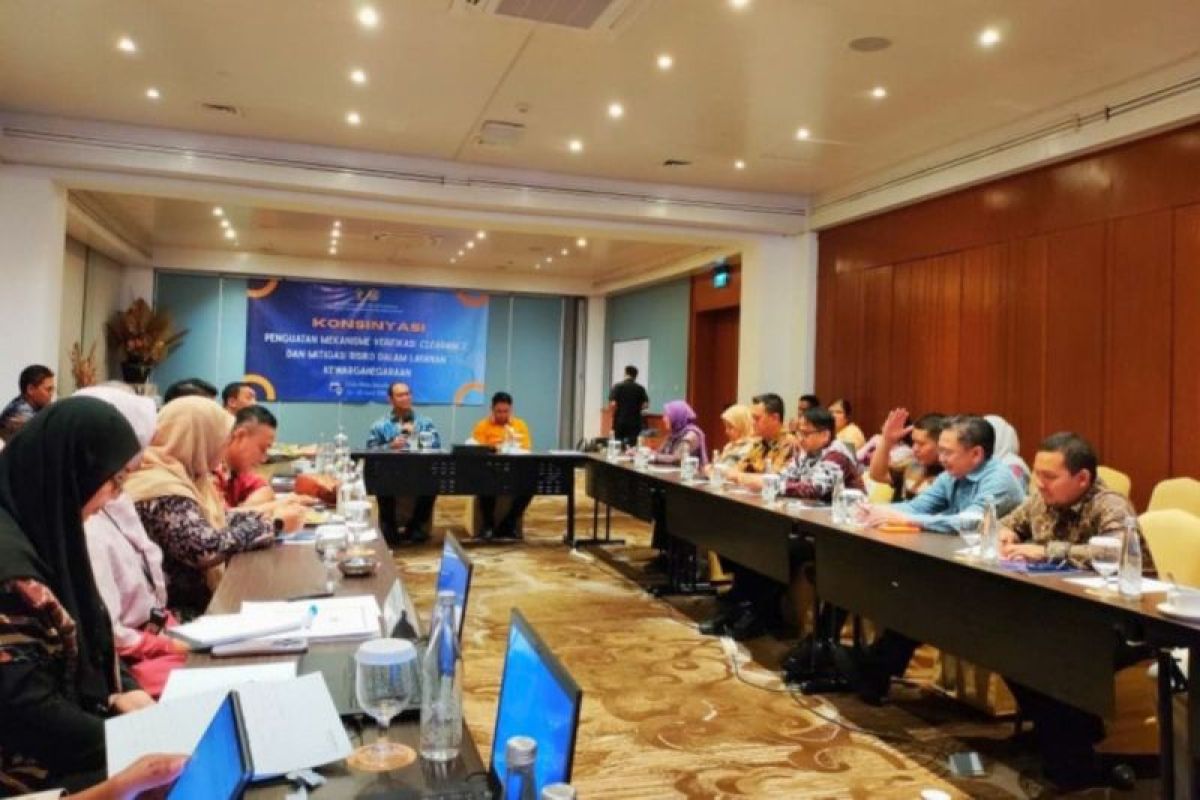
Director General of General Law Administration (AHU) at the Ministry of Law and Human Rights, Widodo, explained this strategic step during an event in Jakarta on Friday (24/4), to ensure that every determination of citizens’ legal status is more accountable, selective, and in line with the mandate of Law Number 12 of 2006.
“Citizenship is a fundamental legal bond and loyalty, so every decision to grant or revoke it must be based on the highest caution,” said Widodo, as quoted from a statement confirmed in Jakarta on Wednesday.
Thus, he continued, citizenship is not merely an administrative status, but reflects a legal bond, loyalty, and responsibility between individuals and the state.
He stated that every state decision in recognising citizen status must be based on valid data and comprehensively consider national interests.
Meanwhile, Director of State Affairs at the Directorate General of AHU, Ministry of Law and Human Rights, Dulyono, reported service data based on the Directorate General of AHU database, which recorded 712 applications from Dual Citizenship Children (ABG) choosing Indonesian citizenship (WNI), 332 general citizenship applications, and 510 through marriage throughout 2024–2026.
In addition, there were 1,433 applications for status affirmation abroad, 210 domestically, and 438 clearance processes or permissions for loss of citizenship.
In response to the data, Widodo instructed his subordinates to no longer work sectorally.
“The verification process cannot be done independently, but must be based on synergy between institutions that complement each other in an integrated work framework,” he said.
He emphasised that verification is a crucial key in facing complex conditions such as the use of foreign passports or taking oaths of allegiance to other countries.
Thus, he said, errors in verification not only have administrative impacts, but can also cause serious consequences for the protection of individual rights, legal certainty, to potential disputes in the future.
Therefore, according to him, the transition towards cross-sector data integration and the utilisation of international information is non-negotiable to maintain the integrity of services.
He reiterated that the nation’s dignity is at stake in every citizenship file processed.
It was emphasised that WNI status is an identity that reflects sovereignty and the honour of the nation. Therefore, every decision taken must be based on principles of selectivity, accountability, and integrity.